

• This thread is just the tip of the iceberg.The people ahead of the curve aren't Googling for answers — they're already in here, having the conversations you haven't found yet. DealerRefresh is free.Get the full picture →

Is improving new-vehicle affordability actually showing up in the showroom?

JLeo99

Push Start
Jul 28, 2026
11
3
Awards
2
First Name
Jon
New-vehicle affordability appears to be improving, but elevated borrowing costs may still be keeping that improvement from translating into stronger demand.

Even when the vehicle is more affordable on paper, the monthly payment can remain the real barrier. That puts more weight on deal structure, trade equity and total ownership cost.

This pattern surfaced while I was reviewing the broader automotive reporting collected for this week’s AutoIntel briefing, but I’m curious how it compares with what dealers are seeing on the ground.

Are customers becoming more payment-sensitive? Are you seeing buyers move down in trim, extend loan terms or walk away once financing is presented?

Context: https://autointel.news/weekly/
 
The place to watch this is the used lot, and that number has not improved at all.
We pull listing data across 196 rooftops. Across 10,823 priced used units the median ask is $28,295, median mileage 50,534, median model year 2023. Only 6.6% come in under $10,000, which is 714 cars out of the whole set, and 45.4% are $30,000 and up. Full table is in our report, Facebook Marketplace Used-Car Report 2026 | AutoLander
So when the payment lands wrong on the new car, the step down you used to have is not sitting on your lot. The customer who needed a $12,000 unit with 60,000 miles gets shown a three year old car with 50,000 miles at $28,000, and the term is what stretches to make it fit. Put Experian's used-car average of 11.19% next to the new-car 6.35% on top of that, and the payment sensitive customer is the one carrying the worse rate on the older collateral. That is the walk you are describing, and it lands after the numbers come back rather than during the trim conversation.
Worth counting this week: your own used units under $15,000 this morning, then the same count in 30 days. If it is flat or falling while your floor traffic is payment sensitive, the affordability story on the new side is not reaching your showroom.
Against myself, this is dealer inventory only, so it misses private party completely, and that is where the cheap car went. A GM who tells me their cash buyers are all shopping Marketplace private sellers now is probably right, and that customer is not in our data at all.
Full disclosure, I build software for this, so weigh accordingly.
 
The place to watch this is the used lot, and that number has not improved at all.
We pull listing data across 196 rooftops. Across 10,823 priced used units the median ask is $28,295, median mileage 50,534, median model year 2023. Only 6.6% come in under $10,000, which is 714 cars out of the whole set, and 45.4% are $30,000 and up. Full table is in our report, Facebook Marketplace Used-Car Report 2026 | AutoLander
So when the payment lands wrong on the new car, the step down you used to have is not sitting on your lot. The customer who needed a $12,000 unit with 60,000 miles gets shown a three year old car with 50,000 miles at $28,000, and the term is what stretches to make it fit. Put Experian's used-car average of 11.19% next to the new-car 6.35% on top of that, and the payment sensitive customer is the one carrying the worse rate on the older collateral. That is the walk you are describing, and it lands after the numbers come back rather than during the trim conversation.
Worth counting this week: your own used units under $15,000 this morning, then the same count in 30 days. If it is flat or falling while your floor traffic is payment sensitive, the affordability story on the new side is not reaching your showroom.
Against myself, this is dealer inventory only, so it misses private party completely, and that is where the cheap car went. A GM who tells me their cash buyers are all shopping Marketplace private sellers now is probably right, and that customer is not in our data at all.
Full disclosure, I build software for this, so weigh accordingly.

This is exactly the kind of on-the-ground context I was hoping for.

The missing piece isn’t simply whether new vehicles are becoming more affordable, it’s whether dealers still have a realistic step-down available when the new-car payment doesn’t work. If that customer moves to an older vehicle carrying a substantially higher rate, the payment problem may not improve at all.

Your point that the walk happens after the numbers come back, rather than during the trim conversation, is especially useful. Tracking the number of dealer-held units below $15,000 over time also seems like a practical way to test whether affordability is actually improving locally.

Do you think the disappearance of those affordable units is driven more by acquisition and recon economics, or by the cars increasingly moving through private-party channels before dealers can retail them?

I appreciate the data, and the disclosure.
 
  • Like
Reactions: carguyfiles
I think the more important numbers to be looking at is what you have done and what you have on the ground. The nationwide numbers can give you a trend but I've always put the cars we've sold price buckets and manage from there.

That makes sense. The nationwide numbers provide context and may identify the direction of travel, but the store’s own sold history and current inventory are what determine whether there is actually an affordability gap in that market.

Looking at sold units and on-ground inventory by price bucket also seems more actionable than relying on an industry-wide average alone.

Have the price buckets that turn fastest changed as affordability has tightened, or is the larger problem simply acquiring enough vehicles in those lower-price buckets?
 
This is exactly the kind of on-the-ground context I was hoping for.

The missing piece isn’t simply whether new vehicles are becoming more affordable, it’s whether dealers still have a realistic step-down available when the new-car payment doesn’t work. If that customer moves to an older vehicle carrying a substantially higher rate, the payment problem may not improve at all.

Your point that the walk happens after the numbers come back, rather than during the trim conversation, is especially useful. Tracking the number of dealer-held units below $15,000 over time also seems like a practical way to test whether affordability is actually improving locally.

Do you think the disappearance of those affordable units is driven more by acquisition and recon economics, or by the cars increasingly moving through private-party channels before dealers can retail them?

I appreciate the data, and the disclosure.
Mostly acquisition, with recon deciding what's left. One caveat up front: our data is dealer listings only, so private party is the half I can't see.

What I can see is what dealers choose to advertise. Out of 10,823 priced units they posted to Marketplace, 714 were under $10,000. The cars that would fill that bucket still come in on trade every day. Most of them never reach the front line at a franchise store, and I'd put most of that on recon. It doesn't scale down with the price, and an older car usually needs more of it. On a $29,000 unit the recon bill is a line item. On a $9,000 unit it can take the whole gross, so the car goes to auction the week it lands and a BHPH or small independent lot retails it instead.

So on your question to DealDeskCoach, I'd bet on supply over a change in turn. Wherever those cheap units exist they probably still move. There just aren't enough of them reaching a retail lot.

DealDeskCoach's frame is the right one, and I'd add one column to it. Next to your sold units by price bucket, pull the trades you wholesaled in the last 90 days that came in under $10,000. That list is a step-down your store already owned and chose not to retail. Plenty of those were right to go. A few, with light recon, were the car for the customer who walked when the payment came back. With the Fed's September 16 hike, the first in more than three years, that payment isn't getting easier, so a few of those units are worth a second look this quarter.

Against myself: retailing old units brings warranty exposure and cars your service drive may not want to stand behind, and a lot of franchise stores are right to pass. The store built for that customer is often the one across town buying from your wholesale lane.

Full disclosure, I build software for this, so weigh accordingly.

The price-band numbers (10,823 priced units, 714 under $10,000) are from our report: Facebook Marketplace Used-Car Report 2026 | AutoLander
 
Last edited:
We're seeing a lot of customers stretch their loan terms out to 84 months just to get the payment where they want it. Trade equity is doing a lot of the heavy lifting right now. If they don't have positive equity, it's a much harder sell. Affordability on paper means nothing if they're underwater on their current car.
 
That is the cycle I would be watching.

Rita Case made an important point in her recent Car Dealership Guy interview: manufacturers keep building higher-trim, more expensive vehicles, while the market needs lower trims.

Some fully loaded Toyotas now reach pricing territory historically associated with luxury vehicles like Range Rovers. When mainstream and luxury pricing begin to overlap, the customer loses the natural step-down that used to exist.

The customer then stretches the loan to 84 months to reach the payment at higher interest rates. Equity builds slowly, and when that customer returns, they are more likely to be underwater—making the next deal even harder like you mentioned @zande299

We are using loan terms and trade equity to solve a vehicle-price problem.

The real question is not whether affordability has improved nationally. It is whether dealers can offer a realistic step-down without asking financing to do all the work—and whether manufacturers are working with dealers to put genuinely affordable trims back on the lot.
 
Rita Case made an important point in her recent Car Dealership Guy interview: manufacturers keep building higher-trim, more expensive vehicles, while the market needs lower trims.

This is an illogical argument. "OEMs keep building higher-trims" vs "market needs lower trims".

IMO, It's: "Market keeps demanding higher trims" --and--> "OEM's keeps getting rewarded for building them"

Where as... (deep breath)...

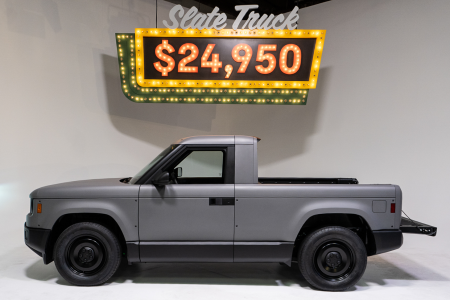
There is a market for lower trims...
1794445549856.png

...but no OEM will go this way until the $85,000 Pickup truck market dries up.
 
I actually agree with the demand-and-reward cycle. OEMs are not behaving irrationally. Customers have continued buying higher trims, and manufacturers and dealers have been rewarded with stronger margins.

Where I differ is on the time horizon.

I am not arguing that manufacturers should stop building $85,000 trucks or that affordable vehicles do not exist. I am arguing that a healthy brand needs a product ladder. Entry-level and premium vehicles can coexist.

The truck you posted illustrates the risk. If traditional brands and their dealers abandon the entry point, direct-to-consumer companies, independents, and private sellers will take that customer. That first transaction can eventually become service, a trade, and a higher-priced purchase. Once the dealership loses the entry-level customer, it may lose the lifetime relationship.

That is how low-end disruption has happened across many industries: incumbents follow the highest-margin customer upward and leave an opening below them. By the time demand for the expensive product slows, the new competitor already owns the value-oriented customer.

So yes, continue building what the market currently rewards—but do not remove the on-ramp. This is @joe.pistell my humble and honest view.
 

✨ AI Highlights

Dealers and industry observers discuss whether improving new-vehicle affordability is actually reaching showroom floors, with the central finding being that elevated interest rates are neutralizing sticker-price gains by keeping monthly payments unworkable. Data from 10,823 used listings across 196 rooftops shows a median ask of $28,295, meaning the traditional step-down to a cheaper used vehicle has largely disappeared for budget-constrained buyers. The practical takeaway is that dealers should track their own sold inventory by price bucket rather than relying on national averages, since the affordability gap varies by market and the real problem may be acquiring enough sub-$15,000 units to serve payment-sensitive customers.

Replies Views 9 2,891 Started Last Reply