









• Stop being a LURKER - join our dealer community and get involved. Sign up and start a conversation.

Vehicle Photography and Virtual Showrooms

I’ll offer a contrarian view here: Don't chase the studio look.

Beat ya. ;-)
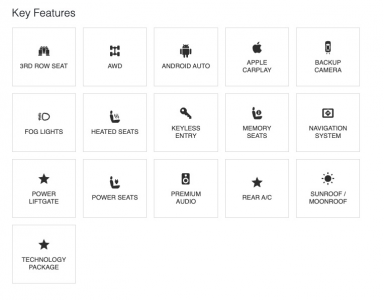
This is how car shoppers see photo booth photos.

1771938082917.png
 
"Haha, fair play @joe.pistell , I’ll happily concede the trophy on this one! Great minds.

That 3x3 grid perfectly sums it up. You nailed it with the 'creative retailing' point. When dealers commoditize their own inventory to look like a sterile Carvana knock-off, it strips all the emotion out of the buy.

The danger here isn't just that it's boring—it's what it does to the gross. When every piece of metal looks exactly the same across five different dealership websites, the customer's brain immediately defaults to sorting by 'Lowest Price.'

That’s exactly when the race to the bottom starts, and suddenly the desk is getting hammered with override requests from the sales team just to win a deal against the guy two miles away. The 'perfect' AI studio shot is actually bleeding their front-end gross.

Curious on your take: Do you think dealers are leaning so hard into these photo booths/AI tools because they're being sold on 'operational efficiency' and cost-cutting, or do they genuinely believe this sterile look is what modern buyers want?"
 
Curious on your take: Do you think dealers are leaning so hard into these photo booths/AI tools because they're being sold on 'operational efficiency' and cost-cutting, or do they genuinely believe this sterile look is what modern buyers want?"

Dealers are masters of getting sh*t done. They are the Sargent that leads their men to take that hill. They dont need or want a generals view of the battle field because their mission is so difficult to accomplish (they reset back to zero every 30 days).

They are franchise operators, they look to their peers to see what's working (or not). 1773678847420.png
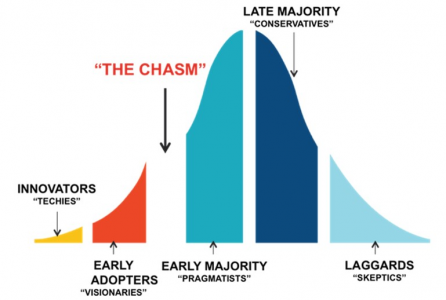
The 'crossing the chasm' chart (by G. Moore) is the perfect model to see the car dealer universe.

SUMMARY:
THe innovator and early adoptor dealers enjoy innovating while their competitors are up to their armpits in trying to take the hill. As time passes, the 'early majority' dealers see what the early adoptiors are doing anf copy them. Then the late majority jump in.

Photo booths are in the late majority stage.
The Innovators are hanging with the Dealer Refresh crazies to see and talk about what's coming next.
 
Last edited:
"Bringing Geoffrey Moore into an automotive debate... I love it. And you are absolutely spot on.

When you combine this chart with your point about the '30-day reset,' it perfectly explains why the auto industry is so slow to adopt new things. The 'Chasm' in the car business is exceptionally brutal. If a new tool or process takes 90 days to prove ROI, and it distracts the Sargents from taking the hill this month, the Early Majority (the Pragmatists) will kill it. It just dies in the chasm.

If the sterile photo booths are safely in Late Majority territory, that means they are officially a commodity. The competitive advantage of having them is gone; you just get penalized by the market if you don't.

Since the Innovators and Visionaries are already bored with the photo booths... Given your such a vast experience in this space, what do you think they are playing with right now that actually has a real chance of surviving the 30-day reset and crossing the chasm?"
 
Since the Innovators and Visionaries are already bored with the photo booths... Given your such a vast experience in this space, what do you think they are playing with right now that actually has a real chance of surviving the 30-day reset and crossing the chasm?"

1st, limit the focus to merchandising only. Sooo many ppl know what it is when they see it, few know how to identify it or define it.

Next, the innovators commit to experiments based on their understanding of the marketplace, they KNOW there is no data to support experimenting in new areas, they commit time and $$ to it because it's logical to them. Innovators intuitively understand Dr Clayton Christensen's "Jobs To Be Done" (JTBD) modeling. The 'see' shoppers trying to accomplish tasks that fuel confidence to make a decision.

ON THE OTHER SIDE OF THE CHASM... are the early majority, they're interested in new ideas but they need to see results (SHOW ME THE MONEY!!!). The chasm exists only if there is no proof of performance (i.e. no ROI).
 
"Dropping Clayton Christensen's 'Jobs To Be Done' into this is brilliant, Joe. It completely re-frames what an online vehicle listing actually is.

If we apply JTBD strictly to merchandising, the shopper's 'job' isn't to look at 40 perfectly sterile, background-replaced photos. Their job is to build enough factual and emotional confidence to justify a $40k transaction. The Innovators intuitively build experiences that solve that specific job.

But your point about the Early Majority needing 'SHOW ME THE MONEY!!!' exposes the exact trap door in the chasm. The Innovators are comfortable operating on intuition, but the Pragmatists demand hard attribution.

And that is where the tech stack usually fails. How do you definitively measure the ROI of 'buyer confidence'? Dealership analytics are historically terrible at this. We can easily track a lead form submission (a blunt metric), but it is incredibly difficult for most dealers to measure how a specific merchandising strategy impacted the final transaction speed or the retained margin.

If the chasm exists purely because there is a lack of ROI proof, doesn't that mean the next big breakthrough won't actually be a new merchandising tool, but rather the analytics/attribution infrastructure that can actually translate that 'buyer confidence' into hard dollars and cents for the Early Majority?"