• This thread is just the tip of the iceberg.The people ahead of the curve aren't Googling for answers — they're already in here, having the conversations you haven't found yet. DealerRefresh is free.Get the full picture →

Lifelike Humanoid Robots That Walk Around and Greet Customers 24/7 on Your Dealership Lot!

Dude, I simply can't get onboard with this. Most dealerships will have their sales staff answering and managing their chats. Thats bad news.
Why so? Our conversions on chat went up drastically when we started having our people handle the chats. Not to mention not looking nearly as foolish as the chat providers often make us look.

Lifelike Humanoid Robots That Walk Around and Greet Customers 24/7 on Your Dealership Lot!

May be an image of 1 person and indoor


BREAKING NEWS - Has anyone seen this on the news? Our dealer group recently partnered with an innovative company that offers lifelike humanoid robots that walk around and greet customers on our dealership lot 24/7 for only $500 /mo!

They sure try their best to help answer customers' questions, but ultimately we just want them to capture a customer's email and phone number so our salespeople can follow up with them after they've already left our lot. Now our salespeople get to focus on better things and not be bothered by helping active shoppers on our lot.
So, can we co-op it?

Third-party cookies are going away, but what does that mean for your dealership?

Quality over quantity…

If this shifts the lead addiction as a count of "how many" to "how engaged are my leads with me" I'm all for it! A drive toward quality creates a better experience for the customer and the employees working with them. It forces vendors to build better tools and may even alleviate some of the ailments of OEM mandated pushes (maybe that part is just wishful thinking).

The root of a lot of our industry's newest evil is coming from the desire to get more and more leads.

Third-party cookies are going away, but what does that mean for your dealership?

[xfbbcode postid="61924"]Written by Kevin LeSage

One of the many benefits of digital marketing is the ability to track and measure. Tracking has always allowed marketers to optimize the consumer experience and better understand behaviors to deliver more relevant messages. There are changes coming to how we track and measure online behavior, and you may have already heard about the “cookie-less future” and “updates to third-party cookies.”

If you’re not really sure what the cookie-less future means for you and your dealership, you’re not alone.​

I’m going to break down what a cookie is, exactly what’s changing and how, in many cases, these updates are going to help automotive dealerships across the U.S.

What are browser cookies?​

When you hear the term “cookie,” think tracking. Technically, cookies refer to files stored on a user’s computer designed to hold data. They are two types: first-party cookies and third-party cookies. First-party cookies are unique to a specific website, and user data can only be collected and activated on that one specific website.

Third-party cookies are added to your device by other parties in agreement with the website you’re visiting. Third-party cookies allow marketers to follow users around the internet to learn about their behaviors, and, in many cases, retarget them and build custom audiences. Think relevancy: As a marketer, the more I know about your behaviors online, the better and more relevant ad I can serve you.

What’s changing with third-party cookies and how will it affect dealership marketing?

As consumers have expressed increased concern over personal privacy and data, and as new regulatory laws have been passed, companies have had to adjust. Apple sparked the beginning of the end when it started blocking third-party ad tracking to protect its users. In January 2020 Google followed suit, announcing it will end support for third-party cookies in its Chrome browser within two years. The new changes to stop supporting third-party cookies are designed so the consumer wins.?

I’m excited for these changes for one main reason: Although audience size may decrease, audience quality will increase. Slapping third-party tags all around the web, to make a bunch of guesses about human behavior, is a poor way to build an audience. This practice creates a lot of marketing waste — in dollars, time and effectiveness. Of course, it’s never sold that way, but I have seen it many times over the years.

I’ve vetted many automotive data companies over the years. When I started peeling back layers and asking questions, I couldn’t believe the lack of credibility in the data. There was a lot of guesswork happening to build marketing audiences that were being resold. This system doesn’t help the car shopper or the marketer and can waste a lot of money — quickly.

Who wins in the cookie-less future?

Businesses need to lean into their first-party data now more than ever. By leveraging your own data and partnering with high-quality data partners, you can be successful.

Leverage your own data: The most important asset you have right now is your own data. For car dealers, first-party data is the personal records in your CRM. Real people coming off lease, or declining service in your service bays. You can build an audience from YOUR data!

With each day that passes, your data increases in value and will become your competitive advantage. It is for Cox Automotive, parent company of Autotrader. Regardless of privacy laws or the crumbling of third-party cookies, we touch 75% of all U.S. consumers shopping for a car.? We connect the dots between our online websites, measuring consumer behavior down to the hour. We’re doing that through our first-party data stitching, tracking device IDs and IP address, then mapping all that data down to the person and household.

Read more about how Cox Automotive is partnering with Amazon Web Services (AWS) to scale our digital personalization.

Find a high-quality data partner: Data providers with meaningful partnerships and integrated technology are the ones who win in the very near future. Look for data partnerships with companies who allow access to their walled garden and “share” first-party cookie information. Companies with large, impactful first-party audiences like Amazon, Apple, Google and Facebook can resell consumer behavior on their own platform; they’re referred to as “walled gardens.” Cox Automotive has one of the highest-quality walled gardens of data in the automotive industry. We track car shopping behavior down to the hour with the ability to identify “ready-to-buy” shoppers who are 15 times more likely to buy than the average person in-market. We’re also able to correctly predict which make the shopper purchases over 91% of the time.? That’s the power of building meaningful, quality audiences specific to the auto industry.

How car dealers can succeed in the cookie-less future

Your dealership’s marketing strategy is all about using smart data to build high-quality audiences. Build first-party audiences and activate on them across Facebook, Over the Top (OTT) platforms, bid modifiers with Google, YouTube, etc. Then, build a conquest audience. Find new market share not currently in your CRM. Get them in your CRM. Add them to your first-party audience strategy. Keep feeding the machine!

And as you’re building out your audience strategy, there are some important questions to ask your potential conquest/big data partner. If your potential partner can’t answer these questions with facts, stats and deep knowledge, it may be time to reassess what they can really do for you, especially in the ever-changing world of digital marketing.
  • How are you collecting or buying data?
  • How are you activating on an audience?
  • How are you identifying in-market car shoppers?
  • How often are you consumer insights updating?
The cookie-less future is coming. Is your dealership ready? Find out how Autotrader can help at b2b.autotrader.com[/xfbbcode]

Glut of Cars Incoming!

Sounds like GM plans to be shipping a lot more cars in Q3. The latest earnings call hinted at it. Guess they have the chip issue sorted.

When this thing comes around it could come around fast! Is your dealership ready to have more new cars than customers? And what if we are in an *official* recession at that point?

Glut of Cars Incoming!

My marketing director is hedging that Ford sees the control of lower inventory, the profit increase by not having to incentivize, and the demand they can generate through lower production. I then added, as long as everyone else doesn't try to increase their market-share, that may work LOL
Remember after 07 when all the OEM's learned this lesson? And then when the market started getting back to normal all of the brightest minds at the OEM's got together and said, "You know what we need? MOAR INVENTORY!!!" I think we will see the same thing on repeat here.

Glut of Cars Incoming!

Hey Alex - Great post.

For GM dealers (I'm one), if this year we only receive trucks and FFSUV(Tahoe, Yukon) we will be good to go!

The backlog and demand for these models will not be filled in 2021. Now if GM decides to flood us with Malibu and Trax... we have a problem.

The manufacturers will prioritize the vehicles that turn and are profitable (IMO).

If you're suggesting they run out of ideas and crank out vehicles that do not require chips..... Even if those models are slow movers, then god help us all.

How Auto Dealerships Can Navigate the Chip Shortage, Tight Vehicle Inventory

[xfbbcode postid="61526"]Author: Jade Terreberry

Let the chips fall where they may. As supply chain disruptions due to the COVID-19 pandemic have resulted in a global chip shortage, carmakers and the automotive industry have been hit especially hard.

But if the last year has taught us anything, it’s that our industry can move quickly to adapt, adjust and meet the needs of our customers.

The chip shortage and supply chain constraints are out of our control. How you respond to them isn’t.

So now we have a vehicle supply and consumer demand equation to solve, with supply chain constraints as our variable. It’s time to get focused, adjust our approach and drive forward.
Here are seven key areas to consider as you start formulating your plan for success and growth through the chip shortage and imminent inventory challenges of the coming quarters. We’ll be diving deep into each of these in the coming weeks to help you navigate through this disruption, but here’s what to start thinking about:

1. Streamline your vehicle inventory acquisition to strategic sales model​

The decisions you make now for your inventory strategy will determine where you land in that widening profitability and market share gap in the coming quarters. Focus on sell your car, Instant Cash Offer and private seller leads and acquisition opportunities. Instant Cash Offers continue to be a viable source for acquiring used inventory, with offers up 23% from February to March 2021.? Work your service drive, CRM, sphere of influence and lease-term avenues. If you don’t have a specific plan around each of those items, one of your competitors does.

2. Re-imagine your Certified Pre-Owned segment​

People aren’t going to stop buying cars because there are fewer new cars available during the chip shortage. Train your sales team on creative conversations about the value of used inventory and re-think your selection criteria for certifying an eligible pre-owned unit. Over half of the eligible used vehicles for certification never get CPO status, but as the new car shortage continues, expanding this business segment may give you yet another competitive advantage.
And remember why CPO is so valuable to you and to your profits: keep that new car shopper loyal, on-brand and in-market while creating back-end extended service contracts, add-on protection products and warranty wraps. In 2020, brand was the most important factor in a new car purchase decision, so keeping customers brand loyal will continue to be important to long-term customer retention. ? Most people buy new not just for that new car smell but for the peace of mind. Give your consumers that same peace of mind on the cars you have available. Our data shows that cross-shopping of new and certified inventory is increasing rapidly, with the expectation that this trend will continue to grow.

3. Lean into fixed operations now​

If you have a service department, read this one over again. For most dealerships with service bays, fixed ops makes up about half of your overall profit, yet only about one-tenth of your marketing investment and probably less than one-tenth of your focus for growth. ?

We are just now starting to see the pandemic’s impact on consumer demand for service, and as consumers take to the roads again, their regular maintenance routines are resuming, they are acting on open recalls and are making purchases from locations farther from home. They’re also doing more online — with more than 5 million consumer visits to the KBB.com Service & Repair experience in 2021 so far? — which means your total addressable market is bigger than ever. But much like digital retailing 5-10 years ago, service and repair scheduling, fair and transparent repair pricing and researching are a “nice to have” competitive differentiator right now. Without these tools, though, you’ll soon be left behind.
This is your growth opportunity and it’s the perfect time for you to take advantage and grow this very stable, long-term revenue stream of your business. Open an extra shift, add a few techs, start a few hours earlier, stay open a couple of hours later, gain market share now and retain that profitability for the future. The handful of consumers who don’t buy now because of a new car shortage or higher prices will be more conscious of maintaining their current vehicle. And if they aren’t servicing with you, they are using your competitor. Remember that it’s not about the single oil change, it’s about the lifetime value potential of every customer you gain — whether they’re walking through your door or you’re going to their doorstep for service pick-up and drop-off.

4. Extend slow-moving inventory beyond your backyard​

And just because you are making money now on fast-selling and high-priced vehicles doesn’t mean you should relax on growing, aged inventory. Extend that slow-moving inventory beyond your own backyard to a market where the supply is low, demand is high and there’s more opportunity than in your local market. We have data that can easily tell you where to place that inventory for fastest turn and best profitability. Take it one step further; instead of waiting until the vehicle is “aged,” buy or trade for every vehicle with the extended market plan in mind. Every dealership is on an even playing field if they embrace these ship-to-home and ship-to-store concepts to meet consumers’ expectations.

5. Be efficient with time and money​

Industry-wide, we are seeing higher lead closing ratios, higher gross profits and more total sales on a month-over-month basis, which means demand is up. Used car inventory is down 11% month-over-month and new inventory is down 17% month-over-month from February to March 2021, according to Autotrader site data.? This situation makes it easy to accidentally create a scenario where your customer acquisition cost is an unnecessary black hole. Know what’s working for you and be ready to invest there. And know that you may not need every provider in the space now. Getting the right connection with the right consumer on the right car at the right time is imperative. Be there where and when they want to connect. You don’t have to be everywhere, just at the right place at the right time.

6. Consider quality over quantity​

In every part of your business, quality matters, and you must know your numbers. In a technology- and data-driven world, not every opportunity is the same. Walk-ins and VDPs aren’t all the same, not all personalization is created equal, lead quality has a broad spectrum and the competitive landscape is vast. Be sure to dig into any available data to determine which strategies and tools are working for you in today’s changing market. You may find some surprises.
Get yourself out of any linear, singular approach to value and quality measurement. The “cost per this” and “cost per that” strategies are viable, but only if you are considering them as part of a larger cost-to-value equation. The world of consumer, device, activity and engagement tracking is so far beyond our old ways of thinking. We must start using those advancements to make decisions within our dealerships, especially with the increased consumer demand driven by factors like tax season, stimulus checks and loosening pandemic restraints.

7. Be nimble and aware of the volatile inventory supply-and-demand equation​

Consumers don’t stop needing or wanting cars when there is a chip shortage. The life events that drive vehicle purchases don’t stop because OEMs have new production constraints; new jobs, new babies, car accidents and sweet 16 birthdays all still bring new car buyers into the marketplace. Keep a very close eye on your inventory buckets in all segments by price, type and, mostly importantly, days on lot. Keeping your finger on the pulse of which segments need creative exit strategies and which segments need aggressive acquisition strategies will keep you healthy and profitable. An imbalance of supply and demand is where you’ll find market share opportunities that will accelerate and widen the gap between you and your competition when the market starts to normalize.

Disruptions like this chip shortage are catalysts for change

We know that change is the only constant and challenges drive innovation. And with any challenge comes opportunity. Do you take on the challenge to innovate, differentiate, gain market share, get smarter and become more efficient?
Today, supply chain challenges present opportunities to rethink how you’re doing business. Tomorrow, these opportunities could be your differentiator and competitive advantage.
Stay tuned for more in our series of how to plan for success during the ongoing chip shortage and inventory crunch.

Subscribe to our Dealer Advantage Blog HERE for more content and articles straight to your inbox.[/xfbbcode]

What is your dealership's plan for increasing service revenue in Q2?

[xfbbcode postid="61320"]

Tips for Increasing Dealership Service Revenue this Quarter​


The majority of my client conversations revolve around front-end sales and generating high-quality audiences of in-market shoppers to target. But what about service and repair audiences? Service and repair is the biggest revenue driver at the dealership and a revenue source you can count on. So, let’s use all our best tools and strategies to target the ideal car owners and get them into your service department.

We all know that a good fixed-ops strategy is like a river that feeds the lake. It will lead to more front-end sales, as well. Below, I will share strategies on how to merchandise your fixed operations across key digital channels and share key steps to creating your own custom audiences to attract service and repair shoppers.

Let’s talk messaging.​

In a time of lots of uncertainty, one thing we can do for consumers is answer their questions upfront. Are you open? Is there a specific process they need to follow before visiting your service department? These are key questions on consumers’ minds during this pandemic, so let’s make it easy to find those answers across every channel. For example,
  • Make sure you’ve updated your Google My Business page for service. Just last week, I checked two different stores’ hours on my phone, then drove up to see that the hours on the door didn’t match. Let’s not lose business this way!
  • If you’re running any SEM, add a callout extension that says, “We’re open for service and doing XYZ to keep you safe.”
  • Prominently include these details on social channels, your website, and in every service department marketing campaign.

What makes your service department stand out from the competition?​

This is a time to mention your processes, your competitive advantage. Some dealers are doing drop-off service and repair to customers’ homes or offices. “If you can’t come to us, we’ll come to you.” (If you’re looking for tips on making the most of service pick-up and drop-off, check out our earlier post - Tips for using valet service and repair to drive fixed ops revenue.

If I’m scanning Facebook and see a convenience that makes my life easier, I’m clicking. Whatever makes your dealership service department stand out, now’s the time to share that message with your local consumers. You’ve built an audience of local consumers on your social pages, so let them know what your service department has to offer!

Let’s identify the best targets for your service campaigns.​

Ideally, when you’re ready to start a service campaign, you’ll create an audience of people that are ready for service and repair, the same way you would for the consumers who are most likely to be interested in your inventory. Autotrader dealers can use nVision reporting to help them do just that.

Across Cox Automotive, we have our proprietary first-party tag living across our websites. This allows us to track shopper activity on websites like Xtime, a service scheduler, as well as across our other brands measuring leads, website activity, credit apps, etc. This gives Cox a 360 view of the consumer, and through the Audience Explorer report in nVision offers you a view of that data in your market.

Audience-Explorer-nVision-data-points.png


With Audience Explorer, you can identify the zip codes that are ripe for service and sales. This data is live in our reporting tool, nVision. If you haven’t seen this, I highly recommend that you take a couple of steps:
  • Watch my on-demand session “Personalization Is Not Created Equal” at the Cox Automotive Experience, January 28 to February 5.
  • Then, if you’re an Autotrader client, reach out to your account rep and asking for a walk-through of Audience Explorer to see your data. There are lots of ways we can help you apply this data to create a more efficient fixed operations strategy for your dealership!
  • If you’re not an Autotrader client, you can request a demo of nVision (and Audience Explorer) at b2b.autotrader.com.

How about adding a new advertising strategy into the mix?​

You’re connecting with car shoppers as they shop and research their next purchase on sites like Autotrader and KBB.com, but are you reaching potential service customers as they’re researching the repairs they need?

The Service & Repair Guide on KBB.com advises vehicle owners on repair pricing, recalls, and other service-related information, with an average of 1.7 million service-ready consumer visits and 300,000 VIN or license plate checks per month.* As a Featured Auto Repair Center, your dealership could stand out as the go-to dealership for car owners in your area and capture more new service customers. Let your local Dealer Success Consultant know if you’d like to learn more.

Let’s fill those service bays!

Regardless of the challenges that are ahead of us this year, people will still need to have their transportation serviced. Challenges create opportunity. Just like with your sales campaigns, the success of service advertising is all about getting a concise, convincing message to the right people. Let us know if we can help. Best of luck and stay safe!
Learn more at b2b.autotrader.com

*KBB‌.‌com Adobe Analytics Data, average June – November 2020[/xfbbcode]

-----------------------------------------------------------

5 Unique Ways to Use Text At Your Dealership

[xfbbcode postid="61130"]Text is still wholly underutilized in the automotive industry as a way to connect with your prospects and customers and have meaningful conversations. Today I wanted to point out a few unique ways to leverage texting from acquisition to advocacy, especially as we continue to live in the “contact-free” world.

Screen-Shot-2021-03-18-at-12.48.51-PM-1.png

Automotive Texting with QR Codes​

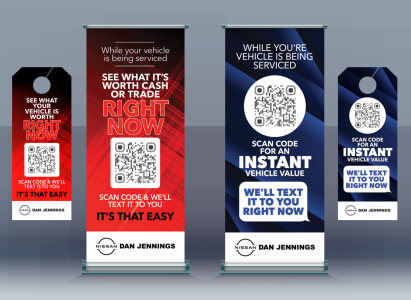
Showroom “Check-in” – You can add a QR code at reception and have all incoming guests “Check-in,” which then opts them into future text correspondence from the dealership. You should also add one at the finance office and an additional one on the service drive as these places are all high contact points for individuals to opt-in to different available text programs.

At 360Converge, we took it another step and made it easy to add people to any list and capture missing data fields through a series of questions to complete any customer profile in the database. This is by far the most straightforward program to implement and manage for your dealership. Plus, it helps to ensure every guest’s conversation continues long after their initial visit.

SMS-Keyword-Example-ProTexting.jpeg
Leverage keywords to drive conversations​

SMS Keywords- Another way to grow your connectivity with opportunities and existing customers is to let your customers subscribe to dealership lists using a simple SMS “keyword.” An example would be to text “Drive” to 844-360-0510. This will subscribe you to a specific single opt-in marketing list at 360Converge.

You could have keywords for many different programs at the dealership giving your existing customers personalization at scale and ensuring you stay in contact with every customer throughout their lifecycle.

timely-follow-ups-hero-3-600x343.jpeg

Text Follow Up Works​
Post Sale Follow Up– Another often overlooked but huge potential profit center for your dealership is following up with your customers after the sale with text automation. This powerful revenue area is perfect to leverage texting to create meaningful conversations after the initial sale. You can target customers to increase the number of Google reviews or focus on customers who didn’t buy extended warranties.

The possibilities are endless on building workflows that continuously impact your dealership’s bottom line through texting automation. One important one would be to schedule the first service appointment through an easy workflow that engages the customer through a text conversation instead of relying on email or your staff making endless calls.

loyalty-programs-02-min.jpeg
Drive more loyalty with dealership texting​

Loyalty program- This is a missed opportunity in many service departments but a staple amongst the independent service marketplace. Using text, dealerships can create and administer a loyalty program for their best customers or an oil change club, or any program the dealership would like to make. This is an easy way to build loyalty at the dealership and pack the dealership’s service drive every morning.

J.D.-Power-shutterstock_1419609941.jpg
Texting drive lease retention​

Lease Retention- Lease renewal systems have been around for several years now, but most require a tremendous amount of human capital to administrate correctly through sending emails and making calls. This could be automated with text and deliver a more significant impact by communicating through the entire lease cycle with text touch base messages, questions, and additional information instead of just a rush at the end of the vehicle lease.

Individuals love to text and the control it offers them. Smart dealerships will use this communication channel to drive better relationships during the entire lifecycle, not just use it for sales and service appointments but to ingrain it into the whole dealership’s communication workflow to drive retention.

If you aren’t leveraging text you are missing the opportunity to build a lasting relationship using meaningful messaging that will continue to grow your bottom line every single month.[/xfbbcode]

---------------------------------------------------------

Moving Your Automotive Dealership to the Flywheel

This is one of my all time favorite posts on Dealer Refresh. It never got the attention that I thought it would get.

With the shift in the market, this might be a good time for some of us to revisit this one.

I encourage everyone to not just scan this, but stop and think about it. Consider how this fits into our specific business models.

We have unquestionably been in a Funnel based industry for the past couple years. This is changing fast.

Do Customers Really Want Electric Vehicles?

They want electric vehicles. However, a lot of customers don't know that they want an electric vehicle. For example, the Mercedes GLB-Class is a popular model because it's reasonably priced and looks the part. A lot of GLB shoppers don't even know an electric EQB exists! When they find out that they could get an electric version and possibly some free charging credits, then it's an easy switch to that model. It's the same vehicle so there's a good chance they'll go with the one that's slightly easier to maintain.

Why are so many aging on Mercedes dealers' lots? @Jeff Kershner - how are the EVs moving at your store? How do the older buyers feel about them?

Do Customers Really Want Electric Vehicles?

I'm an electric vehicle lover and study Marketing in the UK. I have been paying attention to electric cars for a long time since I first saw a Tesla Model X on the road in China in 2017. It was a really amazing car that I cannot move my eyes from it. However, when I came to the UK for my master degree, I found the electric cars are not very popular. So I'm curious about the reasons why people will choose electric cars especially the high-end/ luxury electric vehicles from top brands like Tesla, Jaguar and BMW etc. For me, I like the performance and high tech provided by the electric vehicles.

By the way, l have to say all responses are anonymous and individual respondents will not be identified by name in the final report. You are also advised that you may withdraw at anytime. The project has been subject to ethical review in accordance with the procedures specified by the University of Reading Research Ethics Committee and has been given a favourable ethical opinion for conduct.
Can you share it with us?

Do Customers Really Want Electric Vehicles?

Here's the thing, if they can get the infrastructure right (many would say this is still a big if) I believe that there is a portion of the "undecided" that will get into an electric vehicle and drive it and will never want an ICE vehicle again. There is, of course, the "over my dead body" crowd, but, as always, you have to decide whether there are enough people in that crowd to matter. IF you can get the infrastructure right, if that number is only 20% it might make sense to continue to move forward. As I always tell my people, don't tailor what you do to the 20%. Do what works for the 80%. Where I struggle is the economic/resources/environment side of things. I hate that, as with most controversial things, it is about impossible to decipher what is real and what is propaganda. That being from both sides.

Do Customers Really Want Electric Vehicles?

Customers do not want EVs.

I really beg to differ. I want an EV, but I don't want a current generation EV. Right now, the battery technology requires the battery temperature to operate within a required range. And the electrolyte is flammable. Next generation batteries won't have this problem and the energy density will be better. Plus the charging infrastructure sucks right now.

I think we'll be in this weird transitory period for a while. But I think the writing is on the wall. The gains from technology in electric outpace combustion.

I think it's a mistake to think automakers slowing EV investments is a signal they're looking to abandon the technology. It's just that it's taking longer than anticipated. Overall I think it's a multi-generation technology ramp and the world is going to require a lot more energy than available today.

No one is buying an F-150 Lightening and accepting of the 75 mile range when towing their boat or a camper. That's ridiculous.

Yea 100%. But the Lightning is an awesome product for those it's designed for. Contractors, fleet vehicles, etc. They said up front if you're looking for a highway vehicle this isn't for you. If I had a construction company I'd have one.

EV's aren't for everyone. It's early technology. Remember plasma TVs? Twenty years goes by and you can buy a 85" 4K TV that weighs under 50 lbs for under $1,000. Just have to be patient...

Filter

🔥 This Week 5 threads · 33 posts
Marketing & SEO
Seeking manager feedback: Are dedicated digital storefronts for sales reps a benefit or a distraction?
A vendor developing a personal branding and digital storefront platform for automotive sales reps...
Do you swear at your AI?
Dealers and vendors admit to swearing at and berating their AI tools — Claude and GPT especially ...
Best AI in the dealership, what’s useful / something wish you had?
Dealers and vendors debate where AI genuinely delivers value in the dealership versus where it's ...
Community
OTOLANE Auction Staff are INCOMPETENT
A dealer created an account specifically to complain that Otolane's arbitration team denied compe...
General
Digital Dealer - Is it Back?
Dealers and vendors debate whether Digital Dealer 2026 in Detroit is worth attending, with genera...
Get this delivered every week