



- May 1, 2009
- 102
- 120
- Awards
- 4
- First Name
- Greg
actually, it doesn't matter how you display it - Google renders pages when they're crawled, it's super easy to determine if it's legitimately a privacy/age popup or a marketing one...


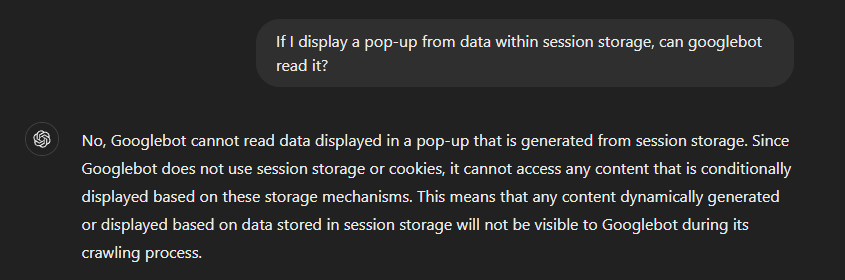
you really shouldn't trust chatGPT on stuff like this...
you can't execute site code with a cookie... or session storage. they are data saving elements, not rendering/execution elements...
you can set in session storage that a popup has already been executed and closed, so it won't display again - but that's just storing a temporary value in session storage, not the actual code of the popup.
$(document).ready(function() {
sessionStorage.setItem('data', 'dataArr');
});
$(document).ready(function() {
let dataForPopup = sessionStorage.getItem('data')
if (dataForPopup) {
// open popup Googlebot cannot store session storage so this isn't performed.
}
});
cracks me up how you think ChatGPT is smarter than Google...
ok man - I don't have the energy to continue to argue about this. WRS is Google's Web Rendering Service, and the text you literally cut-and-pasted into the thread says Google doesn't store local/session data across page loads... which means that if a popup is fired, and then the site is crawled/rendered again later, none of the local/session data is stored, so the page loads "fresh" - so I'm struggling to see how that supports your point?
The fact is this: you cannot launch code from a cookie. You cannot launch code from session storage that wasn't on the page when it loaded.
Google renders code - so it sees the code
Plus - no matter how much dealers love popups, customers hate them too. so there's zero reason to use them.
$(document).ready(function() {
let dataForPopup = sessionStorage.getItem('data');
if (dataForPopup) {
// open popup Googlebot cannot store session storage so this isn't performed.
}
sessionStorage.setItem('data', 'dataArr');
});
Automotive dealers debate whether website popups are inherently problematic or whether poor execution is the real issue, with the original article arguing that bad design, excessive form fields, and irrelevance—not popups themselves—are the problem. Multiple participants emphasize that Google penalizes intrusive popups covering page content, making the SEO cost potentially outweigh conversion benefits, while others advocate for intelligent, highly-targeted popups that match user intent. The consensus emerges that relevance and timing are critical; mandatory popups (age gates, privacy notices) are exempt from Google penalties, but marketing popups require careful consideration of both user experience and search ranking impact.