









• This thread is just the tip of the iceberg.The people ahead of the curve aren't Googling for answers — they're already in here, having the conversations you haven't found yet. DealerRefresh is free.Get the full picture →

Can too many Vehicle Photos be a bad thing?

Ed,

Just because you use a feed instead of a scraping technique your site doesn't become validated.

I don't want to discuss Vast's business model, it is not my place to discuss so I'm generally stating the following:

Using dealer's data without a direct agreement for each site should be illegal. The data is used to generate leads via long tail indexing or networks outside the dealer's reach to generate leads than are sold to companies that in turn sell them back to the dealers.

On one hand you can take this as a positive; Vast has a private network with a defined audience, they generate leads with the dealer's inventory, the dealer has the opportunity to buy those.

On the other hand you can take it as a negative; Vast is getting leads out of the market that otherwise would have found me via my advertising and I would have gotten that customer.

Are these networks thinning down my ability to be relevant?

I don't know the answer to that but at least I advocate that the dealer should be the one making the choice.
I agree with you Yago - the dealer should be the one making the choice. Many, dare I say most, dealers choose the wide exposure that comes from these marketplaces, but there is some possible trade-off in terms of control. So I could re-frame the question and ask, do you want limited exposure with complete control or do you want much broader exposure and (possibly) a little less control? That is question every dealer must ask him/herself.

I don't speak for Vast and I don't pretend to, but from my understanding most reputable inventory syndication services will ask if you want your inventory syndicated across these networks and dealers have knowingly opted in - in order to gain the no cost exposure. Signing up individually for hundreds of sites would be silly and time consuming. But again dealers make a choice and they can always opt out if they change their mind.
 
I agree with you Yago - the dealer should be the one making the choice. Many, dare I say most, dealers choose the wide exposure that comes from these marketplaces, but there is some possible trade-off in terms of control. So I could re-frame the question and ask, do you want limited exposure with complete control or do you want much broader exposure and (possibly) a little less control? That is question every dealer must ask him/herself.

I don't speak for Vast and I don't pretend to, but from my understanding most reputable inventory syndication services will ask if you want your inventory syndicated across these networks and dealers have knowingly opted in - in order to gain the no cost exposure. Signing up individually for hundreds of sites would be silly and time consuming. But again dealers make a choice and they can always opt out if they change their mind.

Ed,

Great point;

Wide exposure VS Control

I do think that the market has been refined to the point of offering negligent exposure and the control is 100% away. The digital 3rd party sites were dominated by just very few websites on the top taking all the budget, dealers refused to pay Yahoo $299-399/month 5-6 years ago when they had they Yahoo Autos program leaving no choice but to look for alternative business models.
 
Am I an idiot but doesn't this imply that having 0 pictures is better than having 20 or 30 images???

I'm doing some research of photos and these stats made me go "huh??? I must be missing something"

So I asked Claude and that future overlord confirmed that is logically true based on the data.

What am I missing?

According to the report, used vehicles posted for sale with nine images generated:
  • 50 percent more leads than those without any images.
  • 56 percent more leads than those with 20 images.
  • 71 percent more than those with 30 images.
The more images after that, the more lead volume drops off and “image fatigue” sets in, said Chad Bockius, CarStory chief marketing officer.

** this analysis is based on marketplace (vehicle listing websites) activity, not dealer sites.
 
What am I missing?
Holy Old Thread Batman, but a personal blast from the past as I joined the team at CarStory shortly after this data was released. I'm teasing you here, but what you're missing is the context from 11 years ago. ;)

We got lightly skewered over this back then for the same reason you are questioning it today, our initial assessment was wrong, this didn't have anything to do with "image fatigue," it had to do with suboptimal consumer journey. It makes a lot more sense in that light.

Am I an idiot but doesn't this imply that having 0 pictures is better than having 20 or 30 images???

Close, but no. The study actually showed that having the right 9 pictures in an optimal order generated far better results than any number greater than 9 that lacked quality and were in an order that didn't resonate with consumers.

Example: Consumers spent a lot of time on the vent to vent interior shot, second only to the hero. Psychologically this makes a lot of sense. I care what it looks like to my neighbors in my driveway and then I care about what it looks like to me as the driver.... but this image was almost never second in the stack because of the way photographers at the time shot the inventory. They took all exteriors before moving inside so that image was buried behind four identical wheel shots, a trunk, a sexy plastic cover over a motor... you get the idea. Consumers defected BEFORE they saw what might have hooked them.

Fast forward 11 years to today and check this out...

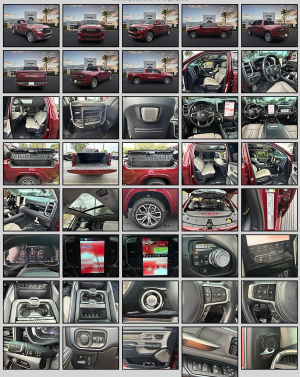
I screenshotted this off of a random vdp a minute ago. Images look great, but I think we still have room to learn from the study you shared that is over a decade old at this point. Image order matters to the consumer shopping experience.

Think mobile...

The "vent to vent" is still really deep in the stack for this dealer. That is 15 swipes. 9 swipes to see the color of the interior.. 22 to the panoramic sunroof that is a $1600 option... I've got a shot under the hood 10 swipes before a visual of the adaptive cruise (when was the last time you opened your hood? wait a minute... this the Hurricane with no oil dipstick. we need a close up of the windshield washer fluid reservoir for this to make sense.)

Again, thanks for bouncing this historical artifact to the top of the stack. I think it's a great reminder that as the technology advances and improves we always need to be mindful of the consumer journey.

1790611136328.png
 
Holy Old Thread Batman, but a personal blast from the past as I joined the team at CarStory shortly after this data was released. I'm teasing you here, but what you're missing is the context from 11 years ago. ;)

We got lightly skewered over this back then for the same reason you are questioning it today, our initial assessment was wrong, this didn't have anything to do with "image fatigue," it had to do with suboptimal consumer journey. It makes a lot more sense in that light.


Close, but no. The study actually showed that having the right 9 pictures in an optimal order generated far better results than any number greater than 9 that lacked quality and were in an order that didn't resonate with consumers.

Example: Consumers spent a lot of time on the vent to vent interior shot, second only to the hero. Psychologically this makes a lot of sense. I care what it looks like to my neighbors in my driveway and then I care about what it looks like to me as the driver.... but this image was almost never second in the stack because of the way photographers at the time shot the inventory. They took all exteriors before moving inside so that image was buried behind four identical wheel shots, a trunk, a sexy plastic cover over a motor... you get the idea. Consumers defected BEFORE they saw what might have hooked them.

Fast forward 11 years to today and check this out...

I screenshotted this off of a random vdp a minute ago. Images look great, but I think we still have room to learn from the study you shared that is over a decade old at this point. Image order matters to the consumer shopping experience.

Think mobile...

The "vent to vent" is still really deep in the stack for this dealer. That is 15 swipes. 9 swipes to see the color of the interior.. 22 to the panoramic sunroof that is a $1600 option... I've got a shot under the hood 10 swipes before a visual of the adaptive cruise (when was the last time you opened your hood? wait a minute... this the Hurricane with no oil dipstick. we need a close up of the windshield washer fluid reservoir for this to make sense.)

Again, thanks for bouncing this historical artifact to the top of the stack. I think it's a great reminder that as the technology advances and improves we always need to be mindful of the consumer journey.

View attachment 11650

That's so interesting.

What if attention spans are shrinking so fast that people are missing out on their perfect car because they aren't willing to go through all the photos???

For example, they would've bought this one but since adaptive cruise was buried, they never saw it, so they hit the exit and went to another car or dealer site.
 
That's so interesting.

What if attention spans are shrinking so fast that people are missing out on their perfect car because they aren't willing to go through all the photos???

For example, they would've bought this one but since adaptive cruise was buried, they never saw it, so they hit the exit and went to another car or dealer site.
That is what we suspected was happening when we ran the study 11 years ago. Totally anecdotal reference, but raising 4 teenagers over that period of time tells me that attention spans didn't get longer. ;)

"Give the customer what they want" has become "Anticipate what the customer wants and give it to them BEFORE they ask for it."
 
  • Like
Reactions: Mike Robbins
Ryan's point gets sharper on Facebook Marketplace, because there the order decides what makes it onto the listing at all.

A vehicle listing on Marketplace holds 20 photos. A posting tool that takes the dealer's feed as is keeps the first 20, in the order the feed lists them, and that's often the order the photographer walked around the car. So on a gallery like the one Ryan screenshotted, the $1,600 sunroof at 22 never reaches Marketplace, and the vent to vent at 15 makes it in behind a lot of wheels.

We got a version of this wrong ourselves. We used to trim big galleries down to 20 evenly spaced shots when we pulled them, and on one 51 photo listing that left 3 full exterior shots. Now we pull the whole gallery and cut to 20 at the very end.

Ryan, "anticipate it before they ask" is the right frame for Marketplace too. The buyer sees one photo while scrolling, and it has to earn the tap before the order matters at all. After the tap, my guess is the first handful does most of the work, which is your nine again.

Worth ten minutes this week: pull five used units with 30 or more photos on your own site. Note where the first interior shot lands and where the one option you'd charge for lands. Then open the same five on Marketplace and check whether they made the cut.
 

✨ AI Highlights

A 2015 CarStory study claiming that nine vehicle photos generate more leads than twenty or thirty reignited debate when a user recently questioned whether the data implied zero photos outperform larger galleries. A former CarStory team member clarified that the original 'image fatigue' framing was misleading — the real issue was photo quality and sequencing, not quantity, with key features like sunroofs often buried too deep for shoppers with shrinking attention spans to reach. The thread closes with a practical warning about Facebook Marketplace's 20-photo cap, where feed order determines which images make the cut and can inadvertently hide a vehicle's best selling points.

Replies Views 46 21,999 Started Last Reply