
• This thread is just the tip of the iceberg.The people ahead of the curve aren't Googling for answers — they're already in here, having the conversations you haven't found yet. DealerRefresh is free.Get the full picture →

Mobile Websites vs. Mobile Apps. Which One For The Dealer?

G

Guest Poster

Guest
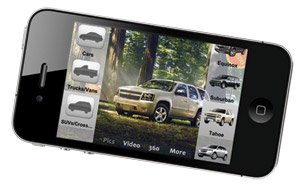
mobile_app_car_dealership.jpg

Dealership Mobile websites vs. Apps.

You can read countless articles on this topic. It’s a subject as polarizing as a sports boarder battle. There are plenty of examples of companies using mobile websites or apps exclusively, while others opt for both options. Which mobile strategy is the best route for the dealer? Mobile websites? Apps? Both?

First, let’s look at some current market data:

Do users prefer apps or mobile sites?

Percentages in available studies conflict, but the results show that some users prefer apps while others want a mobile website experience. A recent Adobe article points to 66% of mobile users preferring to surf via mobile browser rather than mobile apps: http://rww.to/cMFLGv. In contrast data published by Zoken last month points to app usage growing as compared to the mobile web: http://rww.to/arRJLk In summary, some users opt for a mobile web experience when consuming information while others prefer an app experience. While it’s hard to nail down percentages, the takeaway is that there is a strong demand in both categories.

Do more mobile websites or apps exist?

TapTu’s fourth quarter report of the mobile web shows over 440k mobile sites now exist: http:// bit.ly/aF3Yxk. “Mobile site” in this context is defined as a touch friendly site, optimized for today’s touch screen mobile devices. The total number of apps for all mobile platforms exceeds 500k: http://bit.ly/a5e33S. iPhone’s iOS claims over 250k apps, followed by Android recently cresting the 100k mark: http://bit.ly/dfWXMG. With more and more companies opting to create both a mobile website and a native app, look for these stats to increase in the near future.

Time spent within mobile sites vs. apps

While the browser on a mobile device used to account for 70-80% of total internet usage, apps have reduced that number in recent years to just over 50%: http://bit.ly/d4FsVi. In fact, studies are only able to track total browser usage, not just mobile website usage. As such, we are unable see a direct comparison. One stat has increased - time spent within apps. Think of this stat as the website equivalent “time on site” metric. This “stickiness” is aided by the fact that native apps are installed on devices, not just browsed. Having an icon installed on the user’s home page is a clear advantage and is a key reason mobile apps hold an upper hand in this area.

Pros and Cons. Where apps shine and mobile sites excel.

Mobile Websites: As mobile sites have evolved over the years they have become excellent sources for quick information. Hours, directions, inventory, etc loads quickly and is easy to navigate on any mobile device. Mobile sites are cross platform compatible, allowing users on just about any touch screen mobile device to access information.

Pros:

  • Quick, easy access to information on the go
  • Cross platform compatible, no download needed

Mobile Apps: Apps have always been about experience first, information second. Typical app users expect a certain level of interaction and, in many cases, some level of entertainment value. Additionally, app users tend to spend significantly more time within an app vs a mobile site visit. Apps are installed on a device, creating a potential longer-term opt-in relationship channel.

Pros:

  • Interactive experience, unique user interface
  • Extended time-on-site metrics/user
  • App install = long-term relationship potential

The Combo. Mobile Sites within Apps.

Some of the most successful apps feature an interactive front end with drill-down access to additional information. Nike ID’s app draws the user in with an immersive app experience, then capitalizes on opportunity by offering the user the option to purchase. The Hyperlite app allows the user to browse wakeboards, bindings, and accessories in typical app fashion while utilizing Hyperlite’s existing mobile site to provide product details and purchase options. Some of the best app experiences engage, immerse, and then push the user to a call to action mechanism.

Pros:

  • Interactive app experience teamed with drill down access to additional specifics or information.

What about the dealer?

In summary, the industry battle of apps vs. the mobile web is far from over. Which option will dealers see the most success from? Dealers are reporting a rapid increase in mobile device traffic to their websites. In response, both apps and mobile websites are being created to capture visitors. I believe we’ll have a much clearer idea of dealer ROI in this arena within the next 9-12 months.

How are you implementing an app or mobile site with your dealership?

What specific results are you experiencing?

What’s your opinion on the future of mobile web and apps in the dealer market?


With my personal experience, and I feel most others, I will download an app for a site that I tend to visit often (eBay, Amazon, Facebook, etc). For sites that I rarely visit, I will use my mobile browser. With that thought in mind, my gut feeling is that most dealers should focus on mobile sites over apps as our consumers do not visit an automotive site unless they are looking to buy (every few years) or need to schedule service. It seems like the apps I have seen out there are mostly downloaded by the folks that work at the dealership, and not by the shoppers we want to engage.
 
You can make a mobile site and it works on every phone there is... Or you can try and create mobile apps for iPhone, Android, Blackberry, Windows Mobile 7, etc, etc.... can you afford to make them for every platform and keep up with the changes?

Mobile apps allow you to access the camera and maybe send them push notifications. Otherwise there isn't much of an advantage.

You also can't measure page views/usage very well on mobile apps.

Ask people to bookmark your mobile site and it will create an icon in their menu just like a mobile app does.
 
We actually have both a mobile site and apps for iPhone and Android right now. We do a couple of updates a month on the app and get some traffic with it. We also are seeing more and more people scheduling service appointments through both the app and the mobile version of our website.

The app does tie into our mobile site so it is working great for us. I am seeing increased traffic on our mobile site month after month and shows that more and more people are surfing on their phones.
 
We have an App and a mobile site. Since we launched the App we have seen our mobile visits increase 110%. Mobil sites are pretty bland. Our strategy is to market the App heavily on our site, with email, and print advertising, entertain them with the app, give them informaton and videos with the app, then drive them to our site. The younger generation seems to like texting more than talking on phones, they also surf considerably more than previously with their phones. We want to cover all bases. When they are in the market we want to be ready.
 
It's good to see that there are some guys out there who track well enough to see the value in their apps and mobile sites like @Jim Bell.

With so many of us obsessed with our mobile devices today (personally I live on my iPhone 4 so I fall into this category) it would seem like every dealer should have, at a minimum, a mobile site that will allow a consumer to search & browse their inventory as well as set a service appointment.

If they really aren't going to invest any more time into tracking the results but want to make sure they're not missing out on folks who do it all on a mobile device, this should be enough shouldn't it?

The thing I always find humor in is when dealer friends of mine jump on the mobile site/app bandwagon and expect some grand increase in sales just because they have these up and running.

That's like putting an extra driveway into your dealership parking lot and expecting more sales because of it.

Your mobile site and mobile app, in my humble opinion, are two more 'virtual driveways' for a consumer to 'pull in' your dealership. They're supposed to be a fast and easy way to get information and contact you if they want to.

Can you make them into more and get better results? Sure you can. But with most of us not honestly tracking, measuring, monitoring, training, adjusting, tracking & measuring more...you get the picture....since most of us in this industry aren't tracking and adjusting in a way that will make a difference...adding a mobile site or mobile app are basically good ways to add another entrance to the dealership just in case a customer happens to be driving down those virtual roads.

I love the article Ben, thanks!
 
@ Kevin: My research has confirmed your points. The "stickiest" apps tend to be those the user has reason for multiple visits (social media apps, shopping, travel). Also, an interesting point can be made for an app's home screen placement and it's effect on increased usage and multiple user visits. More and more mobile sites are capitalizing on home screen placement - we'll see how this affects the future numbers.

On the flip side, an interesting example of how VW used an app to “create a reason” for multiple visits (app video game) and tied back $4m in revenue to the app: 免费看视频-高清无码随时看

@ Jim Bell & Mike Maher: Great to hear some relevant experience from dealers.

@ Mat: Great analogy. Mobiles sites or apps should be considered an accessory to a well-rounded marketing strategy. What dealers should be paying attention to is how many visitors are using each "driveway". Let those numbers guide your efforts in mobile marketing. Jeff's post earlier this year is of particular interest: Tracking Your Webite Visitor Analytics by Mobile Device – DealerRefresh
 
In these early years of App development, it's a closed garden that doesn't allow for quick implementation. I expect in the next couple of years (months?) that we'll start to see "throwaway apps" that can be made quickly and easily and run on a deck that's already developed for the different app platforms.

In other words, similar to how the Internet works today, you will be able to go to, let's say, a universal car sales app that is attached to multiple dealers in your area. Rather than being dealer-specific, a buyer would be able to install the app, do their business with access to tons (every?) of dealers in their area, and then uninstall the all when they've bought.

Otherwise, mobile website and traditional web browsing on mobile devices is still the way to go in my opinion.