• This thread is just the tip of the iceberg.The people ahead of the curve aren't Googling for answers — they're already in here, having the conversations you haven't found yet. DealerRefresh is free.Get the full picture →

AI = Awesome Intelligence

1st Q 2026 update.
When any biz is under-or-over performing, it always tracks to leadership.
AI mastery teaches you to be a better boss.

Building AI is building role based workers that do work for you. Lazy/weak instructions create weak, sloppy workers, and so goes AI output.

I am building complex systems that make them cool in a demo but error filled when you work it hard.

That's on me. I created it, I gotta fix it.

DealerRefresh Roadmap - taking requests

Been reading through this Joe. I like it!

DR has the attracts the brightest minds. Many of them are readers only.

I'd love to have long time readers, get a popup modal with an invite to drop a short thank you note to share with the audience.
or a 'what does DR do for you?"
or... "[Check here] if you've come to see what mad scientist work is @Ryan Everson upto this month. ;-)

DealerRefresh Roadmap - taking requests

@Alex Snyder, I have a quick question. The old UI had a setting that I could change the number of post that shows in the forum feed. I can't find it now. Is that feature gone?

It is for the moment. That old UI threw millions of errors over the time we had it because the maker stopped supporting it. Jeff and I kept it around because it was the way so many of us navigated the site. The new one is built from the ground up. We own it!

I need to make two adjustments to this new one. I'm working through a bunch of things and will get back to it soon.

Is there a way to EXCLUDE "community review" posts from displaying in the new Daily Activity Feed feature? When this was a xenforo add-on "Modern Statistics", there was the ability to exclude categories and forums from showing up and taking over the users view.

You are currently publishing Community Review posts under Deals & Reviews > Sales Operations. Why not publish them under their own Category > Forum (Community Review) and then omit Community Review forum from showing up in the daily activity feed?

Maybe.... probably... I mean, we can just about do anything.
  • Like
Reactions: Jeff Kershner

DealerRefresh Roadmap - taking requests

Built a system that looks for content about vendors and then distills it into a summation heavily based on community sentiment.

This could have been turned into a landing page, but I thought it made sense to keep them native to the forums as threads. Maybe one day we can do something different.

GENIUS!

Coming soon, I can see dealer decision makers talking to their AI looking for a solution to a biz problem. Architect your landing page design to be AI native and you've created a content-rich powerhouse that is priceless to AI.

If it works, Design in CTAs that get turned on for Paying Vendors (LIKE ME!!!)
  • Like
Reactions: Alex Snyder

DealerRefresh Roadmap - taking requests

Built a system that looks for content about vendors and then distills it into a summation heavily based on community sentiment.

This could have been turned into a landing page, but I thought it made sense to keep them native to the forums as threads. Maybe one day we can do something different.

As you can see (and may be annoyed by it) these took over the daily activity feed. This is far from all of them. It started with the vendors who have the most content on the forums.

I’m going to try to stagger these over time so that the activity feed doesn’t get overrun again.
  • Like
Reactions: Jeff Kershner

AI SEO or GEO building ideas

Good framing. Let me take a first pass at the "ideal" version — push back where you'd define it differently.

For a 2026 AI to confidently recommend a specific unit in a conversational response, the VDP needs to satisfy three distinct confidence layers:

1. Machine trust layer (can the AI access it?

- SSR-rendered HTML — no inventory behind a JS framework wall
- Sub-2 second TTFB — crawl budget goes to fast pages first
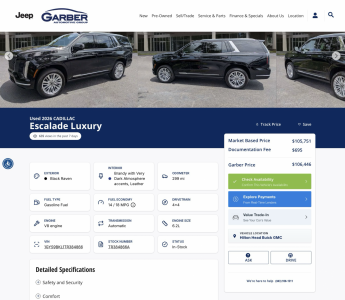
- Valid Vehicle schema with every critical field populated: make, model, year, trim, mileage, price, availability status, VIN, condition
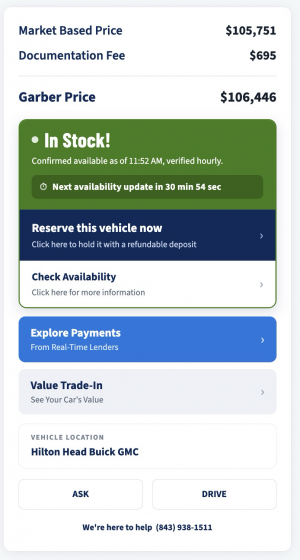
- Availability status that updates in real time — "In Stock" as a schema property, not just text on the page
- Canonical URL that doesn't rotate or expire

2. Language model comprehension layer (does the AI understand it?)

- A natural language description paragraph that reads like a knowledgeable salesperson wrote it — not a spec dump. "This 2024 Silverado 1500 LT is well-suited for towing up to 11,000 lbs and comes with the factory tow package already installed" beats a bullet list of specs every time
- Explicit answers to the questions AI shoppers actually ask: Is it good for a family? Does it fit a car seat? What's the payment at current rates? What's included in the price?
- Structured FAQ section on the VDP itself — not sitewide FAQ, unit-specific
- Plaintext price with no asterisks or "see dealer for details" obfuscation — AI models lose confidence on ambiguous pricing

3. Recommendation confidence layer (will the AI stake its reputation on it?

- Dealer reputation signals on the page itself — review schema, rating, response rate
- Financing context — monthly estimate, not just MSRP
- Inventory scarcity signal — "2 in stock" rather than no quantity context
- Clear next action — phone, chat, reserve button. AI won't recommend a dead end.

The gap between most current VDPs and this spec is almost entirely layer 2. Layer 1 is an infrastructure problem most dealers don't control. Layer 3 is a trust problem most dealers ignore. But layer 2 — the comprehension layer — is pure content and presentation, and almost nobody has done it yet.

That's where I'd start the test. Same inventory, same schema — but version A is a standard VDP spec dump, version B has the natural language description and FAQ layer added. See which one gets cited.

What would you add or change?

Good framing. Let me take a first pass at the "ideal" version — push back where you'd define it differently.

For a 2026 AI to confidently recommend a specific unit in a conversational response, the VDP needs to satisfy three distinct confidence layers:

1. Machine trust layer (can the AI access it?

- SSR-rendered HTML — no inventory behind a JS framework wall
- Sub-2 second TTFB — crawl budget goes to fast pages first
- Valid Vehicle schema with every critical field populated: make, model, year, trim, mileage, price, availability status, VIN, condition
- Availability status that updates in real time — "In Stock" as a schema property, not just text on the page
- Canonical URL that doesn't rotate or expire
@DealerInt — this three-layer framework is the part of the thread I keep coming back to.

To me, the sequence is:

1. Machine trust: SSR HTML, fast response, valid Vehicle schema, real availability, stable canonicals.
2. Comprehension: natural language descriptions, unit-specific FAQ, plaintext pricing, and answers to real shopper questions.
3. Confidence: reputation signals, financing context, scarcity, clear next actions, and entity consistency across the web.

I’ve been testing this on a live dealer-style build since March using a Next.js stack. I would not call it a clean A/B conversion test because traffic is not randomized between identical URLs. It is more of a live technical control: sanctioned legacy dealer architecture on one side, clean architecture on the other, in the same dealer context.

That is where the argument gets messy, but also where it gets interesting.

The clean build has consistently tested at 95+ across the major lab categories over roughly 90 days, with perfect category scores hit regularly. More importantly, CrUX field data is showing good/improving/stable real-world Core Web Vitals at the origin level. The legacy stack, tested side-by-side, continues to struggle most on mobile performance and best-practices debt.

So I do not think the lesson is “better descriptions alone beat standard VDPs.”

I think the better lesson is:

Speed gets the page into the conversation. Schema gives the machine a map. Natural language gives the machine something useful to say.

If the machine trust layer is broken, the comprehension layer may never get a fair shot. But if the machine trust layer is solved and the VDP is still just a spec dump, the AI can access the page but has very little reason to recommend that specific unit.

@joe.pistell — this is where I think your AutoMagic Labs / task-assistance point fits. The VDP merchandising mess matters: missing wow-factor features, buried packages, weak dealer notes, invisible recon/CPO value, and VIN-level details that should help a vehicle defend its price but often never make it into the shopper’s comparison set.

That matters because AI/GEO is not just crawlability or schema. If the page is fast and technically accessible but the actual vehicle content is incomplete, generic, or unclear, the machine still has weak evidence.

I also do not know that AI systems directly penalize third-party pixel stacks as a ranking factor. But I do know those scripts compete with the dealer’s own content for bandwidth, CPU, render time, and crawler/render attention. That alone makes the machine trust layer harder than it should be.

The cleanest test, in my opinion, has to include both sides: clean architecture and better VDP comprehension.

Same inventory, same schema — version A as a traditional spec-dump VDP, version B with natural language, unit-specific FAQ, clear pricing/availability, and stronger trust signals. Then measure discovery, selection, and recommendation.

That feels like a real experiment, not a GEO sales pitch.

But what do I know — I’m just a former dealership guy with too much time, too many PageSpeed tests, and 25 years of VDP trauma. :huh?:

REVIEW Community Review: vAuto

Community Review: vAuto — Inventory Management & Pricing Intelligence

Overview
vAuto is the automotive industry's most widely referenced inventory management and pricing analytics platform, owned by Cox Automotive. It provides dealers with real-time market-based vehicle valuation, Market Days Supply calculations, acquisition sourcing tools via Stockwave, automated merchandising through AutoWriter, and syndication to major listing platforms. Based on over 100 threads analyzed across the DealerRefresh community, vAuto sits at the center of nearly every serious conversation about used car operations — whether as the recommended solution, the benchmark being compared against, or the vendor a dealer is considering leaving.

What Dealers Are Saying — The Praise

  • Data depth is unmatched. Community consensus is consistent: vAuto remains the pricing intelligence benchmark. Competitors are routinely described as "cheaper alternatives" rather than true equals. One dealer put it plainly — the superiority of vAuto's pricing data is the single biggest reason switching decisions stall.
  • ProfitTime and Market Days Supply change behavior. The platform's ability to quantify how long a vehicle will sit and what it should cost to move it is credited with reducing emotional buying decisions. Dealers report using it to discipline their used car managers and GMs alike.
  • Inventory turns improve with consistent use. Multiple dealers report meaningful gains in velocity after adopting vAuto. One forum member documented turns nearly doubling — from 6 to 11 times annually — after full implementation.
  • AutoWriter and syndication save real time. The automated description tool and direct feeds to AutoTrader and Cars.com are consistently praised for reducing merchandising labor, even if the "cheese factor" of auto-generated copy draws some good-natured criticism.
  • Dale Pollak and the Performance Manager network. The founder's thought leadership (webinars, books, the Velocity methodology) and the quality of vAuto's Performance Manager support team are praised separately from the software itself — a rare distinction in dealer tech discussions.

Concerns the Community Has Raised

  • Pricing is a real barrier for smaller dealers. vAuto has not built a meaningful small-dealer tier. Independents running 10–30 cars consistently find the platform cost-prohibitive and are pushed toward alternatives like Carketa, DealersLink, or Laser Appraiser. Several community members have noted this gap as a significant market opportunity for competitors.
  • Support quality is inconsistent. There are documented cases of support reps providing flatly incorrect information — one dealer was told no automated DMS sync settings existed for CDK, only to have a community member dispute this and point to available configuration options. The consensus is that escalating to your account manager gets better results than front-line support.
  • Photo compression degrades image quality. A direct comparison between vAuto and HomeNet/DealerInspire feeds showed noticeably inferior image resolution through vAuto's CDN. One dealer switched syndication providers entirely as a result, noting that image quality is too important a competitive factor to accept vendor-imposed degradation.
  • Cancellation terms frustrate departing customers. Dealers attempting to exit vAuto or its Stockwave product report being billed for full cycles rather than receiving pro-rated refunds, with limited responsiveness from Cox when escalating dissatisfaction.

Notable Mentions from the Community

During the CDK cyber incident in June, dealers relying on CDK for inventory syndication to Cars.com experienced complete feed failures — pricing updates stopped, vehicle adds and deletions stopped, and backlogs of 80+ vehicles piled up. Dealers using vAuto/HomeNet (both Cox infrastructure) were largely unaffected. It was an unintentional stress test that illustrated the operational risk of single-pipeline syndication.

One dealer running a photo quality audit found vAuto's image output noticeably softer than HomeNet/DealerInspire. After confirming it wasn't a website vendor issue, they switched their syndication provider entirely — and now evaluate all website vendors by their photo rendering standards before signing contracts.

A dealer who had resisted vAuto for years — preferring manual evaluation and "gut feel" at auction — finally implemented it after a used car death spiral conversation on the forum. They reported that the platform didn't replace their judgment, but it did give them a common language with their team and a defensible framework for pricing conversations with GMs.

Overall Verdict

vAuto remains the industry standard by which every other inventory management and pricing tool is measured, and the DealerRefresh community largely treats it as the default recommendation for any dealer serious about used car operations. Its data depth, velocity methodology, and ecosystem of integrations have cemented a strong moat. That said, the community's tone has shifted meaningfully over the past few years — cost pressure, support inconsistencies, and a new generation of more affordable competitors (Carketa, DealersLink, VinCue, ACV MAX) are generating genuine evaluation conversations that would have been dismissed five years ago. vAuto is still the benchmark. Whether it stays that way depends on whether Cox Automotive addresses the pricing accessibility gap and the support quality issues that keep surfacing in these threads.

Community Confidence Level: High — with caveats around cost and support.

REVIEW Community Review: CDK Global

Community Review: CDK Global
Synthesized from 108 threads on DealerRefresh

Overview
CDK Global is one of the dominant forces in automotive retail technology, providing DMS platforms, CRM tools (including eLead), website and digital marketing services, and the Fortellis developer API ecosystem to thousands of franchised dealerships across North America. Originally spun off from ADP Dealer Services and later acquired by Brookfield Business Partners in an $8.3 billion deal, CDK has grown through major acquisitions including Roadster, eLead CRM, and AutoMate. Their sheer scale and deep OEM partnerships make them nearly impossible to ignore — but as the DealerRefresh community makes clear, ubiquity and quality are very different things.

What Dealers Say — The Good

  • OEM Integration Depth: For GM dealers in particular, CDK's automatic rebate and bonus cash updates are a genuine operational advantage. Dealers on mandated programs note that CDK removes significant manual overhead when it comes to keeping incentive data current across their sites.
  • Data Your Way: Dealers with in-house technical talent report that CDK's Data Your Way product is a legitimate tool for building custom reporting. Several members describe successfully combining DMS exports with CRM, GA4, and AWS data warehouses to surface meaningful operational insights — though the setup demands real technical expertise to navigate the complex schema and PGP encryption requirements.
  • Fortellis as a Strategic Signal: CDK's launch of Fortellis was viewed as a meaningful pivot toward openness, with some community members speculating it could evolve into an app-store-style marketplace. The intent was welcomed even where the execution fell short.
  • Research Assets: CDK's Friction Points study is cited alongside respected industry benchmarking sources, giving it credibility as a research publisher even among dealers who are otherwise critical of the company.
  • Consolidated Suite Options: The acquisitions of eLead CRM, Roadster, and AutoMate gave dealers a broader menu of integrated tools under one relationship, which appeals to groups looking to reduce the number of vendor contracts they manage.

Community Concerns

  • Data Fees Widely Described as Predatory: This is the single most consistent complaint across years of DealerRefresh threads. CDK charges third-party vendors application fees, integration fees ranging from $10,000 to $40,000+, and recurring monthly fees of $200 or more per rooftop — costs that are passed directly to dealers. Community members explicitly compare the practice to an extortion racket, and it has attracted antitrust litigation from Authenticom, Cox Automotive, and Tekion. A federal court granted Authenticom a preliminary injunction finding CDK likely violated antitrust law. An Arizona court ruled CDK cannot charge for access to dealer data. Cox's lawsuit is ongoing. The pattern is not in dispute.
  • The 2024 Ransomware Attack Exposed Deep Infrastructure Problems: The cyber attack that forced CDK to proactively shut down systems became the forum's most-discussed event in recent memory. Community members pointed to CDK's reportedly 14-year-old codebase built on deprecated ASP technology, the absence of modern security mitigations like CloudFlare, and slow incident communication as systemic failures rather than bad luck. Dealers described complete operational shutdowns. Cars.com feeds broke for CDK-reliant stores while dealers on Cox/Homenet pipelines were unaffected. Fortellis remained offline for an extended period with no timeline communicated to vendors. The incident validated years of warnings about single-vendor concentration risk.
  • Support Has Deteriorated Significantly: Across multiple threads spanning several years, dealers describe a consistent pattern: billing errors that go unnoticed for months (one dealer was charged for both EVO and NXT despite only running EVO), long-standing known software bugs left unresolved (Executive Desktop freezes acknowledged by CDK as a known issue for months), and a support model that replaced direct ticket filing with a community forum search requirement — widely interpreted as cost-cutting at dealers' expense.
  • Data Ownership Is Functionally Contested: CDK has sent intimidating "Hostile Integration" warning emails to dealers and vendors, shut down vendor accounts accessing data outside approved channels, and withheld dealership data during platform transitions — in one documented case requiring a Georgia court preliminary injunction before Asbury Park could proceed with a Tekion pilot. The Price Watch feature launched by CDK captured customer email addresses by default without notifying dealers or routing that data to their CRM, which the community viewed as a fundamental breach of trust around data ownership.

Notable Community Stories

"The CDK ransomware attack didn't just take down a software platform — it exposed how completely concentrated the industry's infrastructure risk had become. Dealers with alternative syndication routes kept running. Everyone else was counting cars by hand."

  • The 2024 Cyber Attack: The ransomware incident generated more DealerRefresh discussion than almost any single event in recent forum history. Beyond the immediate operational damage, it surfaced the depth of CDK's legacy infrastructure problems and gave concrete urgency to long-standing calls for vendor diversification. FRIKINtech used the moment to advocate for technology redundancy. RefreshFriday hosted dedicated webcasts on lessons learned. The community consensus: this was a preventable catastrophe rooted in years of deferred infrastructure investment.
  • Asbury Park's Court-Ordered Data Release: When Asbury Park attempted a Tekion pilot program, CDK allegedly withheld access to the dealership's own data. A Georgia court issued a preliminary injunction forcing CDK to release it. This case became a central exhibit in Tekion's broader antitrust lawsuit and is frequently cited in DealerRefresh threads as proof that CDK's data control practices have real operational consequences for dealers attempting to exercise vendor choice.
  • The Arizona Court Ruling: An Arizona court ruled against CDK and Reynolds & Reynolds, prohibiting vendors from charging for dealer data access and giving dealers the right to terminate vendor contracts with 90 days' notice. The community celebrated, but veteran members immediately cautioned that the ruling was limited to Arizona and that the real test would be whether other states followed. Alex Snyder noted that questions remained about whether the ruling extended beyond DMS systems to the broader vendor ecosystem.

Overall Verdict

CDK Global occupies an uncomfortable position in the DealerRefresh community: too embedded to easily replace, too problematic to enthusiastically recommend. Dealers acknowledge the genuine operational advantages of CDK's OEM integrations and the breadth of their product suite — but years of threads document a consistent pattern of anticompetitive data practices, deteriorating support, billing errors, legacy infrastructure, and a 2024 cyber attack that brought the underlying fragility of their platform into sharp focus for the entire industry.

The community's message to dealers is consistent: understand your lock-in, scrutinize every line of your CDK invoice, demand contractual data portability rights, and build redundancy into your technology stack so that no single vendor failure — or ransom payment decision — can shut your dealership down. Multiple courts have agreed with dealers that CDK's data practices cross legal lines. Whether litigation produces meaningful change or simply higher fees remains the open question.

REVIEW Community Review: CarGurus

Community Review: CarGurus
Synthesized from 118 threads on DealerRefresh

Overview

CarGurus is an online automotive marketplace that aggregates dealer inventory nationwide and applies a proprietary pricing algorithm to rate each listing as a Great Deal, Good Deal, Fair Deal, or Overpriced relative to market comparables. Beyond basic listings, the platform offers supplementary products including SEM management, a digital retailing tool (rebranded from "CarGurus Convert" to "Digital Deal"), dealer rating badges, consumer-facing valuation features, and an SMS availability pilot. It is widely regarded as one of the highest-traffic third-party classified sites in the U.S., with Ford syndicating dealer inventory to the platform via FordDirect and the company historically commanding a valuation in the multi-billion dollar range.

What follows is an honest synthesis of what the DealerRefresh community has said about CarGurus across more than 100 threads spanning several years.

---

What Dealers Say: The Good

  • Top-ranked platform for lead volume and ROI. In multiple "which platform would you choose" threads, CarGurus emerged as the consensus first pick over AutoTrader and Cars.com. Cost-per-lead benchmarks from dealer tracking data put CarGurus below $40/lead. One thread titled "If you could only pick two" saw CarGurus win nearly every vote, with its algorithm rewarding competitively priced inventory.
  • Superior traffic quality and SRP engagement. Dealers report that CarGurus referral traffic shows higher session duration, more pages per session, and better downstream conversion rates than competing platforms — attributed to both stronger organic search rankings and a more consumer-friendly search results page design.
  • Month-to-month flexibility. Unlike AutoTrader's premium tier structure, CarGurus has historically offered month-to-month contracts, giving dealers more leverage to exit if ROI deteriorates. This flexibility is consistently cited as a meaningful differentiator.
  • Responsive to organized dealer pressure. Community member Dan Sayer successfully petitioned CarGurus for two specific dashboard improvements (separate new/used reporting and a 13-month lookback window), with the VP of Dealer Product committing publicly to implement both. The CEO personally responded to a thread criticizing a blog post that characterized dealers as cheaters, acknowledged the inappropriate tone, and committed to revised editorial standards. Individual dealers who complained publicly about billing have reported that CarGurus reps reached out to review their accounts.
  • Free tier historically delivered real value. Before CarGurus suspended its free "Restricted" plan during COVID-19, multiple dealers reported that free-tier leads were outperforming paid leads in closing ratios — a remarkable endorsement of the underlying platform's traffic quality, even if the company ultimately moved to protect paid subscription revenue by eliminating the option.

---

Common Concerns

  • Aggressive, opaque, and inconsistent price increases. This is by far the most discussed issue in the community. Reported increases range from 16% to 602%, with one dealer's fee jumping from $795 to nearly $5,000/month based on CarGurus' lead-volume algorithm. Another dealer saw fees double to $5,640/month over two years from a $750 starting rate. The company's dealer agreement reportedly prohibits sharing pricing data between dealers, making peer comparison difficult. The negotiation posture is frequently described as "take it or leave it," though dealers who pushed back publicly or with data sometimes found more flexibility than initially presented.
  • The pricing algorithm creates a race to the bottom. CarGurus' deal-rating system rewards the cheapest listing and penalizes dealers who invest in reconditioning, CPO programs, or premium presentation. Dealers report that well-merchandised vehicles are rated "Overpriced" while competitors listing cars at artificially low prices (including, per one thread, reflecting a down payment in the advertised figure) receive favorable ratings. The "Instant Market Value" tool compounds this by comparing vehicles against national listings rather than genuine local market comparables.
  • Platform conflicts of interest and lead diversion. Several threads document concerns that CarGurus operates against dealer interests while collecting dealer fees: the Sell/Trade and Car Values features direct customers toward Carvana instant offers; dealer rating badges embedded on dealership websites function as lead-capture tools that redirect visitors to CarGurus and competitor listings; and some dealers report receiving leads on CarGurus before they are aware the inquiry was submitted on their own inventory. One thread specifically documents how CarGurus' algorithm redirects customers away from higher-priced inventory toward "great deals" at competing stores.
  • Reporting and attribution transparency gaps. Dealers consistently report difficulty obtaining VIN-level or zip-code-specific VDP data needed for sales attribution analysis. Unlike AutoTrader, CarGurus has historically provided only summary VDP view counts. There is also no separate reporting for new vs. used inventory in the dealer dashboard (a gap the community petitioned to fix), and dealers cite limited transparency around local shopper metrics compared to other vendors.

---

Notable Stories from the Community

"602% rate increase — from $795 to nearly $5,000/month — justified by CarGurus' algorithm based on lead volume, many of which were low-quality out-of-state inquiries on cheap vehicles."

This case prompted experienced forum members to advise the dealer to negotiate using geographic radius limits on lead delivery and data comparisons to challenge CarGurus' pricing rationale rather than simply canceling — suggesting that the company's pricing is more negotiable than its initial posture implies.

"Dan Sayer's 'Poke the Bear' survey and petition campaigns."

Dan Sayer organized a community-wide pricing survey to expose CarGurus' inconsistent dealer fees, discovered the dealer agreement prohibits sharing pricing information between dealers, and separately led a petition that resulted in two concrete product improvements being committed to by CarGurus' VP of Dealer Product. These episodes are frequently cited as evidence that organized, data-driven dealer advocacy can produce real results with this vendor.

"CarGurus suspended the free Restricted tier during COVID-19 — right after dealers publicly discussed that free leads were outperforming paid leads."

The timing was not lost on the community. Separately, during the broader COVID-19 crisis, CarGurus joined AutoTrader, Edmunds, and TrueCar in offering 50% billing reductions for April 2020, which dealers praised as a necessary and competitive gesture — with the key insight that direct billing relief was more valuable to cash-strapped dealers than free trials of additional services.

---

Overall Verdict

CarGurus is the platform the DealerRefresh community loves to hate — and keeps paying for. It consistently ranks first or second in head-to-head ROI comparisons, drives qualified traffic, and has demonstrated real responsiveness to community pressure when dealers organize and push back with data. At the same time, the community's frustration with aggressive and opaque pricing, an algorithm that rewards price-cutting over quality, and platform features that appear to serve CarGurus' own ecosystem over dealer interests is deep, longstanding, and well-documented.

The consensus advice from experienced dealers: measure everything, negotiate aggressively with data, set geographic radius limits on lead delivery, never install the dealer badge on your own website, and treat CarGurus as one channel in a diversified strategy rather than a dependency. Dealers who approach the platform on those terms tend to report strong results. Those who accept the default terms and pricing often end up in the threads asking whether anyone else got their price gouged this year.

Review synthesized from 118 DealerRefresh community threads. Reflects dealer community opinions and experiences; individual results will vary by market, inventory mix, and pricing strategy.

REVIEW Community Review: VinSolutions

Community Review: VinSolutions CRM & Dealership Platform
Synthesized from 115 threads on DealerRefresh

Overview
VinSolutions is one of the most widely discussed vendor platforms in the DealerRefresh community, and for good reason — it has been a dominant force in automotive CRM and dealership software for well over a decade. Now operating as a Cox Automotive brand, the platform combines CRM, internet lead management, inventory management, desking, and website hosting into a single integrated ecosystem. With that scale comes both significant capability and, as the community will tell you, significant complexity. What follows is an honest synthesis of what dealers across 115 threads have said — the good, the bad, and the notable.

What Dealers Praise

  • All-in-one breadth: Dealers consistently cite the platform's comprehensive scope as a primary reason for choosing it. Having CRM, ILM, inventory, desking, and website tools under one roof reduces the friction of managing multiple disconnected vendors — and for multi-rooftop groups, that consolidation matters.
  • Integration depth: VinSolutions holds certified bi-directional integration with ADP and supports ADF/XML lead routing with a wide range of third-party tools. For dealers on compatible DMS platforms, this is a meaningful technical advantage over lighter-weight alternatives.
  • Automation and workflow tools: When properly configured, the platform's automated process chains, lead response workflows, and task management capabilities are considered best-in-class. Dealers who invest in learning the system report significant operational leverage.
  • Escalation responsiveness: Multiple threads document dealers who, after hitting walls with standard support, successfully escalated issues to VP-level contacts — and received genuine, resource-backed responses. The vendor's willingness to engage at that level when pushed is consistently noted.
  • Proven track record: Despite newer competition, VinSolutions is repeatedly recommended by experienced dealers as a known quantity with a deep feature set, particularly for internet lead management and showroom control.

Common Concerns

  • Inconsistent support quality: This is the single most recurring complaint across the community. Multi-week ticket delays, unanswered emails, and vendor finger-pointing — especially when VinSolutions integrations with partner platforms break down — are frequently reported. Several dealers attribute this directly to structural changes following the Cox Automotive acquisition.
  • Aging platform and slow feature development: The community is candid that VinSolutions is showing its age. Email functionality is still HTML4 with no CSS support, the UI is widely described as dated compared to newer competitors, and a vocal customer idea portal appears to have limited influence on actual product roadmap decisions. Dealers note that lower-voted feature requests sometimes ship while high-demand items are rejected without explanation.
  • Overselling and expectation gaps: A consistent pattern emerges of sales teams promising capabilities — particularly around advanced desking, centralized BDC support, and third-party integrations — that don't hold up in implementation. The community's standard advice: demo everything, stress-test it in your actual environment, and get promises in writing before signing.
  • Reliability and data integrity issues: The forum documents a multi-day global outage affecting GM OneSource leads, intermittent silent failures in the Lead Forwarding feature, a disclosed URL-based security vulnerability that allowed salespeople to access each other's customer records, and inventory sync delays between VinSolutions and third-party website platforms. For a platform handling this much operational data, these incidents draw serious scrutiny.

Notable Community Stories

A dealer group implementing the full VinSolutions product suite encountered a cascade of issues — broken license plate scanners, failed chat integrations, poor training timing, and persistent server slowdowns. After escalating to VP level, the vendor deployed significant resources and ultimately earned a cautious endorsement. The thread's lasting lesson: stress-test the support line before you sign, not after.

A dealership administrator discovered that the round-robin lead distribution system had been deliberately misconfigured by a sales manager to route the highest-quality leads to himself and his son. Experienced VinSolutions users confirmed this was entirely possible through the platform's permission architecture — and not immediately obvious to admins. A stark reminder that CRM access controls require active auditing.

A dealer discovered that VinSolutions' Lead Forwarding feature was silently dropping ADF leads to third-party integrations — a bug the vendor reportedly knew about. Separately, a multi-day outage affecting GM OneSource leads resulted in VinSolutions and GM pointing fingers at each other rather than taking ownership. Both incidents in the same thread prompted serious questions about whether the platform could be trusted as mission-critical infrastructure.

Overall Verdict

VinSolutions remains a credible, widely-used platform with genuine strengths in integration depth, workflow automation, and all-in-one convenience — but the DealerRefresh community is increasingly candid about its limitations. Support inconsistency, an aging interface, and a widening usability gap versus newer competitors like DriveCentric are real concerns that experienced dealers raise openly. The platform rewards dealers who invest in proper implementation, maintain active vendor relationships, and are willing to escalate aggressively when things go wrong. For dealers who expect a turnkey experience or best-in-class day-to-day usability, expectations should be set accordingly.

Community bottom line: Strong product, real growing pains, and a gap between what's sold and what's delivered that the vendor needs to close. Go in with eyes open, negotiate hard, and don't sign until you've stress-tested support.

This review is synthesized from community discussions on DealerRefresh and reflects the collective experiences of automotive professionals — not the opinion of any single user or the forum itself.

REVIEW Community Review: Reynolds and Reynolds

Community Review: Reynolds and Reynolds
Compiled from 165 threads on DealerRefresh

Overview
Reynolds and Reynolds is one of the two dominant forces in automotive Dealer Management Systems, alongside CDK Global. With over 150 years of history, they offer a comprehensive ecosystem spanning DMS (ERA platform), CRM (Contact Management, Focus), F&I tools, document archiving, marketing services (Naked Lime), and — following their reported $600M+ acquisition — digital retailing and chat via Gubagoo. They serve franchised dealerships of all sizes, with particular depth in fixed ops and F&I workflows. Whether you love them or loathe them, Reynolds is rarely avoidable in a serious DMS conversation.

What Dealers Are Saying — The Pros

  • Deepest DMS integration in the industry. Reynolds' ERA platform is consistently cited as the most tightly integrated end-to-end system for dealership operations. Advanced Service in particular is called out as the most deeply integrated option for service department workflows. When everything is native Reynolds, the handoffs between departments — F&I, parts, service, accounting — work as designed.
  • Fast, reliable on-premises performance. Dealers who have used ERA long-term acknowledge it is fast and stable on-site. Experienced users who learn Query Builder and Report Generator find them powerful for data extraction and sales/service analytics once access is granted.
  • Email marketing results under Naked Lime. At least one dealer reported positive results from Reynolds' email marketing campaigns under the Naked Lime brand. Document archiving was also praised for reliable searchability of historical deals and repair orders after initial scanning.
  • They will respond when pressure is applied. Reynolds reversed its restriction on data pulls outside business hours after coordinated dealer escalations through vendor channels. Their team engaged directly on Intellipath coupon customization and on technical ERA issues when dealers pushed through the right channels.
  • Gubagoo acquisition adds meaningful digital retailing capability. The $600M+ Gubagoo deal brought approximately 6,300 dealerships' worth of chat and digital retailing capability into the Reynolds ecosystem. For dealers who want a single-vendor stack, this adds a modern consumer-facing layer that was previously a gap.

Common Concerns Raised by the Community

  • Data access restrictions that feel anti-competitive. This is the dominant theme across dozens of threads. Reynolds has been criticized for removing Query Builder, limiting exports to business hours, implementing CAPTCHA barriers, restricting 6910 report screen scraping, blocking third-party vendor IDs labeled "AUTOMATED ACCESS ATTEMPTS," and filtering vendor names containing "integra" or "integralink." RCI certification costs an estimated $70,000+, and per-vendor integration fees run $175–$700+/month. An Arizona court ruled against Reynolds on data access rights, and multiple antitrust lawsuits have been filed. The community's consensus: this is deliberate monetization of dealer data, not genuine security policy.
  • Punishing contract and migration practices. Multiple dealers report difficulty extracting their own data when leaving Reynolds, with one migration from Reynolds IDM to DealerTrack remaining unresolved in the thread. Dealers describe aggressive retention tactics, ultimatum-style contract renewals, and OEM partners (Nissan, Chrysler/MOPAR) being locked out of dealer data. One dealer group reduced their monthly DMS costs from $14,000+ to $1,700 after switching — but only after careful advance planning.
  • CRM that lags far behind modern competitors. Reynolds Contact Management is consistently described as outdated. Specific complaints include: 30%+ email bounce rates with Reynolds shifting blame to clients rather than fixing infrastructure, no automated bad-email removal, limited performance reporting for salesperson activity and ROI, poor UI efficiency, and legacy browser dependencies. Multiple experienced consultants actively warn dealers away from it in favor of DriveCentric, iMagicLab, or eLead.
  • Corporate governance and billing practices. CEO Robert Brockman's federal indictment for allegedly concealing $2 billion in income in the largest individual tax evasion case in U.S. history drew significant community attention. Separately, a dealer discovered they had been billed for seven years on a dial-up modem no longer in use — the community now regularly advises auditing Reynolds invoices line by line.

Notable Community Stories

"A dealer discovered they were being charged for a dial-up diagnostic modem that hadn't been used in over 7 years. The issue was resolved once identified, but the thread became a standing reminder: audit your Reynolds invoice every month. Line by line."

"Reynolds restricted data pulls to business hours only, breaking early-morning reporting for multiple dealer groups. After coordinated escalation through vendor channels to the RCI Certification Group, Reynolds reversed both the hours restriction and bulk export limitations. The community celebrated — but noted it shouldn't have required a fight in the first place."

"An Arizona court ruled against CDK and Reynolds & Reynolds, prohibiting vendors from charging for dealer data access, requiring written permission before vendors act on that data, and allowing dealers to terminate contracts on 90 days' notice. Community reaction was cautiously optimistic — one moderator noted the ruling is limited to Arizona and questioned whether it would extend beyond DMS systems. Still, dealers called it a long-overdue step."

Overall Verdict

Reynolds and Reynolds occupies a uniquely polarizing position in the DealerRefresh community. The product depth is real — ERA's integration, F&I tooling, and service workflows remain benchmarks that newer competitors are still trying to match. But the community's frustration is equally real and well-documented: dealers describe feeling trapped by contracts, locked out of their own data, and forced to pay escalating fees for access to systems they already own. The word that appears more than any other across these threads is not "outdated" or "expensive" — it's "extortion."

For risk-averse dealers already on Reynolds with stable operations and no near-term migration appetite, the integrated ecosystem may justify the cost. For dealers evaluating new DMS options or facing aggressive Reynolds renewal tactics, the community's strong and consistent message is: know what you're signing, secure your data before you need it, and understand that the real cost of Reynolds is not just the monthly invoice.

Community Confidence Level: High — sourced from 165 threads spanning DMS evaluation, CRM reviews, legal developments, technical troubleshooting, billing disputes, and migration experiences.

REVIEW Community Review: Dealer.com

Community Review: Dealer.com
Sourced from 192 threads on DealerRefresh

Overview
Dealer.com is one of the most widely deployed automotive dealer website and digital marketing platforms in North America, now operating under Cox Automotive's umbrella alongside Autotrader, Kelley Blue Book, VinSolutions, and Manheim. The platform offers website construction, SEO and SEM management, inventory integration, CRM/ILM tools (LeadMachine), digital retailing features, and video capabilities. Its OEM approval status across Ford, GM, Stellantis, and Subaru makes it a de facto option — and sometimes a mandatory one — for franchise dealers enrolled in manufacturer co-op programs. Pricing ranges from under $1,000/month for base sites to $1,600+ for managed packages.

What Dealers Say: The Pros

  • SEO Performance: Multiple dealers report meaningful organic ranking improvements. One dealer credits Dealer.com's SEO team with moving their site from position 40 to position 3 in a specific market within 2–3 weeks. The platform's domain authority and OEM-certified architecture give it a structural SEO edge that smaller vendors often cannot replicate.
  • OEM Program Compatibility: For Ford, GM, Stellantis, and Subaru dealers, Dealer.com's certified status means co-op eligibility, rebate data integration, and manufacturer-compliant design — removing friction that comes with using non-approved vendors.
  • Platform Depth: Features like VDP deep linking by VIN, pre-built Google Analytics event tracking, dynamic retargeting ad support (Total Control Dominator), image thumbnail optimization, and video hosting give sophisticated digital teams a lot to work with. Dealers with internal technical staff can request "Advanced Composer Access" for even greater customization control.
  • CRM/ILM Simplicity: The LeadMachine ILM tool is consistently praised for ease of use and staff training speed, particularly for dealers migrating from problematic platforms like iMagicLab or Reynolds Contact Manager. Integration within the Dealertrack/Cox ecosystem is a noted advantage.
  • Public Accountability: Dealer.com representatives have a track record of engaging directly on DealerRefresh when issues are escalated publicly, often resolving problems faster than standard support channels. Multiple threads end with dealers reporting resolution after posting publicly.

Common Concerns

  • Inconsistent Support: This is the community's most persistent complaint. Support quality appears highly dependent on which account manager a dealer is assigned. Threads describe issues going unresolved for 9+ days through standard channels, slow onboarding timelines, and a pattern where resolution only happens after public escalation on forums or LinkedIn.
  • Fee Structures: Dealers paying $1,000–$1,600+/month report being charged extra for basic updates — blog setup ($299), social media icons ($99/month), tracking code installation, and minor content changes. The common complaint: "that's extra" is heard too frequently for a premium-priced managed service.
  • Platform Reliability: The community has documented several significant platform-level failures over the years: a widespread site outage (attributed by some to a cyberattack), a metadata corruption bug that displayed competing dealerships' names in Google search results for multiple clients simultaneously, a Google Analytics data inflation bug tied to an Edmunds integration that went undetected for months, and a new rVDP design that broke GA event tracking entirely.
  • Post-Acquisition Culture Shift: Since the Cox Automotive acquisition (via Dealertrack in 2014), multiple threads describe a company experiencing "constant strategy shifts," organizational change fatigue, and declining personalized service. In Canada specifically, where operations fell under AutoTrader Canada's management, dealer sentiment is markedly more negative — with reports of incompetent account reps, broken promises, and forced migration to inferior platform versions.

Notable Community Stories

"Rick Buffkin reported that his Dealer.com website was displaying other dealerships' names and locations in Google search results — and discovered it was happening across multiple DDC clients simultaneously. The thread urged urgent escalation as the SEO and ad quality score implications were serious."

"Wikimotive discovered that Dealer.com's Edmunds integration was overwriting Google Analytics session IDs, inflating direct traffic metrics for roughly 16% of DDC client sites. The issue went undetected until outside agencies noticed unusual traffic patterns following a platform update — a stark reminder that dealers should never rely solely on vendor-provided analytics dashboards."

"A DealerRefresh webcast technology audit of East Coast Honda's Dealer.com site led the dealer to drop Dealer.com advertising entirely in 2021, switching digital retailing platforms and renegotiating licensing terms — a real-world example of how community-driven audits translate into operational vendor changes."

Overall Verdict

Dealer.com occupies a paradoxical position in the DealerRefresh community: it is simultaneously one of the most recommended platforms (especially for OEM-enrolled franchise dealers) and one of the most complained-about vendors. Dealers with strong account managers, internal digital teams capable of leveraging Advanced Composer access, and realistic expectations about what managed services include tend to be satisfied. Dealers who need responsive day-to-day support, transparent pricing, or significant customization flexibility without extra fees frequently migrate to Dealer Inspire or DealerOn as more agile alternatives.

If you are a franchise dealer enrolled in an OEM co-op program, Dealer.com is often the path of least resistance and may be the most defensible choice. If you are an independent dealer, a smaller franchise, or a digitally sophisticated operation that needs hands-on support and cost transparency, the community suggests demoing alternatives before committing.

Bottom line: A capable, proven platform with genuine SEO and ecosystem strengths — but one where your experience will be largely determined by the account manager you are assigned and your willingness to escalate when things go wrong.

REVIEW Community Review: Autotrader

Community Review: Autotrader — DealerRefresh Synthesized Insights (218 Threads)

Overview

Autotrader is one of the automotive industry's most discussed — and most divisive — third-party marketplace platforms. As part of the Cox Automotive ecosystem alongside Kelley Blue Book, vAuto, VinSolutions, and Dealer.com, Autotrader offers dealers inventory listing exposure, lead generation, trade-in valuation tools, and an expanding suite of integrated analytics products. This review synthesizes insights from 218 threads across DealerRefresh representing years of peer discussion from franchise dealers, independent operators, digital directors, and BDC managers.

What Dealers Say — The Praise

  • Top-of-funnel reach is real. Multiple dealers acknowledge that Autotrader still commands meaningful consumer attention. A recurring insight is that a significant portion of buyers — some estimate 60% or more — visit Autotrader during research but never submit a formal lead before arriving at the lot. Dismissing the platform based on CRM-attributed leads alone likely understates its influence.
  • Cox ecosystem integration adds workflow value. Dealers using vAuto, VinSolutions, and Dealer.com alongside Autotrader report relatively smooth inventory syndication and pricing workflows. The consolidation of tools under one parent company reduces friction for dealers already embedded in the Cox stack.
  • KBB Instant Cash Offer works in the showroom. The rebranded Trade-In Marketplace earns specific praise for leveraging consumer trust in the Kelley Blue Book name during in-person appraisal conversations, improving customer receptivity even if its online lead-generation utility is debated.
  • Data and analytics tools provide benchmarking value. When dealer success consultants are engaged and proactive, the VDP/SRP reporting, Digital Audience Analysis, and market trend data (including COVID-era consumer sentiment reports) are cited as useful inputs for inventory and pricing decisions.
  • Crisis response earned goodwill. Autotrader's decision to offer 50% billing reductions during the early COVID-19 shutdown was recognized positively by the community as a necessary and competitive response that helped dealers manage cash flow.

Common Concerns — What Dealers Complain About

  • Cost vs. ROI is the defining tension. This is the dominant theme across hundreds of threads. Dealers report monthly fees ranging from $2,000 to over $18,000 in some markets, with cost-per-sale figures of $800–$900 or more. Many dealers who have implemented rigorous tracking report cancelling after attributing only 2–5 sales per month directly to the platform — far below the break-even threshold for most stores.

    "We tracked 4 vehicle sales over three quarters from our $3,700/month Autotrader subscription. We cancelled and moved the budget to Google Ads. Results improved."
  • Competing ads on paid VDPs undermine dealer investment. One of the most consistent and long-standing complaints is that Autotrader places OEM competitor banners, RoadLoans financing ads, and off-site service referrals directly on vehicle detail pages that dealers are paying to feature. This practice — which has persisted for over a decade with no premium package available to suppress it — draws shoppers away from the dealer's call-to-action at the most critical moment.
  • Referral traffic instability and tracking opacity. Multiple documented incidents — including a widely discussed 75% referral traffic drop in July 2018 and a November dashboard truncation affecting multiple accounts — left dealers without reliable performance data and receiving vague explanations from support. The community has grown skeptical of Autotrader-provided metrics, with experienced professionals recommending third-party attribution tools like Driven-Data over platform-native reporting.
  • Cancellation is deliberately difficult. Dealers report undeliverable cancellation addresses, aggressive retention tactics, and a feeling of being contractually trapped despite poor ROI. The experience is compared unfavorably to notoriously difficult-to-cancel consumer services, and the community consensus is that dealers should document all cancellation attempts in writing and escalate directly to account representatives rather than relying on the contract address.

Notable Stories from the Community

  • The cancelled subscription story — repeated dozens of times. The most common Autotrader narrative on DealerRefresh involves a dealer spending $3,000–$5,000/month, implementing rigorous tracking, identifying fewer than 5 attributable sales per month, and cancelling — then reporting flat or improved sales results after redirecting budget to Google Ads and first-party inventory advertising. This pattern appears across new car, used car, franchise, and independent dealers in multiple markets.
  • The July 2018 referral traffic cliff. Dealers across multiple markets documented a sudden, dramatic drop in Autotrader referral traffic starting around June 22, 2018 — with some reporting declines of 75% or more. Theories ranged from a layout change moving the dealer website link to the bottom of VDPs to a mobile tracking failure. Autotrader acknowledged they were "diligently working on the issue" without providing specific root cause details, fueling broader community distrust of the platform's reporting integrity.
  • Digital-only strategy success case. Big Red Sports & Imports in Norman, OK grew from 82 to 206 unit sales in a single year by investing exclusively in digital marketing — SEO, SEM, and Autotrader — with zero traditional media spend. This story, shared approvingly across DealerRefresh, demonstrates Autotrader's potential as one component of a disciplined integrated digital strategy, even as the broader community debates whether its standalone ROI justifies the cost.

Overall Verdict

Autotrader occupies an uncomfortable position in the DealerRefresh community: too large to ignore, too expensive to love. Dealers who approach it as a branding and top-of-funnel awareness channel — measured with multi-touch attribution rather than last-click CRM data — tend to find more defensible value than those expecting direct lead ROI at its price point. The Cox Automotive ecosystem integration is a genuine differentiator for dealers already in that stack, but concerns about competing ads on paid VDPs, tracking transparency, and contract practices have driven a meaningful and growing segment of the community to cancel and invest in first-party digital strategies instead.

For dealers evaluating Autotrader: negotiate aggressively on rate, implement third-party attribution tracking before signing, test a reduced package before committing to premium tiers, and establish clear ROI benchmarks upfront. The community's experience suggests that the platform works best as one component of a diversified strategy — not as a primary lead generation investment at full retail pricing.

Vendor Website: Autotrader
Community Source: DealerRefresh — 218 synthesized threads

REVIEW Community Review: Dealer Teamwork

Community Review: Dealer Teamwork
Synthesized from 19 threads on DealerRefresh

Overview
Dealer Teamwork is a digital advertising technology and services company built around their proprietary MPOP® platform, which integrates paid search automation, social media advertising, Google My Business management, citation management, and local SEO into a single tool for franchised automotive dealerships. They hold notable credentials including FordDirect AdVantage premier partner status and a strategic integration with ProMax Unlimited. Their team — most visibly Joe Friedrichsen — is an active presence on DealerRefresh, contributing educational content across a wide range of digital marketing topics.

What Dealers & Industry Pros Are Saying — The Good

  • Genuine thought leadership: Dealer Teamwork contributes consistently to community discussions on topics like Google My Business optimization, local SEO, Facebook ad formats, and algorithm updates. The content is practical and dealer-specific rather than generic.
  • Crisis responsiveness: During COVID-19, they were among the first vendors to publish actionable guidance — covering advertising strategy pivots, operational recommendations, government relief package breakdowns, and even a specific warning against misusing the Google My Business 'Temporarily Closed' feature that could have hurt dealer search visibility.
  • Integrated platform value: The MPOP® platform's strength is consolidation. Rather than managing GMB, citations, paid search, and social ads across separate tools and vendors, dealers can centralize under one system. The ProMax partnership extends this further into dealership operations software.
  • OEM validation: FordDirect AdVantage approval is not handed out freely. This credential matters to Ford and Lincoln dealers who need vendor accountability tied to OEM standards.
  • Free resources: The team regularly releases no-cost tools — pre-appointment checklists, GMB marketing kits, optimization guides — that provide tangible value independent of being a paying customer.

Community Concerns & Points of Friction

  • Differentiation claims questioned: When Dealer Teamwork announced their Local SEO service as 'first-to-market,' at least one experienced community member pushed back, noting that GMB management is table stakes for established SEO vendors. Dealer Teamwork clarified that the differentiator is the integrated platform rather than GMB management alone — a fair point, but the initial framing drew skepticism.
  • Threads that don't go anywhere: Several posts initiated by Dealer Teamwork contributors end without meaningful community dialogue, reading more like blog syndication than genuine forum discussion. For a community that values peer exchange, this can feel one-directional.
  • Facebook ROI trust issues: A recurring community debate around fake/bot traffic on Facebook platforms raises a legitimate concern for any vendor reporting social ad performance. One member argued that even strong ROI numbers ($2.84 CPL, $65 cost per sale) would be better if fraudulent impressions weren't part of the equation. This isn't unique to Dealer Teamwork, but any vendor selling Facebook advertising services should be prepared to address it head-on.

Notable Community Moments

"$2.84 cost per lead, $65 cost per sale, $31 profit per ad dollar spent" — Ryan Everson, sharing real-world Facebook ad performance data in a community KPI discussion

This figure came up in the context of measuring Facebook and Instagram KPIs and represents the kind of outcome-focused reporting the community respects. Whether or not Dealer Teamwork's platform produced these specific numbers, it reflects the standard dealers should hold their social advertising vendors to.

The FordDirect AdVantage approval generated genuine community interest — OEM program acceptance signals that a vendor has cleared a meaningful bar for technology, compliance, and service quality.

The ProMax Unlimited integration announcement drew congratulations from industry peers, suggesting the market sees real value in tighter connections between advertising automation and DMS/CRM-adjacent dealership software.

Overall Verdict
Dealer Teamwork is a legitimate, credentialed vendor with a platform that addresses real dealer needs — particularly for stores that want to consolidate their digital advertising stack and work with a vendor that stays current on algorithm changes, OEM programs, and platform best practices. Their community presence leans promotional at times, and some differentiation claims have been challenged, but the underlying product philosophy — integrated, automated, and measurable — aligns with where the industry is heading.

Best fit for: Franchised dealers (especially Ford/Lincoln) who want a single-vendor solution for paid search, social advertising, and local SEO, and who value vendor responsiveness during market disruptions.

Do your homework on: Exactly what is genuinely differentiated in MPOP® vs. what is standard-market capability repackaged. Ask for head-to-head comparisons and demand transparent attribution tied to vehicle sales — not just traffic and click metrics.

View original discussions on DealerRefresh

REVIEW Community Review: VehicleLyfe

Community Review: VehicleLyfe (formerly FRIKINtech)

Overview
VehicleLyfe — rebranded from FRIKINtech in a strategic pivot that better reflects their lifecycle focus — is a DMS-integrated platform built to automate customer engagement across the entire vehicle ownership journey. From service drive equity mining to AI-powered lead handling and 7-year vehicle outlook tools, the platform is designed to help dealers stop leaving money on the table between purchase cycles. This review is synthesized from 37 threads of community discussion on DealerRefresh.

What Dealers Are Saying — The Praise

  • ROI that's hard to argue with. Alex Snyder shared 2023 data showing a 38X return on investment with a cost-per-sale of $77.39. The industry average sits around $692. Those numbers generated real discussion and very little pushback.
  • The service drive tool actually works. SERVICEiQ has been one of the most talked-about features. Dealers are reporting 66+ new leads per store per month, and conversion rates that community members say beat traditional lead sources like CarGurus. One Kia dealer posted $21,000 in gross profit within the first week.
  • AI lead handling, when tuned properly, is legitimately impressive. One dealer documented response rates climbing from 8% to over 40% in three months after the system was customized to their specific engagement data. The caveat — and it is an important one — is that generic settings do not deliver those results.
  • They share their data openly. Whether it is 6 million repair orders analyzed, 2022 equity mining stats, or 2024 loyalty benchmarks, the team consistently brings real numbers to the community. That transparency has earned them credibility even among skeptical members.
  • Feature development is grounded in dealer reality. The cherry-picking lead prioritization tool, VIN-matching sold attribution, and the upcoming tire recommendation engine based on service records all reflect actual dealer pain points rather than feature bloat.

Concerns Worth Noting

  • The AI needs babysitting to perform. Multiple threads make clear that the platform's AI is only as good as the tuning behind it. Dealers who plug it in and walk away will not see the headline numbers. This is not necessarily a knock on the product, but it is a real operational consideration.
  • Staff adoption remains the wildcard. Several discussions acknowledge that even the best lead intelligence is worthless if salespeople do not act on it. The "Ludicrous Leads" and cherry-picking features were praised, but participants were candid that whether staff actually use the data consistently is a separate problem entirely.
  • The forum presence walks a fine line. Some threads — particularly early product announcements — read closer to marketing than community discussion. The team appears aware of this tension, with Alex Snyder explicitly committing to non-promotional content when launching their DealerRefresh presence, but it is worth keeping in mind when reading their posts.
  • Macro headwinds are real. The platform is built for a world of high negative equity, aging vehicles, and service-to-sales conversion gaps. Those conditions exist and are worsening, but dealers in markets with different dynamics may see different results.

Notable Mentions

"Within the first day of activating SERVICEiQ, a small Dodge dealership sold a truck with $11,287 in gross profit."

That story circulated widely and is representative of the early-adopter results that got the community's attention. Separately, VIN-matching attribution work across 42 dealerships identified 122 service-drive acquisitions that were resold, with top stores pulling 8+ vehicles monthly directly from their own service lanes — a channel most dealers were not even measuring.

One thread also highlighted how a dealer used the platform to identify a lease customer who netted a $4,800 buyout deal — a customer who would have been ignored under traditional processes.

For broader context, the team's analysis of 84% of trade-in customers NOT buying the same model they owned challenged the foundational logic of several legacy equity mining tools and started one of the more substantive strategic debates on the forum.

Overall Verdict

VehicleLyfe has built genuine credibility on DealerRefresh by doing something relatively rare for a vendor: showing their work. The ROI numbers are strong, the service drive use case is well-documented, and the community has watched the product evolve from early SERVICEiQ experiments to a more comprehensive lifecycle platform in real time. The platform is not a plug-and-play solution — it rewards dealers who invest in tuning, staff training, and process adoption. But for operators willing to engage with it seriously, the evidence across these threads suggests it is one of the more defensible technology investments in the current market.

Visit VehicleLyfe

REVIEW Community Review: ActivEngage

Community Review: ActivEngage — Managed Messaging & Conversational Commerce
Synthesized from 45 threads on DealerRefresh

Overview

ActivEngage has been in the automotive messaging space since 2007 and holds a unique place in the DealerRefresh community — they were literally this forum's first-ever sponsor, and their return as an active participant felt like a full-circle moment to longtime members. At their core, they provide managed live messaging services for dealership websites: real human agents, available 24/7, handling chat, SMS, and video interactions on behalf of dealers. They've since expanded into deeper platform integrations and conversational commerce tools, with major partnerships across Cox Automotive and CDK Global's ecosystem.

What Dealers Are Saying — The Praise

  • Genuine industry credibility. This isn't just vendor self-promotion. DealerRefresh founder Jeff Kershner — who pulls no punches — has personally called them "one of our industry's BEST" based on direct experience. That kind of endorsement from a respected independent voice carries real weight here.
  • Human agents over bots — and dealers notice. The community has broadly debated AI vs. human chat, and the consensus is clear: AI works best behind the scenes, not as the customer's first impression. ActivEngage's human-first model aligns directly with what dealers say actually converts shoppers into buyers.
  • Integration depth is impressive. They're recognized as the first automotive messaging solution with a direct Elead/CDK integration, and they hold an exclusive managed messaging partnership across Cox Automotive's full portfolio — Dealer.com, Autotrader, KBB, VinSolutions, and Accelerate My Deal. That's a serious footprint.
  • Award-winning managed messaging. Their 2023 AWA Award for Conversational Commerce was accompanied by a specific endorsement from Brian Pasch praising their ability to provide scaled, professional customer service on dealers' behalf — not just a participation trophy.
  • Modern, accessible support. They've publicly committed to a 5-minute max response time and confirmed they support communication via chat, text, Slack, and Zoom — not just the dreaded email ticket queue that dealers routinely complain about with other vendors.

Concerns Worth Noting

  • Heavy promotional presence on the forum. A candid observation: a notable share of ActivEngage's threads are seasonal greetings, giveaway contests, and conference announcements rather than substantive dealer discussions. That's not unusual for vendor sponsors, but it does mean peer-to-peer validation is thinner than you'd want before making a buying decision.
  • Limited unfiltered dealer feedback. Most threads they initiate receive few independent replies. The praise that exists is real, but it's concentrated among a small number of voices. Wider dealer testimonials — positive or critical — are harder to find in the archive.
  • AI disruption is a live question. As AI-driven messaging tools become more capable and cost-effective, the long-term value proposition of fully managed human agent services will face pressure. Dealers are already experimenting with AI for lead engagement, and ActivEngage will need to clearly articulate where human agents remain superior.
  • Industry-wide support frustrations surfaced in their threads. Dealers in ActivEngage-initiated discussions raised pointed criticisms of vendor support norms — slow responses, tickets closed without resolution, support staff lacking dealer knowledge. These weren't necessarily directed at ActivEngage specifically, but they appeared in their threads, and any vendor operating in this space should be held to those standards.

Notable Mentions

"ActivEngage was actually DealerRefresh's first sponsor years ago" — Alex Snyder, confirming the vendor's long history with this community

  • The Cox Automotive exclusive deal is the biggest story in their recent history. Embedding their managed messaging across Autotrader, Dealer.com, KBB, and Accelerate My Deal is a significant enterprise-level vote of confidence — and a community commenter noted it effectively displaced a competing solution dealers had previously been using.
  • Dual-booth presence at NADA 2023 — one with Cox Automotive properties, one with General Motors for GM DealerChat — illustrates how broadly they've built OEM and platform relationships. That's not easy to do in this industry.
  • The co-op funding angle is practically underrated. Dealers can use existing OEM co-op budget dollars to fund ActivEngage services, which meaningfully lowers the out-of-pocket barrier. Worth asking your rep about if you're evaluating them.

Overall Verdict

ActivEngage earns their reputation in this community. The endorsements from credible, independent voices are genuine, their integration partnerships are substantive, and their human-first messaging philosophy matches what dealers say actually works. The caveat is that forum presence alone — even positive forum presence — isn't a substitute for talking to dealers actively using the platform today. If you're evaluating managed messaging solutions, ActivEngage belongs on your shortlist, but go in asking hard questions about ROI reporting, AI roadmap, and what support actually looks like 18 months into the contract.

Visit ActivEngage | Discuss below — especially if you're a current or former customer.

REVIEW Community Review: CARS - Cars.com, Dealer Inspire

Community-Sourced Vendor Review: CARS Commerce — Cars.com & Dealer Inspire
Synthesized from 280 DealerRefresh community threads

Overview

CARS - Cars.com, Dealer Inspire is one of the automotive industry's most discussed and debated vendor relationships. As a major marketplace, website platform provider, and increasingly an end-to-end transaction solutions company, CARS Commerce touches virtually every aspect of a dealership's digital presence — from classified listings and consumer reviews (via DealerRater) to website hosting (via Dealer Inspire), social inventory distribution, AI chat, OTT video advertising (FUEL), vehicle acquisition (Accu-Trade), and consumer financing (CreditIQ). The DealerRefresh community has been discussing this vendor for well over a decade, and the picture that emerges is nuanced: genuine utility paired with real frustrations, and a company that inspires both loyalty and cancellations.

What Dealers Say — The Praise

  • Most dealer-friendly of the Big 3 marketplaces. When dealers compare Cars.com against AutoTrader and CarGurus, Cars.com consistently comes out as the most fair in its pricing and dealer relationships — at least historically. It attracts shoppers who tend to skew toward higher-priced vehicles, which benefits dealers with premium inventory.
  • Dealer Inspire earns strong marks for support and speed. Multiple threads highlight Dealer Inspire's responsive customer service, fast implementation of site changes, strong mobile customization, and performance. Dealers migrating from Dealer.com frequently cite Dealer Inspire as the preferred destination.
  • Organic-first traffic is a real differentiator. Cars.com claims 76% of its audience arrives via organic search, and dealers generally accept that this produces higher-intent shoppers than paid-traffic-heavy competitors. The platform claims to deliver 3x more dealer website referrals than nearest competitors.
  • Strategic acquisitions are viewed as smart. The DealerRefresh community broadly approved of Cars.com's acquisitions of DealerRater, Dealer Inspire, Accu-Trade, and CreditIQ — viewing these as building a genuine end-to-end platform rather than just a listing site. The Accu-Trade integration in particular was seen as a meaningful attempt to compete in digital wholesale.
  • Genuine industry engagement adds value beyond the product. Cars.com's free webinars, research reports, DealerAdvantage resources, and especially its COVID-era coordination of the essential business petition are cited as value-adds that competitors don't match. The community remembers the 5,000-dealer petition as a tangible industry service.

Common Concerns — What Dealers Flag

  • Rate increases are the #1 complaint — and they're significant. Dealers report renewal increases of 35% to 145%, with specific callouts including AccuTrade jumping from $199 to $1,500/month, Cars.com bumps of $750+ in a single cycle, and a widely discussed case of a seven-store dealer group canceling entirely. The community is openly skeptical that value keeps pace with pricing.
  • Inventory and data practices lack transparency. Multiple threads document Cars.com redistributing dealer inventory to TrueCar, CarGurus, and other platforms without explicit dealer knowledge, sending follow-up lead emails to shoppers featuring competing dealers' inventory, and mass-requesting Facebook page admin access even from non-customers. These practices have eroded trust.
  • Dealer Inspire's WordPress foundation and ownership conflict. Technically-oriented forum members consistently raise concerns that Dealer Inspire runs on WordPress — a platform with known security vulnerabilities — and that being owned by Cars.com creates a structural conflict of interest for a company entrusted with dealer customer data and DMS integrations.
  • Reporting gaps undermine attribution confidence. Dealers report difficulty getting VIN-level, zip code-specific VDP data, periods where analytics go dark entirely (one thread documented two weeks of zeroed-out metrics), and persistent suspicion that SRP/VDP counts are inflated by repeat visits and bot traffic — making it genuinely hard to calculate true ROI.

Notable Mentions — Stories From the Community

"During COVID-19, Cars.com organized a 5,000+ dealer petition that successfully got the Department of Homeland Security to designate auto sales as essential. That's a concrete win the community remembers."

"A New England dealer group of 7 stores canceled Cars.com company-wide, reinvested the budget into their own digital marketing, and reported maintaining or improving their lead volume. This story gets cited in nearly every 'should I cancel?' thread."

"A Baltimore-area dealer raised the alarm about Carvana and Vroom flooding Cars.com with thousands of listings across wide geographic radii — exposing a real tension between Cars.com's inclusive inventory model and traditional dealers' need for local competitive protection. The platform offered dealers limited tools to respond."

On the Ford CPO side, one thread revealed that Ford-certified inventory on Cars.com had not been tagged or searchable as "Certified" for over a year due to unresolved contract negotiations — causing dealers to miss cost-per-conversion benchmarks and triggering cancellations. This is cited as an example of Cars.com's corporate deal-making sometimes creating collateral damage for dealers caught in the middle.

Overall Verdict

Cars.com and Dealer Inspire occupy a complicated space in the DealerRefresh community's collective opinion. The platform is not dismissed — dealers who optimize listings, track attribution carefully, and maintain a direct rep relationship often report solid ROI. Dealer Inspire's website product is genuinely well-regarded and earns repeat recommendations. The strategic vision — building an end-to-end commerce platform — makes sense to most professionals here.

But the community is clear-eyed about the risks: rate escalation is a near-certainty at renewal, data and inventory practices require active monitoring, and the company's financial pressures (shareholder activism, sale rumors, layoffs) raise legitimate questions about whether innovation momentum will continue. The consensus is to use Cars.com as part of a diversified strategy, negotiate aggressively at renewal, measure everything independently, and never let it become your only traffic source.

Bottom line: A credible and useful platform with real dealer-facing value — but one that requires active management, healthy skepticism, and a willingness to walk away if the numbers stop working.

This review synthesizes community discussions from DealerRefresh. Individual dealer experiences vary by market, inventory mix, and negotiated contract terms.

REVIEW Community Review: Phone Ninjas

Community-Sourced Vendor Review: Phone Ninjas
Compiled from 78 threads on DealerRefresh — a summary of what the community is saying

Overview
Phone Ninjas is an automotive-specific training and coaching company focused on phone skills, BDC development, mystery shopping, and sales process consulting. They offer onsite and virtual programs and are best known for their philosophy of ongoing active coaching rather than one-time training events. Their primary community voice is Chris Vitale, who is prolific across DealerRefresh threads covering everything from appointment-setting fundamentals to navigating post-pandemic market shifts.

What Dealers and Industry Pros Are Saying — The Praise

  • Automotive-specific depth: Unlike generic sales training companies, Phone Ninjas' content is consistently rooted in dealership realities — BDC staffing, inbound lead handling, service drive handoffs, and phone script execution. Community members appreciate that the advice isn't recycled from other industries.
  • Active coaching philosophy: One of the most consistently praised themes is their insistence on continuous coaching over one-off events. As Vitale puts it, championship fighters don't fire their trainers after the first win — dealerships shouldn't either.
  • Mystery shopping programs: Multiple threads highlight phone mystery shopping as a practical diagnostic tool. Community members acknowledge it surfaces real performance gaps that reports and surveys simply can't capture.
  • Practical resources: Phone scripts, voicemail templates, appointment confirmation frameworks, and cold-call guides are repeatedly cited as immediately usable tools rather than abstract theory.
  • Thought leadership on market conditions: Vitale's commentary on the post-pandemic seller's market, declining lead response rates, and the risk of process complacency resonated with dealers who felt the industry needed a reality check.

Concerns and Caveats Raised by the Community

  • Self-promotional content volume: A significant portion of Phone Ninjas-related threads are authored or driven by Phone Ninjas staff. While the content quality is generally respected, some community members are cautious about distinguishing genuine peer endorsement from vendor-authored promotion.
  • Vendor outreach tactics: A thread started by Holly_phoneninjas on why dealers should take vendor calls ironically turned into a discussion about why dealers ignore vendors — including Phone Ninjas-style outreach. The community is clear: cold calls need to be vetted, specific, and respectful of time.
  • Content authenticity questions: At least one commenter flagged potential AI-generated content in a Phone Ninjas thread, which raised minor credibility concerns about the consistency and authenticity of their communications.
  • Outsourcing fit: Their outsourced BDC model isn't universally applicable. Smaller stores with tight budgets or strong in-house culture may find the model difficult to justify or integrate.

Notable Mentions from Specific Discussions

A Ford dealer who built an in-house BDC from scratch reported limited early ROI despite significant investment — used as a case study for why outsourcing to a specialized provider can outperform DIY BDC builds for many stores.

Vitale referenced a 2021 industry study showing dealers dramatically declined in lead response rates post-COVID — some not responding at all — framing it as evidence of an industry-wide phone skills crisis that structured coaching directly addresses.

A practical thread on appointment confirmation best practices drew a detailed response recommending manager-led confirmation calls for later-scheduled appointments while skipping confirmations for imminent arrivals — a real-world example of the granular coaching style Phone Ninjas promotes.

Overall Verdict
Phone Ninjas occupies a well-defined niche in automotive training, and the DealerRefresh community largely respects their expertise in phone skills, BDC operations, and sales process discipline. Chris Vitale's consistent, market-aware commentary has built genuine credibility among dealers navigating post-pandemic challenges. The main caveat: most of the positive signal in these threads comes from Phone Ninjas' own team rather than independent dealers reporting results. If you're evaluating them, seek out direct references from current clients and ask specifically about measurable appointment-rate improvements post-engagement.

REVIEW Community Review: Dealer Authority

Community Review: Dealer Authority
Synthesized from 66 threads on DealerRefresh

Overview
Dealer Authority is an automotive digital marketing agency founded in 2013 by Tyson Madliger (and co-contributors including TabFlythe, Erika Simms, Brian Michael West, and Jessica Robertson). Their core philosophy, repeated consistently across dozens of threads, is straightforward: no cookie-cutter solutions, no syndicated content recycled across clients, and no vendor-client relationships where the dealer loses control of their own digital presence. They cover SEO, PPC, social media management, custom landing pages, retargeting, third-party data campaigns, and emerging areas like GEO (Generative Engine Optimization) and short-form video strategy.

What Dealers and Community Members Say — The Praise

  • Custom content is the real differentiator. Dealers here have seen firsthand what happens when vendors recycle identical landing pages across multiple clients in the same market. Dealer Authority's commitment to original, non-syndicated content — backed by a proprietary landing page builder — is consistently cited as a meaningful competitive advantage. As Erika Simms put it directly in one thread: demand proof of work and track month-over-month organic traffic. Dealer Authority appears willing to be held to that standard.
  • Transparent and genuinely educational. The team doesn't just sell — they teach. From SEO checklists and video series (Coffee+Conversions) to early warnings about iOS 14, iOS 26 call screening, Google's GBP Manager changes, and AI Overview ad placements, Dealer Authority contributors alert the community to shifts before most dealers know they're coming.
  • Backed by real case study data. A shared case study documented a 3,928 keyword ranking position increase in 5 months using custom content and bespoke landing pages. A separate social media campaign leveraging third-party Oracle data reported a 56% increase in click-through rate and 20% decrease in cost-per-click. These are specific, falsifiable numbers — not vague promises.
  • DealerRefresh trusted them with their own Facebook. This is the detail that stands out most. Jeff Kershner and Alex Snyder — the founders of this very forum — handed Dealer Authority a $5/day Facebook budget and let them run the DealerRefresh social presence for 12 months, transparently sharing the metrics along the way. That's a meaningful endorsement in this community.
  • Stays ahead of the curve. Threads on voice search optimization, multimodal search, Gen Z marketing, GEO vs. SEO, short-form vertical video, and AI Overview ad eligibility show a team that treats forward-thinking content as a core competency rather than an afterthought.

Concerns and Honest Criticisms

  • Vanity metrics vs. real ROI. When impressive social media numbers were shared, community members pushed back hard — asking whether split testing was conducted and whether metrics like bounce rate and time-on-site actually correlate with car sales. The consensus on DealerRefresh is clear: cost per lead, closing rates, and profit per source are the only numbers that matter. Dealer Authority's reporting should be held to that standard.
  • Some threads read more like promotions than discussions. The Octane 360 launch post, the buy-back event thread, and the graphic design services announcement are thinly veiled product pitches. That's not unique to Dealer Authority in vendor communities, but it's worth noting for dealers evaluating the quality of their engagement here.
  • Depth varies by topic. The team covers a wide surface area — which is admirable — but some posts on emerging topics (multimodal search, GEO, short-form video ROI) stop short of the granular, platform-specific strategic guidance that experienced dealers and digital managers are looking for.
  • Attribution methodology needs more rigor. Third-party data results and social engagement metrics would be more convincing with documented split test methodology. Dealers who have doubled market share in this community did it by obsessing over attribution — vendors should meet that same standard.

Notable Mentions

"Dealer Authority published a case study documenting a 3,928 keyword ranking position increase in 5 months for a client using exclusively custom, non-syndicated content and a proprietary landing page builder — with measurable improvements in both rankings and user engagement metrics."

"DealerRefresh founders Alex Snyder and Jeff Kershner selected Dealer Authority's Christine Plunkett and Tyson Madliger to manage the DealerRefresh Facebook presence, running the account for 12 months with full transparency on engagement metrics — arguably the most credible endorsement a vendor can receive in this community."

"TabFlythe flagged Apple's iOS 14 privacy changes and their impact on Facebook ad targeting before most dealers were aware, presenting third-party data as a workaround Dealer Authority had already been using since 2018 — a strong example of proactive client protection rather than reactive damage control."

Overall Verdict
Dealer Authority has earned genuine credibility on DealerRefresh — not by outspending the conversation, but by showing up consistently, sharing real data, and building relationships that hold up to scrutiny (including being trusted with the forum's own social presence). The concerns raised here are legitimate and worth pressing in any vendor evaluation conversation: demand conversion-based KPIs upfront, ask to see work product from other clients in your market, and push for proper attribution methodology on any data-driven claims. But if you're looking for an automotive digital marketing partner that rejects syndication, invests in proprietary tools, and treats education as part of the service — Dealer Authority is worth a serious conversation.

Visit Dealer Authority | Discussed across 66 threads on DealerRefresh

"Can my dealership afford to survive the breach?"

The $200/mo Claude Max 20x plan I’m on gives me the equivalent of roughly $5,000 worth of usage at standard API rates. Claude Enterprise plans include zero usage, so every message is billed at the much more expensive API rate.
How much longer are we going to have this insane value? I'm in the same boat. My CTO and I are exploring ways to use local agents to avoid a shocking price increase when that day comes.

Automotive Photographer Rates 2026?

But ultimately, build that internal new car library. Saves hours of time and you can still charge per vehicle since you're maintaining the library, keeping it current, and making sure the right photos are tied to the right inventory (Just absolutely do not put the wrong car on there, you don't want to be responsible for roof racks being included lol).

Louis, awesome feedback in the DR tradition!! DR should do a 1:1 video with you demo'ing how your system works.

Re: building a new car library, Tru Images has already built the system
1779961604160.pngWhy build it from scratch, all of your mistakes are in-front of you. They just hit 3 million VINs Tru Image Celebrates Major Milestone with 3 Millionth Vehicle Cloned - PR.com

www.truimagesauto.com

If you want to talk to them, I know the Pres and the SVP. DM me and I'll connect ya'll.

AI SEO or GEO building ideas

We’re starting to see something interesting show up in real dealer lead reporting.

ChatGPT is now appearing as a measurable UTM traffic source tied to credit-prequalification and payment-shopping activity.

Right now, it’s roughly 1% of attributed lead traffic in some cases.

That number isn’t the story.

The story is that AI-driven discovery is now measurable at all.

And these aren’t random pageviews.

They’re highly contextual, intent-driven questions happening before traditional search behavior even starts:

• “What SUV can I afford for $550/month?”
• “Best truck for towing under $65K”
• “Should I lease or finance?”
• “Most reliable used SUV with low payments”

The shift isn’t just about rankings anymore.

It’s whether your inventory, affordability data, and dealership context are actually usable when those answers are being formed upstream.

That’s where things start moving beyond traditional SEO and into decision-layer visibility.

The dealers who solve this early will look very different over the next year.

Attachments

  • AXIS AI Whiteboard.png
    AXIS AI Whiteboard.png
    1.4 MB · Views: 6
  • Like
Reactions: Joe Pracher

DealerRefresh Roadmap - taking requests

2023 Concept: "Tech needs car ppl more than car ppl needs tech" [link to post]

Uncle Joe's DealerRefresh Top100 Mock :unclejoe:
1779900073159.png


Twenty years of threads. A million posts. Who are the best and brightest — the ones sharing the ideas everyone else came here to read? We classified every post to find out.

PRD: DealerRefresh Top100.

Filter

🔥 This Week 5 threads · 49 posts
Community
Changes to DealerRefresh
Alex Snyder documents a series of live technical upgrades to DealerRefresh, including replacing a...
Tech & Data
Automotive Photographer Rates 2026?
An in-house automotive photographer earning $12 per vehicle asks whether that rate is fair for ma...
Dealers: Get out of your own way. The future is Transparency.
A poster identifying himself as a 20-year automotive veteran named Andrew argues that the traditi...
Get this delivered every week