• This thread is just the tip of the iceberg.The people ahead of the curve aren't Googling for answers — they're already in here, having the conversations you haven't found yet. DealerRefresh is free.Get the full picture →

IT, oh how I love thee

I read that article when it came out earlier this week and again after you posted this Theron.  That is definitely the downside, but there really is no way for any dealership to afford the kind of NSA/CIA/FBI security that is needed to block a real attack from hackers.  

We just have to measure the risk, decide who the primary customer of IT is, and roll with any punches.  I will promise you that if the primary customer of an IT department is a security protocol, these breaches can still happen.

IT, oh how I love thee

So true, the IT element of the dealership isn't easy. I've found that the IT dept. (me) needs to have a thicker skin than the car guys in the showroom. 

I've tried hard to push for usability first & have to say that it's taken about 5 years for that mentality to sink in. Doubling bandwidth, better workflow processes, and nice equipment all helped - but the one item that worked the best...simply listening to what the guys in the stores were saying & finding them the best solutions possible. 

IT, oh how I love thee

I am a customer of the IT department.  I am not an IT expert.  I am just a customer.

Ed Shaffer asked a simple question in the comment string of the article titled "Does your Dealer block Social Media:"

[Why haven't we addressed] The bandwidth drain that YouTube and Fb would have on our already thinly stretched pipe…

This question got me thinking about where the perspectives of IT administrators come from.  As a customer of the IT department, who happens to be interested in history, I want to start to answer that question with:

The Evolution of the Dealership IT Department
It all began with the DMS.  The original DMS systems were based on tapes, but that's not the important part.  The important part is that there was really only one user of the original DMS:  the accounting department.  In the case of my dealership, that was our CFO.  Back then she had to be the person who maintained and managed the DMS system.  Her responsibilities revolved around not only keeping the dealership financially sound, but also in safeguarding the data in our early DMS system.

In time, our DMS company added more functionality for other parts of the dealership and the CFO no longer could handle all the maintenance and needs this brought.  This signified the birth of the IT department at my dealership.

On the sales, service, parts, rental, and bodyshop side there really wasn't much need to do a ton in the DMS at first.  We were still handwriting RO's, deals, parts orders, and even had a fantastic microfiche system that was actually really good (I kind of miss it).  So, IT was tasked with one big priority:  safeguarding the data.

Over the last 15 years things like dealership websites have developed, online inventory display, CRM's, ILM's, inventory management, etc etc etc.  As a lot of things moved to the web, the IT department did all they could to continue striving toward their number one priority:  safeguarding the data.  So they built elaborate security systems, they built monitoring systems, and they even gave us email!  But these things came at an expense on the user:  things got slow.

The slowness stemmed from these elaborate and secure networks.

A trade-off for good security is reduced speed.

What's the problem today?
Today our IT departments still have to safeguard the data.  But they also have to balance all the demands all these different technological tools create.  When was the last time you looked at how many systems a sales manager is working in at one time?  How do you speed things up?  Is it getting a sales manager a faster computer?  Is it buying more bandwidth from your ISP?  If it were only that simple...

The fact is it isn't simple.  The fact is that we have an evolved need that has changed from our original needs.  We have so many more users today, and only so much money to spend that doesn't directly turn into profit.

I am a customer of IT
As a customer I believe it is time to redefine what is important.  I think it may be time to figure out what our true needs are today.  I think it is time to figure out whether security is the most important thing our IT departments can be providing.  Because security is slow and technology is a hog.

If, at a really high-level, we can define two IT priorities:  Security and Usability, can we figure out which one is most needed?  If usability becomes the priority, then is our IT department capable of making that transition?  Can they give us a fast network that meets our needs and still provide an adequate level of data security?

Sincerely,
A frustrated customer

P.S.  I'm not really a frustrated IT customer anymore because I now live in a world where usability is the first priority of an IT department.  Usability first, patch the holes that need patching second.  It is my newfound experience that has made me understand why many of my past vendors (from my dealership days) didn't appreciate the IT dilemma that plagues many dealerships.

What Is Your Dealerships Product?

My two cents:

I sell Suzuki.  I love Suzuki, but as a brand and product it is pretty low on peoples' shopping lists.  In my market I outsell, in no particular order, Honda, Chevy, Nissan, Mazda, Hyundai, Kia, Dodge, Jeep, etc.  In fact, only two Ford stores and a Toyota store outsell Suzuki of Wichita. 

My customers buy Suzuki of Wichita - NOT Suzuki.  I understand the definition of a product.  Our product is our environment, culture, team, processes, and message.

I think Jeff is correct.  While we are all selling metal, we should be focusing on the things behind the metal.  The things that set us apart from all the other dealerships we compete with.  This is truly our product and the most important thing to focus on...

Just sayin'

What Is Your Dealerships Product?

Jeff, The ONLY thing I was arguing about was the definition of the word "Product". I agree wholeheartedly with Alex's goal. And I agree with the statement, "If your people don't know how they are adding value, then they will not be adding much of it and they will not be fulfilled".

A car dealer is considered to be pretty darn successful if they can hold onto 3 cents of every dollar they bring in. There can be absolutely no doubt that developing a great culture at your dealership will add value for the customer. That "great culture" translates into being your brand. And if that can add 1 penny on the dollar, you've gone from being a average dealer to a highly profitable dealer.

If "evolving" the definition of a word helps you accomplish that, so be it. :)

What Is Your Dealerships Product?

In classical marketing terms, Ed is right about the car being the product or merchandise. The dealership is the end of the distribution channel, the retailer. That isn't to say that retailers don't add value to the product, they must. However, marketers generally don't refer to the value added by sales efforts as a product. The service of vehicle repair is a product, the service lane is distribution. Having said that, the lines can get a little blurry.

A retailer of bottled water at the beach adds place utility. Nothing more, but it is worth a premium. Walmart doesn't add value any differently than its competitors, but it does it for less. If you sell cars at a premium, then you need to be able to demonstrate the added value. If you can't demonstrate it to the customer in the age of transparency and choice, then you need to think about selling on a low-priced transaction basis.

Some retailers actually make the product. Starbucks and Cold Stones were mentioned. Both of these companies add value to the product, primarily buy making it custom. They both try to add value beyond the product: clean restrooms, atmosphere, friendly service.

I don't think anyone is wrong here, it is more a question of vocabulary. In the pop-culture that surrounds marketing, the vocabulary constantly changes. In classical marketing terms the word product means what it has always meant.

All this misses Alex's fantastic point. If your people don't know how they are adding value, then they will not be adding much of it and they will not be fulfilled. To Joe's point, enhancing confidence adds value, but I think some stores need to be realistic about how much of this value they actually deliver and what it is worth. Getting the shopper into the right vehicle with the right mix of accessories, financing, service contracts, etc. is also a job worth doing and being rewarded for. Rarely are  the differences in vehicle prices equal to the cost of buying the wrong car and having to switch again. Proper matchmaking is just one way dealers can add value, but you need to be honest about whether or not you are in the business of proper matchmaking. I doubt anyone at a high-end dating service ever put a spiff on Ugly Betty because she had been around for 90 days.

What Is Your Dealerships Product?

Any of you people ever been in a Starbucks? Sure you have. If your like me, it's my second home. What happens if you get a bad drink at Starbucks? I'll bet most people don't know 'cause they never had a bad drink there.

According to John Moore who wrote Tribal Knowledge...Business Wisdom Brewed From the Grounds of Starbucks Coffee, Starbucks is in the people business serving coffee.

To answer my original question, IF you got a bad drink, the Barista throws it away and makes you exactly what you want.

What Is Your Dealerships Product?

Joe,

Maybe I'm just an old fuddy duddy, but I will always contend that the "what" is a the car. The "how" in the case of a car dealer, is by instilling confidence.

You can't take your eye off the "how" for a minute just as you can't take your eye off the "what".

The product and the process go hand in hand and one without the other is a major problem. So Joe, I'm in full agreement that the customer is looking for more than just the car, the product if you will. My concern would be that it might be easy for some to put more emphasis on "how" we sell rather than "what" we sell. In the long term, that is a recipe for failure.

Jeff mentions a number of companies. Cold Stone Creamery sells a great "what" and the "how" is spectacular. ShowBiz Pizza sold a questionable "what" combined with a spectacular "how" - they no longer exist.

I'm not suggesting that the car is the only thing thing that matters to a consumer. It's not, they have lots of choices and you had better be differentiating yourself. But in the end, it's the car they pay their money for.

What Is Your Dealerships Product?

What is the customer buying? The Product? The Smiling Sales Rep? The
Internet Cafe in Svc? The Inflatable Gorilla?  NO.  I think the customer
is buying... Confidence.

Consumers seek a seller that inspires Confidence. The showroom visit is all about overcoming fears:
-Do you have a history of selling good product?
-Is this Product offered at a fair price?
-Does this Product have a good history?
-Will this product get me to work?
-If this product fails, will you be there for me?

We Sell Confidence.

What Is Your Dealerships Product?

OK Jeff - Point taken. I'd still contend that "product" of Cold Stone Creamery is the ice cream (with all the delicious toppings and flavors being mixed in). The product alone isn't only the REASON people eat there. But, that product (the delicious ice cream treat) still better be good.

At a car dealership there will be many reasons for a customer to buy from you including reputation, location, etc. But at the end of the day you're selling a car. You can't expect a customer to buy a car they don't want at a price that doesn't make sense - at least not very often. EVERYTHING matters but the car is still the product we retail.

A bad product with lots of nice amenities surrounding it is still a bad product.

What Is Your Dealerships Product?

Jeff Kershner: [Screw that - If it were my dealership, my business, my heart and soul, you better bet it would be a "product."]

Would it?  Or would the DOLLAR be the heart and soul?

I know very, very few people who get into this business for the LOVE of selling and servicing cars.  I know quite a few people in this business who LOVE making the income you can make in automotive.

So then, maybe, your "product" is your "focus?"

What Is Your Dealerships Product?

Great article Alex.

The part that gets interesting is how dealers execute and communicate that that quality product across all of their marketing outlets (especially in the digital realm).  Very many dealer websites out there that do not effectively communicate a dealers quality product (or even a "why buy from us" statement) whether it be a slide on the home page or even a blurb on an "About Us" page.

What Is Your Dealerships Product?

Alex, I'll admit my brain became a little muddled with another person's views on a similar subject. I still feel that the "product" we sell is a car. It's about rolling iron over the curb. That said, if you don't establish a brand for your dealership and work hard to differentiate yourself from the pack, then your efforts as a marketer have failed and you will have far fewer opportunities to move the metal.

I agree with your two "Walking Away" points wholeheartedly!
1.  It is all about your dealership.
2.  Read Bob Lutz's book.

... but we could argue for days on the definition of "Product" :)

What Is Your Dealerships Product?

After talking things through with Ed, in direct tweets, I think he had the misfortune of hearing this notion first from someone who is a bit less "articulate."  I don't know exactly what that other person said, so I can't say whether we are on the same page or not (usually not).

At the end of the day there are two things I'd like people to walk away with after reading this article:

1.  It is all about your dealership.
2.  Read Bob Lutz's book.  

What Is Your Dealerships Product?

After talking things through with Ed, in direct tweets, I think he had the misfortune of hearing this notion first from someone who is a bit less "articulate."  I don't know exactly what that other person said, so I can't say whether we are on the same page or not (usually not).

At the end of the day there are two things I'd like people to walk away with after reading this article:

1.  It is all about your dealership.
2.  Read Bob Lutz's book.  

What Is Your Dealerships Product?

Alex,
I'm digging this post....whether or not Ed thinks it's crazy talk.

I think building a brand and selling that brand is the difference maker in lots of transactions by the time we get face to face with a customer.

How and where we "sell" that brand is the whole other discussion that happens on here with the majority still not understanding the where to sell that brand is in space....digital space, that is.

What Is Your Dealerships Product?

Our manufacturers and vendors can answer this question easily about their own businesses, but can the dealers? A product is a "thing produced by labor or effort. "A "thing" isn't always something physically tangible.

What is the product of a dealership?

This isn't a question anyone ever answered for me directly. It wasn't something anyone directly trained me on, as I think it was just assumed I knew it.

The product of a dealership is the dealership.

I must admit, it is quite the duh statement. There really isn't anything special about it, but once it is stated so plainly it makes all the sense in the world. Was this ever defined for you?

Now that we know our product is our dealership let's talk about what a quality product is. We also know what that is. It is simply something you want to buy. The level of the quality determines the price.  It is a brand; it is a reputation. A quality product easily creates referrals, it doesn't have to ask for reviews, and it generates fans.

Look at Apple. They build operating systems, but there are plenty of choices in operating systems. So why do Apple's customers hang on its every new "thing" and talk about it like they're part of a cult? Why do they pay more for it over and over and over again?

We can talk about Apple and everything they do all day long, but I'd rather you think about how your dealership is a product.


How is your dealership a quality product?

Is it time you define that for your coworkers and staff?


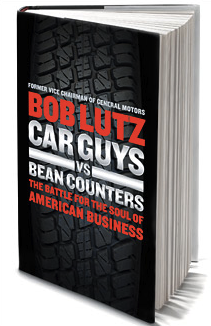
[highlight color="#fddcaf" font="black"]For further reading on this subject, check out Bob Lutz's new book:  Car Guys vs. Bean Counters:  The Battle for the Soul of American Business [Amazon].  Yes, this article was inspired by this book.  It is definitely worth the read.[/highlight]

Filter

🔥 This Week 5 threads · 33 posts
Tech & Data
Used Car Acquisition Costs - 1st Party vs. Auction
Alex Snyder shares DMS data analysis showing customer-sourced used cars (trades, street buys, lea...
Rank the CRMs
A 12-store dealer group on Elead/CDK is exploring a switch and asks the community to rank automot...
Marketing & SEO
Which third-party lead sources are still worth the money?
Dealers compare notes on which third-party lead sources — Cars.com, CarGurus, Autotrader, TrueCar...
General
Looking for honest feedback on an idea. Turns car snaps into professional car listing photos.
An early-stage founder named Dyllan is seeking honest feedback on a tool that transforms casual c...
Too many automotive news sites... anyone else?
A dealer community member introduced AutoIntel, a daily automotive news digest he built to consol...
Get this delivered every week