• This thread is just the tip of the iceberg.The people ahead of the curve aren't Googling for answers — they're already in here, having the conversations you haven't found yet. DealerRefresh is free.Get the full picture →

Your Sales Hiring Forecast 2017 and Keeping Up with the New Buyer

Today’s buyers want to purchase cars like they purchase everything else — simple, fast, and in a transparent manner.

With broad access to the internet, the days of distrust for the car-buying process are long gone, and in its place is a system that works in the buyer’s favor. Once a buyer visits one or two dealer websites, he or she can walk into a store armed with all the information they need to close the deal on their terms.

According to a study conducted by IHS Automotive in conjunction with Autotrader, the average car shopper spends more than 16 hours online researching before making a purchasing decision. Possessing valuable information, such as the car's invoice price, dealer inventory listings, competing dealer bids and manufacturer discounts, puts the buyer in the proverbial driver’s seat.

This new breed of buyer requires a new class of sellercue the rise of the product specialist...

Instead of trying to hard sell a prospective car buyer, a product specialist strives to provide information and insight and present themselves as a knowledgeable resource. These specialists create a low-pressure, more transparent atmosphere, helping move buyers along the sales process without making them feel rushed or overwhelmed. In the long-term, this position will be vital to increasing customer satisfaction and establishing sustained brand loyalty.

Finding the Right Candidate

The product specialist job title is a relatively new one, and management has their work cut out for them trying to find the right candidates for these jobs. Prospective employees may not be familiar with the job title, and their first inclination might be to move on to the next job listing.

Since that is a move away from the traditional role of a salesperson, that fact should be made very clear in the job description.

When trying to attract a broader kind of candidate, stay away from using sales jargon in the listing, as this can turn off applicants. Focus more on the fact that this position is bonus-based with set hours and focuses primarily on client relations, a world away from what dealers offer with a sales role.

Possessing the Right Traits

There is no single blueprint for what makes someone a successful product specialist. Candidates with backgrounds varying from sales, customer support, technology and service all bring something valuable to the role.

Owners and hiring managers may be unsure of what to look for in these candidates, so it’s important to consider these 10 traits that are essential to the position. The primary role of a product specialist will be assisting customers and answering any questions they have. Ideally, a product specialist should not only have a deep understanding of the cars’ technology and features, but they should also possess high emotional intelligence, presenting themselves as a credible, trusted advisor.

A product specialist’s main focus is fulfilling the customer’s needs – not trying to sell them a car so that they can receive commission. The candidate must be friendly, personable and trustworthy in order to establish a relationship with the buyer and guide them along the car buying process without losing their interest.

Knowing What to Look for in a Product Specialist

In our latest eBook, The Complete Guide to Hiring: Product Specialists, our Talent Coaches worked to compile a list of the critical factors dealers should look for when hiring a product specialist:

  • Ability to be a sponge: If they know nothing about the car business, then they must be prepared to absorb information and put it to quick use on the showroom floor
  • Aptitude to demo the vehicles: Must be comfortable using the vehicles and showcasing their features
  • Knowledge of technology: Must be savvy to speak about tech and articulate the information to customers
  • Provide great customer service: Willingness to learn and develop knowledge of how to help customers
  • New to the industry: You want your employees to be molded within your system, not bring old bad habits to your dealership

Notice how the last factor suggests that looking for someone who is completely outside the industry is a good strategy to employ. When looking to hire a product specialist, don’t limit your recruiting to only those with automotive experience. As long as a candidate has the right attitude and personality, he or she could be the right fit for this new position.

This year, make a resolution to not let your dealership fall behind your competition when hiring your next product specialists.

Will your dealership be set-up for success in 2017?

[highlight color="#F0F0F0" font="black"]Download Hireology’s in-depth ebook on all things product specialists.[/highlight]

Why Dealer Reviews of Automotive Vendors Matter

Customer reviews have become a first stop for today's savvy shoppers. Online reviews exist for everything from the quality of electronics and computer accessories to which linens are best for a guest room. While the glut of customer reviews can be overwhelming, they illustrate how much stock people put into reviews and how important they can be for any company.

Reviews may be commonplace now, but before the Internet they were harder to come by. Consumer advocacy phone lines, magazines like 'Consumer Reports' and old-fashioned word of mouth supplied much - if not all - of the reviews people relied on before making a big purchase. Since there was no way for consumers to effectively communicate directly, businesses did what they could to spin articles and published reviews to their advantage and marketing was focused primarily on appearances.

Today, of course, that has all changed since people can now post reviews on social media, video sharing sites and, of course, directly to many review-based websites like Angie's List or Yelp. As a result, companies today not only understand the power of customer reviews - they do everything they can to encourage feedback from customers and to use those reviews to improve their services.

Ratings and Reviews of Industry Vendors

For an industry like auto sales, reviews go beyond fielding customer complaints and promoting positive reviews of dealers. Dealerships too are customers for dozens of automotive vendors at any given time, who can use their own voice not only to help out other dealers considering certain vendors, but also to hold vendors accountable. This kind of collaborative, community-based approach does more than simply connect dealerships, it can improve the auto industry as a whole.

So where can dealers go to to rate and write reviews on vendors in an authentic way?

[highlight color="#3ab353" font="#ffffff"]
>> How Dealers Benefit from a Vendor Management System? <<


[/highlight]
 

While our very own Dealer Forums here on DealerRefresh have been a mainstay for thousands of dealers over the years to collaborate online about their experiences with vendors, the only place I can think of where dealers can formally rate and review vendors is DrivingSales.com, which has a dedicated section on its website with more than 1,000 vendors and 32,000 reviews.

Working collaboratively with competitors to share insights, reviews, and tips may seem counter-intuitive at first but working with your competitors does offer a number of benefits.

First, it creates mentors in the industry.

Sharing knowledge isn't a sign of weakness - it's a sign that you are secure enough in your own experience to lend a helping hand to others who may be still finding their feet in your industry. Mentors in the world of auto sales are more important than ever, considering the rapidly changing landscape and technologies.

Secondly, it expands and improves your professional network.

From simply making connections with other dealers and personnel to being in the know when it comes to exceptional vendors - or warnings on who you should steer clear.

Finally - and perhaps most importantly - you get what you give.

By sharing information and being an active participant in a community of industry experts, you're more likely to hear about new technologies, emerging best practices and innovative ways to win - and retain - customers.

The rise of online customer reviews over the past 20 years has driven home just how important a company's reputation is - and how easily public opinion can impact a business' bottom line. It has also shown how important reviews and sharing information can be for the community in an industry such as automotive.

In addition to being a valuable resource for all, the lessons learned from customer reviews can fuel the future of our niche in this industry.

Why Page Engagement Is More Important Than Lead Forms Fills

As digital marketers we are taught from the very beginning that one of the most important things to measure is “Lead Form Fills”.

The premise is simple: If someone is willing to provide you their information on a lead form, then they are obviously interested in the car on your lot and this automatically makes them a lead.

Score one for the dealership marketing team!

This may have worked back in 2005 and perhaps even in 2010, but today’s buyers have proven that they are much more wary of forms and this wariness has been reflected in their online behaviour.

Why Lead Form Submissions Are No Longer Good Indicators of Intent

As Ward’s Auto states: “Many shoppers were put off by filling out forms asking personal questions. And the people who did go through the exercise and submit leads didn’t get much in return.”

The article goes on to quote Jared Rowe, former president of the Cox Automotive Media Group: “Half of [the people who filled out price quote forms] didn’t get called back, and the other half didn’t get a price quote. They figured, ‘What’s the point?’”

Recent discussions that we have had with top marketers from some of the largest dealer groups in the country have echoed this statement. I’ll paraphrase the sentiment: Even when we (marketers) are able to generate form filled leads - only 50% of them get followed up on in a timely and effective manner.

Is the lead form really as valuable as we’ve been lead to believe? Many studies suggest that car buyers will find the car they are looking for online and only visit one or maybe two stores before making a purchasing decision.

According to the Harvard Business Review, “Fewer than 10% [of car shoppers] will fill out an online contact form or communicate via email.”  However, the article goes to state that “Nearly 75% of buyers had not contacted the dealership before visiting.” So, are they calling, using chat, texting or something else entirely?

What these two findings imply is that digital indicators of a showroom visit are there, but they are just not as apparent as form leads.

This directly contradicts what digital marketers are relying on as their primary metric and so if this metric is not lead forms, then what is it?

The New Indicators of Interest

Shoppers will still go to dealerships’ websites to view inventory, but they are just not filling out forms. So what we need to do is find new metrics to gauge interest.

Time on VDP

The longer a car shopper spends looking at the cars you have on your lot, the more interested you can assume they are. If you have not set up any goals or events in your Google Analytics, the “Time on VDP” metric can easily be calculated using standard Google Analytics fields.  In fact, we have a tutorial on how to measure this.

VDP per Session

The more cars an online shopper views per site visit, the more interested they are in the cars you have on your lot. Like Time on VDP, this is yet another metric that can be seen even if you have not set up any Google Analytic Goals. We have a tutorial on how to measure this too.

Photo/Video Gallery Engagement

Like many complex purchases, scrolling through the photos is a high indicator of interest. Think about an apartment you want to rent or a house you’d like to buy. It’s easy to infer that the more pictures you view in the gallery the more interested you are.

Return Visit Performance

We all know that car buying is a complex decision that requires a significant amount of consideration. As a result, it’s very likely that the buyer will return to the car multiple times. This means that one of the best indicators of interest is the car shopper returning to the site to view the car again.

Dealerships Need to Move from Explicit to Implicit Measurements of Interest

Dealers need to understand that looking at the wrong metrics can have unintended consequences on their results.

By shifting measurement from explicit interest indicators (like form fills) to implicit behavioral metrics (like those mentioned here), dealers are aligning their measurement with the way their buyers are interacting with their website.

This will allow dealers to better invest into products that help drive more traffic and ultimately more sales into their stores.

It’s Enough to be ‘Found’, Right?

In “The $4 billion Taxi Ride: Recognizing When to Influence a Purchase” John Clavadetscher talks about the $3.93  billion automotive advertisers will spend on paid search in 2016. In fact, dealers direct 45.1% of their digital spend towards paid search. I think we can all agree that is a considerable amount of money. What is the outcome? Tens of thousands of dealers, both franchise and independent, all shouting, “look at me, look at me”!

But is being ‘found’ enough?

Even Google, the beneficiary of the vast majority of money spent on paid search, says that doesn’t mirror how consumers shop for a car. In “The 5 Auto Shopping Moments Every Brand Must Own”, Google discusses the sophisticated shopper journey consumers make and looks at the questions most customers need to have answered before they even walk onto the lot;

  1. Which car is best?
  2. Is it right for me?
  3. Can I afford it?
  4. Where should I buy it?
  5. Am I getting a deal?

The long and short of it is, simply being found is not nearly enough.

The consumer’s goal is not to find you; it is to find answers to those five questions. And, unfortunately, paid search does not help them get the answers they need. Yes, your car and your dealership need to show up on the consumers’ radar at some point on the journey, but paid search doesn’t deliver all of the answers for shoppers and isn’t the answer for your dealership – at least not the only answer.

A better goal for dealers is to spend energy and money to show up in the places consumers are looking for answers to those five questions – places where consumers compare vehicles and pricing as well study dealership reviews. ‘Awareness’ is necessary, but consumers spend the majority of their journey in the ‘consideration' phase of the process, finding the answers to the five questions above.  Paid search has a place in dealer budgets, but I would suggest that dealers concentrate their energy where buyers are spending the majority of THEIR energy.

Borrell says that U.S. franchise auto dealers will decrease their paid search spend by 62% by 2018 and that may be a very good thing. When dealers devote more attention to the places where they can truly influence consumers and stop shouting, “look at me, look at me,” they win.  Awareness is one small piece of a much larger puzzle. By paying more attention to the places where you can exert influence, rather only ‘being found’, you will sell more cars and make more money.

Are you spending too much on Paid Search? Let's discuss over on the forums.

Preparing for the Inevitable Downturn

As the Greek philosopher Heraclitus said, "The only constant in life is change." People who work in the auto industry know this is more than just a catchy quote. The auto market experiences seasonal dips and surges and it is also affected by a number of outside forces. The economy affects how much people are willing to spend, environmental issues make buyers more critical of emissions and mileage and industry trends can all cause a downturn that seems to come out of nowhere.

So what can dealers do to be prepared for a downturn in business no matter what's causing it?

Invest Wisely

Making wise investments means more than just buying the best IT equipment or using services from the best providers. It means making investments while times are good that will pay off when things get sluggish. Investments in upgrading facilities, improving your website and creating easier ways for customers to connect with you will make you more accessible and a better option overall even during an economic downturn. In other words, spend for the long term.

Diversify Your Inventory AND Your Services

Carrying too much inventory is a concern for all dealerships, so keep an active eye on your inventory even when sales are brisk. If you carry a fleet of rentals, ensure the cars are well maintained and in regular demand. Also consider your leasing program and amp up your marketing if needed. Leasing a car today means you can count on a customer in 12 or 24 months.

As you diversify your inventory, make sure you're doing the same for the services you offer. In addition to leasing, there are general car services - from routine oil changes to more complex repairs. Operating an on-site service center means you can maintain your own fleet more efficiently, offer incentives to new buyers and attract customers even if they didn’t purchase their vehicle from you.

[highlight color="#ca0813" font="#f4b945"]
>> DEALER REPORT: VDP Views Distribution in 2016 <<

[/highlight]

Check Your Pricing Against the Competition

Even if you think your pricing is competitive, double check it anyway. These days there are a number of programs that let dealers check and tweak their pricing based on local or national averages so don't think you can set a price in April and have it be competitive come May. Be vigilant about looking at local pricing and deals to ensure you're giving your customers the best bang for their buck.

Make it All About the Customer

If the only thing you're offering customers is stale coffee and a TV set airing game shows, you're actively hurting your own business. These days customers post online about their experiences just about everywhere - especially places where they end up waiting around.

Give your customers something positive to talk about by enhancing their experience from the drinks you offer to what you can offer to those waiting for their car to be serviced. Make sure your service center is on time with appointments and familiar with the schedule. Customers want to know their business is appreciated and if they've taken the time to set up an appointment for a specific service, they don't want to be kept waiting while your team scrambles to figure out what needs to be done.

Invest in a good hot beverage machine to give customers greater choice and include cold drinks and small snacks. Offer free wi-fi and a luxurious place to sit and before you know it, they'll be tweeting about the awesome service even before they get their car back.

Be Open to Change

Finally, it's important to remember that change drives growth. Dealers who want to operate like it's 1987 simply can't remain competitive in the 21st Century. Online marketing, enhancing customer incentives, better communication and approaching sales from a new perspective are the only ways you'll stay ahead of the curve. So if the thought of changes and new technology make you nervous, it's time to jump into the deep end. Get familiar with new technology - both hardware and software - to take the mystery out of the process. Not only will you be able to improve your sales and reputation, you'll find plenty of ways these changes can make your dealership more efficient, more effect and ultimately, more successful.

10 Candidate Traits that Lead to Great Employees

When interviewing candidates for your dealership, it can be tempting to only focus on their past experience or current product knowledge. While these topics have their advantages, they can also be taught on the job. However, a candidate’s basic character traits are not nearly as easy to cultivate.

As the interviewer, it’s up to you to use the brief time you spend with a candidate to assess whether he or she will be a great addition to your dealership. You can improve your dealership by adding great employees who exhibit the following 10 traits:

1. They Fit Within Your Dealership’s Culture

According to a recent Mercer's study, 35 percent of employees cite internal politics as the reason for their unhappiness. And unhappy employees do not stay for very long; they usually leave in search for a more accepting workplace. That’s why finding a candidate that fits your company culture is incredibly important to the culture of your dealership. An employee who gets along with his or her team is more likely to grow and invest themselves in the brand.

2. They Come Prepared

If you are interviewing someone for a sales position, a great indicator of their sales ability would be seeing how well they sell themselves. If they come prepared to the interview and are confident in their answers, they will likely come prepared to sell cars.

3. They Are Self-Motivated

You can train someone to know the job, but you can’t train someone to be motivated. That is an inherent characteristic, and if a candidate lacks the ability to motivate themselves, it is only a matter of time before they will not be able to meet their workload.

4. They Are Upbeat

Upbeat employees can bring an air of positivity to your dealership and can even serve to inspire other members of your staff. You want employees who are happy to collaborate with others and are eager to create an environment that better suits your dealership’s workflow.

5. They Communicate Well

Speaking and writing ability, as well as body language, are all features of an effective communicator. If you find a candidate who has a hard time communicating, this can eventually lead to issues arising internally as well as with your customer base if they are hired.

6. They Are Proactive

An employee that shows he or she has no problem taking the initiative is a great asset to your dealership. It shows they are willing to make the effort to better themselves and make your life easier in the process.

7. They Are Detail-Oriented

A candidate with a great attention to detail is an ideal addition to any company but can add tremendous value to your dealership. Detail-oriented employees take pride in their work and make sure to limit the mistakes they make. Employees who possess this trait can eventually be great additions to your management staff as well.

8. They Are Passionate Individuals

If an employee is passionate about their role, it can go a long way in keeping that person happy, engaged and motivated. Passionate individuals tend to become great leaders, teachers and role models for future employees in your dealership.

9. They Exhibit Creativity

Being able to think outside the box is also a skill that can be incredibly useful to your dealership. An employee who is able to find creative solutions to issues or ineffective processes that are in place can help reduce inefficiencies and change your dealership for the better.

10. They Possess Leadership Abilities

Whenever you hire anyone, you are investing in the future of your business. These employees will rise through the ranks to eventually become leaders in your dealership. If they exhibit leadership qualities from the very beginning, it is in your hands to work with them to nurture their success and positive growth.

How to Spot These Traits

Finding a candidate that possesses these qualities can be a difficult undertaking, as every candidate wants to make the best impression possible. You can make the search easier by instituting a more process-driven approach to hiring.

At Hireology, we promote a standardized method to hiring that is based on aggregating data and using that information to choose the best employee available. Our research has found that dealers with a process driven approach are much more likely to find and hire quality candidates. Creating a hiring process in order to improve your chances of selecting the best candidates for the long haul is easy if you incorporate the following steps:

1. Attach a Pre-Screen Survey to the Application

As a best practice before bringing someone in for an interview, we recommend administering a survey that asks about a candidate's past experience, and the questions usually relate to the job at hand. Hireology offers a SmartRankTM survey that is automatically customized for the position you are hiring for and is sent to candidates directly after they apply for the position online. Applicants are scored based on their responses automatically, helping you prioritize who to potentially interview first.

2. Conduct a Standardized, Structured Interview

If your interview process is unguided and consists of different interviewers asking candidates a variety of wildly different questions, the data you will amass will likely be random and hard to navigate. Consider using job-specific, customized, structured interview questions for all your candidates. This will allow you to see how each candidate takes on a specific question, and you can more accurately predict job success by creating a consistent rubric for assessing each candidate.

3. Administer a Personality Assessment

When hiring a new employee, administering a personality assessment can be valuable in helping identify successful traits. In my opinion, one of the best personality assessments available is the DiSC Assessments. The DiSC (Dominance, Influence, Steadiness and Conscientiousness) Assessment Program is a profiling tool that helps improve work productivity, teamwork and communication by giving you a way to see what work styles a potential employee may possess.

As an owner or a hiring manager, personality assessments allow you to evaluate a new hire on a much deeper level and give you insights that you would normally find out about an employee after you have worked with them. You are able to gain a better understanding of the new employees’ motivations and work styles, as well as how they will mesh with the rest of your staff.

Hiring the right staff for your dealership is essential for your continued growth and success. But in order to know what to look for, a structured hiring process must be in place. What’s stopping your business from finding and retaining the best employees?

Let Routine Maintenance Change the Internet Sales Routine

Try brushing your teeth with the opposite hand, or take a different route to work, and see what happens.

It’s been well written that we fall into routines. We look at automotive e-commerce the exact same way. All of us continue to try to fix the buying process, and that’s why the e-commerce transition continues to fail.

As I’ve said many times over the years, one of the critical barriers to selling a car over the Internet is that people have a preconceived notion of how they should buy a car. As many of you may already know, I sold cars over the Internet (as much as technology would allow) for six years. Although there were plenty of signals of an underlying weakness in the various programs, the real moment of clarity occurred when I was working on a direct buy program for AutoNation.

As many of you may already know, I sold cars over the Internet (as much as technology would allow) for six years. Although there were plenty of signals of an underlying weakness in the various programs, the real moment of clarity occurred when I was working on a direct buy program for AutoNation.

After conducting some follow-up, I discovered a customer had purchased locally - even after presenting them 100% of what they asked for. The customer confirmed that we had the exact car they wanted, option for option, at the best price. Yet, for some reason, all of the customer’s logic was overridden. It was too far removed from his/her research to buying routine. They just felt an underlying need to purchase the vehicle locally.

For those of us who have worked on a dealership floor, selling cars becomes part of a routine.

Customers say yes.
Vehicle gets prepped.
Paperwork gets signed.
Vehicle drives over curbs.
Rinse and repeat.

It happens so much that we don’t realize the transaction is an isolated one, that won’t be repeated for several years. We forget that it’s special. Instead, we feel like our efforts somehow overcame decades of ingrained car purchasing behavior. No matter how stellar that isolated transaction might have been, it doesn’t happen at an interval where, in the customer’s mind, it becomes the norm.

In the meantime, the entire automotive ecosystem continues to fall into another related routine. Since the dawn of the Internet; millions of dollars and man-hours have been thrown at creating solutions that create a novel buying experience. Although millions of cars are sold, those same customers didn’t return to the market for 5, 6, or 7 years (as of August of 2016, NADA pegs the average loan schedule at 68 months, for those who are keeping score). Some haven’t returned at all. Those who came back returned to a new purchase pathway that didn’t resemble the “new purchase pathway” they followed before.

Even if their brain tried to reference the new routine, what was being presented didn’t resemble what they were referencing. Like anyone faced with that situation, their brains revert back to what they understand. The same mechanism that controls how you get back and forth to work, or how you brush your teeth, also projects an image of how you should buy a car.

If we want to move customers into an e-commerce relationship, we need start by creating new and repetitive routines.

How? It’s actually quite simple.

Instead of focusing all of our e-commerce efforts on selling vehicles, we should look at the continuously overlooked profit center inside of every franchised dealership: The service department.

Providing a customer maintains their vehicle, they will interact with a (preferably your) service department dozens of times between purchasing vehicles. If a dealership is lucky, its service writers will get to see a household’s vehicles every three months or three thousand miles, or eight times a year if Hubby and Wifey Smith are loyal customers. Again, assuming the dealership is super lucky, and those same Smiths alternate twenty-four-month lease cycles, they interact with the sales team once a year.

You tell me, who has a better chance of altering the routine... the department that delivers smiling faces eight times a year or the department that delivers smiling faces once a year?

Now that I’ve got your attention, go look in the mirror, and tell yourself you’ve fallen prey to your own unconscious habits. For a person who built their career on selling cars online, it’s a tough pill to swallow, but I’m ready to admit it to myself. All of the things we’ve been offering to customers on the sales side in the hopes of creating an e-commerce relationship aren’t enough to change a customer’s routine.

The shopping carts, click-to-calls, live chats, no matter how fancy these things are, do nothing to alter the customer’s baseline model of how to interact with a car dealership. As soon as these tools drive a transaction, the relationship then reverts back to calling the dealership, or just showing up, to schedule routine maintenance on the vehicle.

...let that simmer for a second.   

If you want to reinvent the wheel, start at the hub. If the automotive industry wants to drive change on the retail side of the business, it must focus its efforts where customers interact most. All of the whiz-bang technology that’s meant to create a seamless digital experience should start on the service side. If we can change a customer’s routine way of interacting with a dealership, then we can cultivate a way to change the way they purchase their vehicles in the future.

Stop throwing money at a moving target five years from now, and invest that money in a future you can create today.

What are you currently doing in your service department to create a seamless experience at your dealership?

4 Texting Tips to Maximize the Online Experience with Your Dealership

There is no question that having a solid mobile strategy, including the ability for your customers to text you in a safe and compliant manner, is important in helping your dealership increase sales and improve customer service.

The success of your texting strategy, however, hinges on maximizing a person’s ability to initiate contact with your dealership via text message. The best way to do this is to add a call to action for texting across all of your marketing and communications initiatives, including your mobile and desktop websites, to drive leads, increase engagement, and ultimately enhance your business.

Below are four easy steps for more effectively implementing text calls-to-action with your dealership.

[highlight color="#00497f" font="#ffffff"]
>> How to Turn Shoppers from Third-Party Automotive Sites into Buyers at Your Dealership <<

[/highlight]

Make sure all important phone numbers are text ready

Dealers can implement technologies that exist today to text-enable their existing phone numbers, including main phone numbers, special vanity numbers, service numbers, and call tracking numbers. The reality is that consumers are probably already trying to text to your current landline phone numbers, but their messages are not being successfully delivered.

Include “Text or Call” in your advertising

Anywhere you promote your text-enabled phone numbers, whether in your online or offline advertising, be sure to add “Text or Call” to open new channels of communication with customers who prefer to text. In addition to generating new prospects, your existing customers (including your service customers) will be able to engage with you quickly, easily, and in the manner they prefer.

Feature “Text Us” buttons on SRPs and VDPs and other key website pages

Be sure to implement “Text Us” buttons on new and used vehicle search results pages and on vehicle details pages, on lead forms, and on “contact us” and directions pages on both your desktop and mobile websites. This will help broaden your reach among car buyers and improve your ability to engage and communicate with shoppers who want information about a particular vehicle in your inventory.

Utilize a text lead management system that assists with compliance

Telephone Consumer Protection Act (TCPA) guidelines are strict when it comes to texts, and fines for non-compliance can run as high as $1,500 per unwarranted text sent. Permission-based texting platforms assist with proper opt-ins and opt-outs while serving as an effective lead management system to monitor and track communications since all text communications can be pushed to your CRM for follow up and lead management.

By maximizing a person’s ability to text you via your existing phone numbers (including your service numbers, in your online and offline advertising, and at your SRPs, VDPs, and lead forms), you offer your customers a great first line of communication to engage with your dealership. Texting is also a great way for you to initiate communication and reach out to customer prospects after they have opted in (and after you have implemented a texting platform to assist with compliance and manage leads).

Remember also that texting makes a great addition to the service business, enabling your service advisors to ask the customer’s permission to text with updates at the time of write up, and by allowing the customer to text back with questions once they have opted in.

Recap of 2016 DrivingSales Executive Summit and AutoVentures

For three days in the middle of October in the far reaches of the Bellagio Hotel and Casino in Las Vegas - the Conference Center - nearly a thousand of the auto retail industry’s more savvy dealers and thought leaders assembled to attend the industry’s most progressive dealer executive event - the 7th Annual DrivingSales Executive Summit.

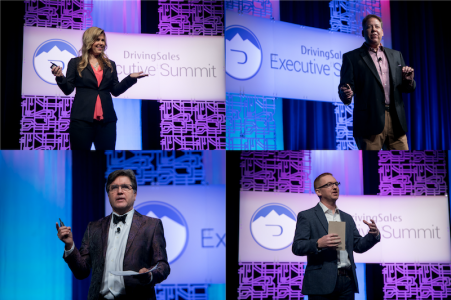
During this brief and exhausting period were Keynote Addresses from global business leaders, Breakout Sessions presented with industry thought leaders, panel discussion, a Best Idea Contest, and the Innovation Cup. And for the second year there was the AutoVentures Summit.

6 Keynotes from Global Business Leaders

DSES-2016-Speaker-4Square.png

Three of the six keynotes this year, including DrivingSales CEO Jared Hamilton's, concentrated on the significance of human resources, training, development and retention. Below is a list each Keynote speaker and topic.


To explore these further and get a pulse on how the keynotes were head on over to this thread in the Forums.

Dozens of Breakout Sessions with Industry Thought Leaders

DSES-2016-Collage2.jpg

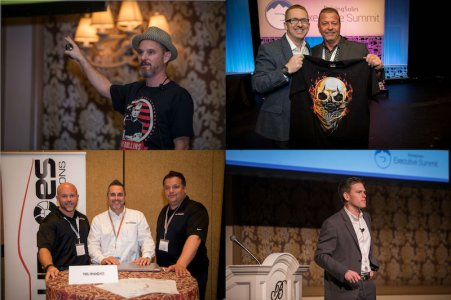
As usual there were six different periods of Breakout Sessions split across the three days, each period offering at least six or more options of sessions ranging from fixed-ops to sales and marketing and leadership. For a complete list of the sessions you can visit the DSES website but to get a pulse on how the content and presenters were in the sessions head on over to this thread in the Forums

[highlight color="#475057" font="black"]
>> What Are the Benefits of a Vendor Management System? <<

[/highlight]

Best Idea Contest

dses-best-idea-winner-paschal1.png

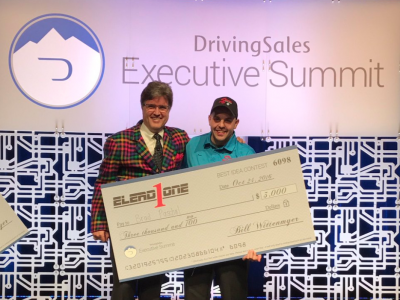
Best Idea Contest Winner - Brad Paschal

The Best Idea Contest consisted of five dealers seeking the recognition of peers and awards from the judges. The winner of the Best Idea Contest was Brad Paschal from Street Volkswagen of Amarillo who won $3,000. The runner-up that received $2,000 was Josh Pogue from Lexus of Richmond Hill, followed by the other three finalists - Brian Armstrong from VW Southtowne, Derrick Woolfson from Younger Nissan of Frederick, and Jean-Francois Blaquiere from Groupe Park Avenue who each received a $1,000 cash prize from ELEAD1One which sponsored the contest. For details about each idea presented check out this thread in the Forums.

Innovation Cup

dses-innovation-cup-winner-clarivoy-1024x768.jpg

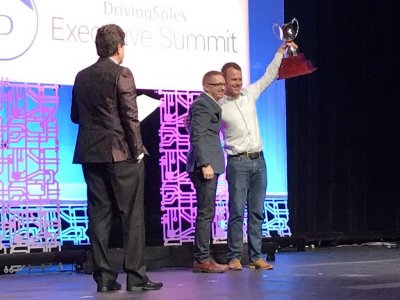
DrivingSales CEO Jared Hamilton with DSES 2016 Innovation Cup Winner - Steve White from Clarivoy

The Innovation Cup also consisted of five finalists that were selected prior to the event by an appointed committee of dealers and thought leaders. The contests were: Calrivoy, LaunchControl by DealerTeamwork, BuyerScout by Outsell, AutosOnVideo, and Shop by Pay from DriveItNow.

Each contestant had three minutes to present their solution to the audience followed by five minutes of questioning from a panel of three including Robert Karbaum (@karbaum), Eve Knudtsen, and Ric McCoy (@RicMcCoy).

Sean Stapleton’s pitch of LaunchControl was the final presentation which drew the most response, but the following morning when Steve White from Clarivoy was announced the winner, a “stunned silence” was drawn.

Each contestant was presented with an award, the largest of which went to Clarivoy. Congratulations to Steve and Clarivoy and all five finalists.

Digital Debate Panel

dses16-digital-debate.png

On Monday the Digital Debates Panel moderated by Joe Webb (@zonewebb) was held where a lively discussion of topics was explored such as gamification and augmented reality technology as to how and when it may eventually affect auto retail; price transparency vs. price validation; the slow uptake of vendor technology to meet consumer adoption; how Google Analytics measurements must change because of the new SEM strategies in the market; and finally who has run a better social media campaign - Hillary Clinton or Donald Trump.

The panelists were:


2nd Annual AutoVentures Summit

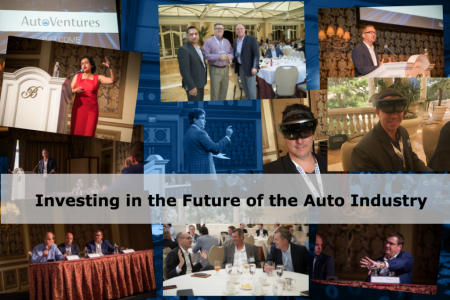
AutoVentures-Collage-1024x683.png

Proving to be a real winner, the AutoVenture Summit is a separate (and additional) event that begins as the Executive Summit ends. Drawing about 200 attendees, the half-day event gathers a group of venture capitalists and innovators competing for not only an award but also funding. It consists of a luncheon, four rounds of presentations and audience voting, followed by a reception.

Contestants this year included:

SHIFTMobility
Voyomotive
AutoPay
Dynatron by the KEEPS Corporation

CloudEngage
Drive Motors
Carlabs
JuiceNet by eMotorWerks

Context360
WeGoLook
Migo
Momentum Dynamics

T2 (Sells Cars)
DriveMode
8Ninths
RationalRobotics

av-aaron-krane-e1478111362226-200x300.jpeg

Drive Motors CEO Aaron Krane

Each contestant had a strict 7 minutes to present followed by 3 minutes of questioning from a panel of three judges that changed after each round, of which there were 4 rounds. After each round attendees were directed to a web page where they were asked to score each presentation, not against each other, just an individual score.

After a 30-minute panel discussion about “Innovations Trends” moderated by none other than Mr. Cliff Banks himself, Aaron Krane, CEO of Drive Motors was announced the contests winner. Congratulations to Aaron and the Drive Motors crew, who we happened to interview here on DealerRefresh in August during.

Innovation Coming of Age

av-alumni-shot-play.png

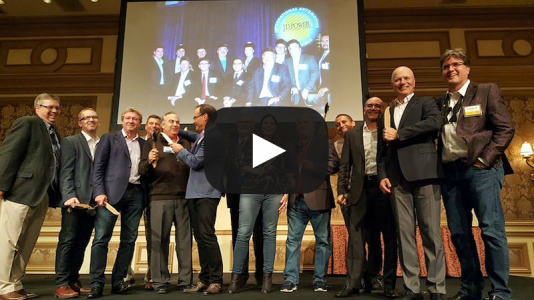
This year, to close the event, MC Charlie Vogelheim was joined on stage with Cliff Banks to present their instant-classic “Innovation Coming of Age,” a 30-minute voyage of auto retail’s coming of age on the Internet from the mid-nineties to today. To cap it off, the two were joined on stage by a dozen industry icons featured in a 10-year-old photo, each asked to share a poignant story related to their early legacy in the business. To view this now-classic Facebook Live recording go here.

On stage with Charlie and Cliff were: Gary Marcotte, Tara Wagoner, Allan Cooper, Chip Perry, Kevin Root, and Bernie Brenner, Mitch Galub, Jared Hamilton, Payman Zamani, Mike McFall, and others.

Closing Anecdotes

dses-2016-collage-1024x776.png

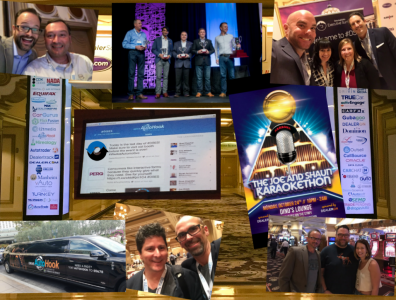
As you can see there was quite a bit of activity packed into this three-day summit, more than what is even mentioned here. AutoHook provided free limousine rides to and from the airport and around the strip. Be sure to say thanks if you took advantage of that. The Canadian Dealer Summit sparked off the event on Sunday afternoon. As usual there was the Joe and Shaun Karaokethon at Dino’s Lounge Monday where all the “cool people” go, the vendor hall, the evening receptions in the vendor hall, and more, not to forget also the Twitter board that streams all #DSES tweets in near-real-time.

DealerRefresh is proud to be a Media Partner with DrivingSales and looks forward to continued coverage leading up to and following the Executive Summit and its associated activities.

Who REALLY has Ownership of YOUR Customer Data?

Who owns the customer data, in your dealership's DMS?

“I do, of course!" and depending on your perspective, you may be right.

Dealers could emphatically answer that question, but what about DMS providers? From their perspective, they might feel they have data ownership since their systems warehouse it. If you live on the OEM side, you may feel you have ownership of the data. After all, it’s your product customers are buying through dealerships that you grant franchises to.

For purposes of this article, let’s consider customer data in its purest form; un-appended third party data and un-processed to derive a new data set (more to come on this). For Example – combining customer transaction data with search data could create an entirely new data set. This does not typically happen within the DMS system involving yet another data vendor. Who owns that data?

The war for data ownership has been brewing for a while and is now at full boil.

The stakes are high with potential impact to rival anything the industry has ever been challenged with. To the victor, huge revenue potential with severe impact to the loser(s).

From each perspective, there is an argument to be made for data ownership, each unique.

The OEM Perspective

OEM's may view themselves as “originators” of purchase customers and therefore feel they should ultimately own the data. Dealers have no customer without a product to sell. Product development driven by understanding of customer’s needs initializes interest in a dealer’s product line. Though dealers facilitate the sale of a vehicle, it’s often the OEM marketing platforms delivering customers to the dealerships.

Understanding customer’s changing desires, access to sales and service history and satisfaction with the dealer network are all business imperatives requiring free access to deep levels of customer data. Most importantly, the ability to stay in contact through the ownership cycle aids re-purchase intention.

What’s at stake? Revenue implications underline the importance of owning this data with downstream revenue opportunities like finance products, subscriptions to services and re-purchase.

The DMS Provider Perspective

DMS providers warehouse and resell data to others - Dealers have long since granted them this opportunity. As customer data resides on their systems and access to those systems are controlled by the providers, DMS providers believe it to be theirs.

For the DMS providers, changing business dynamics make for stormy seas to navigate. With a legacy business model that relies on long term contracts, proprietary hardware and software interfaces outdated by today’s standards, dealers are less satisfied with the status quo and are beginning to challenge this model.

[Tweet "Reselling customer data, with a presumption of ownership, is the life jacket of a DMS Provider."]

What’s at stake? Perhaps survival. DMS providers see the revenue potential. Licensed third-party vendors have seen their costs triple in the last few years with more price increases on the way. This is a hot button for everyone yet the market seems to have absorbed this additional cost. Further revenue schemes, however, are on the horizon.

The Dealer Perspective

Dealers believe they own the data and they make a good argument for it. Their marketing and retention efforts attract the customer. Dealership staff transact the sale and are responsible, ultimately, for retention and customer satisfaction. No data makes it into any system without starting at the dealership.

Revenue implications are just as important from the dealer’s perspective and generally aligns with that of the OEM. Downstream revenue opportunities and repurchase being the biggest elements of the profit opportunity.

What’s at stake? Dealers can certainly access customer data now, right? True, but using that data in new, creative ways are in jeopardy. In a changing customer environment, new tools designed to increase customer engagement rely on access to dealership data. With costs imposed by the DMS providers, this ultimately costs the dealer or vendor more.

Other Concerns

  • Expressed in other articles on the topic are concerns around data security. Liability for a data breech is enormous and few have the proper coverage. Add lack of control over what third-party vendors may use the data for, and it’s a recipe for a sleepless night.
  • Increased fees and added restriction for dealers to access their own data can only cause added heartache…and it’s just not good for the business.
  • Finally, there are a host of legal implications around ownership of data, free trade and competition more numerous and complex to discuss here.

More to follow on all of these topics....

So who owns the customer data?

Legally, the duty to secure data is the responsibility of the dealer. Dealers have mostly granted access and use rights to DMS providers – often without knowing what they have agreed to.

It’s my view that dealers own their data though the OEM’s have a stake in this too – Dealers and OEM’s share a common business goal of improving customer engagement and building longer-term customer equity – to do this, they must have access to their own data, without restriction or excessive fees. Ultimately, the customer is the one that benefits from more timely and relevant communication.

Restricting access to data may work as a short-term solution to a business problem but cannot hope to be a “win” for anyone long term. Raising fees and restricting access can only increase challenges by competitors and stakeholders as awareness increases on this issue. A “scorched earth” legal battle can only damage everyone.

Let’s step back from the abyss before we jump in.

Who will Win, and who will Lose the data ownership battle?

iOS 10.0.2 Just Became Your #1 Lead Provider

Admittedly, iOS 10.0.2 is a challenging shift for many iPhone users. I’ve yet to find anyone who understands how to “Press home to open”.

Me, I just repeatedly hit the button on my iPhone until something happens and then recover from there.

BUT!  I have discovered the lone reason why iOS 10.0.2 alone has singularly improved the automotive buying process more than any other mobile Operating System in the history of mobile Operating Systems... AutoFill!!

auto_mobile_form_fill.jpg


Yes, the most important element of a dealership's website that no one has ever attributed a sale to.  And, the actual name of the function has our favorite industry spelled out into it!  Auto… fill.  Love it!

Autofill is that simple feature where when you, as a user, select a form field the browser prompts you to select a preset value for that field such as <Name>, <Email>, <Phone Number>, or even <Credit Card Number>. Chances are you have been have using AutoFill in your daily lives for years now on your desktop browser - but the utilization of Autofill in mobile browser’s has been sloooow to evolve.

So let’s break down the news and the benefit…

News

The feature to turn on mobile Safari has always been there but was rather hidden. For me and every other user I’ve spoken to that feature was not turned on and to turn it on you had to got to SETTINGS > SAFARI > AUTOFILL > then select yourself as the contact.

*Chrome users, here is an article on how you too can use AutoFill

Now, once you upgrade to 10.0.2, iOS automatically associates you with a user in your contacts. It's this step that automagically enables AutoFill. This is a key advancement as now when a mobile user confronts any form on your website, they are immediately prompted for a singular finger selection to fill in the requested field.

That is… IF the form owner has done their due diligence. You see, it is the responsibility of the developer of the form to use best practices to enable Autofill (in browser and mobile) to work.

Benefit

My company has captured 100s of thousands of leads for our dealership clients through our SNAP trade-in tool. Our average customer has benefited from a very mobile-optimized widget and our average dealership generates nearly 70% of their leads from mobile vs. about 46% of their unique traffic from mobile. 

If you have an average organic form submission of 200 leads total, all sources including: ePrice, trade tool, finance, etc. and you can affect conversion by just 15%, that's 30 additional form conversations you can capture each month. Apply your desired close rate on a per lead basis (let’s use 15% since we are talking about leads from our website) and you could get 4-5 additional sales per month, just for optimizing all of your forms for simple mobile conversion.

Add the fact that most of those new conversations should come through users on a phone or other mobile device and I could argue you are engaging with in-market shoppers within a critical area of the purchase funnel - the point at which your site visitors are using a mobile device.

Actions

Take a proactive approach and test your own website forms for accurate and simple Autofill options. I encourage you to check across multiple browsers such as (and with % of users next to each): Chrome (59%),  Firefox (14%), Internet Explorer (10%), and then Safari (10%).  

Then check it on mobile iOS Safari and Android mobile Chrome.

Test all access points of form-fill. If you find any gaps, email your website provider and any 3rd party plug-ins that utilizes a form [mobile] for conversion.

Here's a bit more information and even a simple guide to how to take advantage of modern mobile form-fill.

Is your dealership website forms AutoFill friendly?  

[highlight color="#F0F0F0" font="black"]I posted a video of this in action over in the dealer forums. Go check it out and let us know what you're finding out when you try and use AutoFill on your dealership websites by mobile.[/highlight]
 

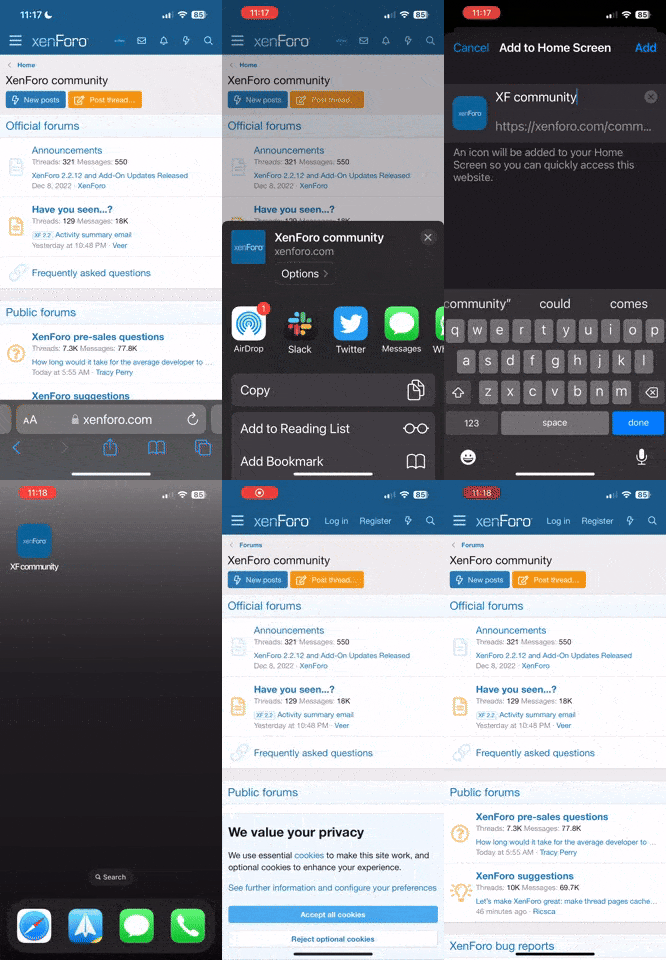
How to Turn Shoppers from Third-Party Automotive Sites into Buyers at Your Dealership

This is a great time in the auto industry for dealers looking to capitalize on technologies that drive leads and grow sales from third-party automotive websites. Consumers have evolved and continue to command more and more seamless and transparent digital engagement with dealers, forcing companies and dealerships to evolve as well.

One such emergence over the years as dealership websites continue to improve in their ability to engage visitors, is the importance of driving quality website traffic. There are numerous tools and products available for dealers to generate specific types of website traffic, and the discerning dealer has much to consider when implementing tactics and techniques to attract shoppers online from third-party automotive sites.

Acquiring Shoppers from Third-Party Automotive Sites

When a shopper searches the web for vehicles, they initiate an experience that for most is bewildering. Studies and tests have shown that the average consumer does not intimately know or grasp the nuances of finding the best vehicle to meet their needs, and when they begin searching for answers, there is an abundance of information now available.

The web is littered with thousands of websites designed to take advantage of this by acquiring visitors through search and paid media and then monetizing this traffic through advertising, capture forms, and now by referring these visitors to paying dealers.

The problem for dealers, however, is that while they are paying to acquire these website visitors, qualifying this traffic and vetting it out to determine the true value of these website visitors is difficult. Practically speaking, dealers are relying on their websites to do the vetting. Because of this, it’s imperative for dealers to take the time to know more about the sites sending them traffic. In order for acquired paid traffic to achieve a meaningful ROI, dealers must partner with qualified auto publisher sites, or sites within qualified publisher networks that have proven track records of delivering low-funnel and high converting traffic.

Pay-per-click ad technology that engages consumers at automotive websites with highly relevant offers based on the specific makes and models they are researching, and their geographical location, are more likely to send low-funnel, high converting consumers to your website. Additional low-funnel in-market consumer traffic to your website each month means increased sales opportunities.

Customizing the Shopper’s Third-Party Site Experience

Even though millions of serious car buyers visit automotive websites every month, many don’t become leads or click through to dealer sites because they haven’t completed the research phase yet, not because they’re not ready to buy a car. To fully engage consumers and turn shoppers into buyers, be sure your offers cater to their vehicles of interest, and to a person’s market area. Also take advantage of custom solutions that allow you to use your own images, logos, ad copy, vanity URLs and destination URLs. Tactics like this help avoid significant bounce rates on your website.

Offer a Variety of Vehicles and Choices, Not Just a VDP

A common misconception about online shoppers when they click on a vehicle ad on a third-party site is that they only want to see that particular vehicle. We know this isn’t true about web leads. Just because a shopper submits a web lead on a particular vehicle doesn’t mean that’s all they are interested in. This is why when we design the sales process we are sure to offer the customer several options and choices of the same vehicle and similar ones as well.

When we acquire shoppers from third-party sites we want to direct their attention to a range of vehicles in your inventory, versus only the white sedan to which the ad directed them. Directing car buyers to areas of your website such as a Vehicle Search Results page, to give consumers more options by offering a broader range of models, or a look at additional inventory, ultimately leads to a better buying experience.

Engaging Shoppers on Your Website - Audio/Video Chat and Text

Engaging with customers on your website, your virtual showroom, is a tremendous challenge. Technology that enables you to see exactly what customers are doing on your website as they navigate from car to car and from page to page in real-time is of growing importance.

So too is technology that enables you to communicate one-on-one, in real time with your customers, in the manner they prefer (chat, text, audio, or video) while they are on your website be it from a tablet device, a smartphone, or on a desktop computer. By engaging with website visitors in real-time to help guide them through the sales process and your inventory much like you would if they were in your showroom, you enhance the buying experience by building trust and rapport.

What is the Optimal VDP Views-to-Days Ratio?

Sponsored-Blue.png
It’s a widely accepted fact in the automotive industry: VDP (Vehicle Details Page) views drive sales. As the watershed Cobalt study from 2013 declared, “If they see the highlights, you’ll see the taillights.”

In that study, Cobalt found that the number and duration of VDP views were two of the top four online sales predictors. They also found that VINs with more than 30 VDP views spent 44% less time on lot.

On the flip side, driving significantly more than 30 VDP views to a particular VIN does not proportionally reduce its time on lot, while quickly diminishing returns.

So, what is the optimum pacing of VDP views? LotLinx proprietary research indicates it’s 30 views in 30 days.

Based on that goal, a dealer’s best digital strategy is clear: drive 30 VDP views in 30 days to every VIN on the lot to maximize inventory turns and eliminate wasted digital ad spend.

But is that, in fact, what’s actually happening on dealers’ lots today? LotLinx decided to investigate.

We studied 299 dealers and their 483,715 VINs between January 1, 2016 and June 30, 2016 and sought answers to two important questions:

  1. Are dealers driving 30 VDP views to every car on their lot?
  2. Are the VINs receiving 30 VDP views in 30 days selling at a higher rate?

Get the Exclusive Report Now

To see what we found, LotLinx has prepared the, “Data From 2016 VDP View Study Illuminates Wasteful Digital Ad Spend,” report available as a free PDF download. Simply follow this link to obtain your free copy.

LotLinx-2016VDPViewStudy-Download1-1024x394.png


Assessing the Limitations of Print Advertising for your Dealership

Remember waking up to the Saturday morning newspaper and racing to the comics section? Mom and dad going through, clipping the coupons for the afternoon grocery run while reading up on the week's newsworthy events. It was a perfect collation of everything you needed to know in one broadsheet wrapper. The daily and weekly newspaper have been a part of society since our great-great-great grandparent’s day and possibly even before. As with many things in the modern world, the things that have historically been the norm are now changing and evolving. The print industry is no different.

The cost of producing a daily/weekly newspaper has always been high. However, with the decrease in readership and the increase in the use of mobile devices, reading what you want when you want (even when you're on the go) has served to reduce the need for the daily. Add to that the massive debt level, difficult labor agreements, and the social perception of trees for newsprint and you've got a problem. This reduced readership paired with the lack of advertising attribution and it’s obvious why print has, in many cases, become an afterthought when it comes to the advertisers and marketing teams.

Due to these limitations, there are only a few circumstances in which I believe you could benefit from the use of print as part of your dealership’s advertising spend.

When You Could Use Print

Dealerships all over the country still use print advertising; that is a fact. Print is still impactful - a fact that many digital media pundits would rather ignore. The thing is that there are still people out there that prefer to read news media in the printed form, rather than using their computer, tablet or their smartphone. Not every person in your market lives the connected lifestyle that most of us do. In fact, I met with the head of a large newspaper company a few months ago. This man (who was pushing 80), was adamant that car buyers bought vehicles using his paper. I was talking about the standard online consumer percentages and he abruptly stood up from the meeting table in his office, pulled a newspaper off the top of the two-foot pile of past days papers, opened it to the center spread which was an ad from a local dealer. He planted his hands firmly on the pages and stared me in the eyes, and said - “THIS… This is where people shop for cars.” So, you may say, “ya, but he's 80” or “sure, but how many people actually read the paper.” But I gave him even more credit when he predicted that I was likely some loyal Volvo driver … which I am.

[highlight color="#22b1e6" font="#ffffff"]
>> Tip: Two Emerging Technologies to Attract In-Market Car Buyers

Why Dealers Need a Vendor Management System and How They Can Benefit

Sponsored-Blue.png
Auto dealers are faced with tremendous operational challenges today. The pressure to always be increasing sales volume, service and retain customers, train employees, etc., and do it all profitably, is no small feat. It also cannot be done alone, which is why dealers depend on strong partnerships with many different providers.

While there is a multitude of services and solutions available that are designed to help dealers do everything they need to grow and maintain their businesses, the industry lacks solutions designed to enhance the dealership experience of its numerous partner relationships and systems. For lack of a better term, there is no Vendor Management System.

Technically the definition of a vendor is a “person or company offering something tangible for sale,” but the term vendor has become the de facto label of outside companies providing any sort of product, service, or solution for dealers.

What is a Vendor Management System (or VMS)?

A true VMS in this context is a web-based solution that can be accessed from any device, e.g. smartphone, tablet, laptop, desktop, etc. and that serves up all the information, access, and resources you need from one centralized interface. It is software-as-a-service (SaaS) solution designed to make life simpler for dealership owners and operators and their multitude of providers.

The Benefits of an Effective Vendor Management System

The primary benefits of a dealership VMS are centralization, authentication, and simplification. Additionally, you will benefit from intelligence and statistics.

Imagine you bring on a new employee in your sales department. In order for him or her to operate and succeed, he or she will require access to numerous different antiquated systems. The new employee will also require training not only from each provider but also from other team members.

Should your team members be providing this training? In some instances, yes, but in other instances, no. Regardless, how would you know which training has been completed or started on by the new employee? Also, which existing employees are utilizing which systems, and how often?

To determine this, you have to log in to each individual system to find out, assuming that information is even available. If it’s not, and in most instances it isn’t, you have to request a report from the provider.

Can gathering this type of intelligence be more efficient?

Centralization

With an integrated Vendor Management System, you will have access to such activity from all users across all platforms and systems. You would know which training videos have been viewed and not viewed for each employee user, which systems are being underutilized, or not utilized at all, and by whom. You would also have a better feel for which resources are integral parts of your operation.

Identity Management

This type of centralization leads to other benefits such as user and identity management. Rather than your employee users being forced to keep track of multiple different systems logins, team members can instead log in to one central location to which they are able to access whichever systems they’ve been granted. And as already stated, when they do (or don’t), you’ll be able to report on it.

These levels of information lead to efficiency and accountability, two things a savvy dealership needs in order to remain competitive and profitable.

DealerHQ-Vendor-Management-Tablet-1024x683.png

DealerHQ - Connecting Dealers with Innovation

Introducing a Vendor Management System at your dealership is simpler than you might realize, and the benefits outweigh the risks. DealerHQ was founded in 2014 to be the only fully integrated platform built for Dealers to access, optimize, and enhance their vendor/partner relationships.

And now, through a unique partnership with DealerRefresh, DealerHQ is able to bring the simplicity and efficiency of its solution to even more dealers by offering a freemium version of the DealerHQ VMS to DealerRefresh Members for a limited time on a limited basis.

To learn more about how your dealership can benefit from this innovative approach to managing dealer-vendor relationships, go here to initiate the process of connecting your dealership with all its innovative resources.

btn-learn-more-orange-gloss-300x107.png

Removing Sales People and Utilizing Product Specialists at Your Dealership

Before pricing information websites, salespeople were the gatekeepers.

When it came to vehicle features, availability and negotiating, it was a dealer’s market. However, today the playing field has changed immensely.

Many prospective car shoppers walk into a showroom already armed with all the information they possibly need, including the car's invoice price, dealer inventory listings, competing dealer bids, color options and even any discounts they are eligible to receive from manufacturers. According to a study conducted by J. D. Power, the average car shopper spends more than 14 hours online researching cars before making a purchasing decision.

Studies show that buyers already know what they want and how much they want to pay well before they step foot into your dealership. This shift in thinking has led many dealers to eliminate commissioned pay incentives altogether and instead price new vehicles closer to cost and reward their staff members for generating higher sales volumes.

The era of the old-school car salesperson has come to a close, and in its place begins the era of the “product specialist.

A product specialist’s role is to provide information and insight about each and every vehicle line, as well as present themselves as a resource if customers have any specific questions. They are the first point of contact for a growing number of businesses and help create a low-pressure atmosphere, while coming across as both helpful and knowledgeable.

The Effect of a Product Specialist

Customers aside, dealership staff is also benefiting from this sea change. When sales associates become product specialists, they no longer have to spend their time focusing on playing middle man between customer and manager; instead, once they get someone interested, they pass them off directly to the sales manager closer. This allows them to go back out to the showroom and continue to educate anyone looking for help.

As far as pay is concerned, bonuses are given out every time a product specialist successfully connects a customer to a sales manager, instead of direct commission, which alleviates the “hard-sell” pressure.

This shift in thinking has helped yield positive results. In 2014, notable Florida dealership JM Lexus saw a sales increase 27 percent between 2012 and 2013 after eliminating the sales associate position and instead replacing them with product specialists. Other dealerships have followed suit and have adopted the product specialist model to help provide their customers with a smooth and transparent sales experience.

A Different Candidate

For owners and hiring managers unsure of where to begin searching for these candidates, it’s important to know what to look for. The primary role of a product specialist will be aiding customers as they bring their web-based research to the showroom floor. Ideally, these candidates should not only be friendly and personable, but they should have a high emotional intelligence, presenting themselves as a credible, trusted advisor. Their main concern becomes the customer’s needs - not maximizing the dealership’s bottom line. When that relationship is established, the whole sales experience becomes smoother and easier to navigate.

The change in dealership structure is also affecting the way these dealerships recruit and the types of candidates they are attracting. According to Automotive News, the average novice product specialist can earn up to $60,000 a year, which can be very attractive to new college graduates.

This trend has made it so that staff members are younger and easier to immerse in a particular dealership’s culture. Owners can create career paths tailored to newer staff and help foster growth within the organization.

Getting Started on the Right Foot

To find the right product specialists for your dealership and keep them there for the long haul, it’s critical that the recruitment and onboarding process is working from the start.

A great onboarding program is designed to educate and engage your employees so they can become productive members of your organization. Since a lot of product specialists are typically inexperienced hires, your dealership’s onboarding program is essential to your success, allowing you to instill the best practices of your dealerships quickly and effectively.

Have you considered replacing your traditional commissioned sales professional with a product specialist? 

Let's continue this conversation over in the dealer forums....

How to Attract In-Market Buyers at Every Stage of the Journey

Sponsored-Blue.png

As digital marketers, it’s your job to attract buyers that are shopping online, and as GMs, you have seen the impact that online media has on sales and the bottom line. However, with new players coming into the fold and existing dealers upping their investments, it will be increasingly difficult to reach car buyers with your dealership’s message.

One way to increase your message reach is to customize your marketing on different parts of the buyer’s path to purchase.

In 2012, Microsoft Advertising created a report that identified the stages of a car buyer’s journey from the initial realisation of a need (or want) all the way beyond the purchase to ownership.

Each of these stages has a variety of media outlets and online information sources which are useful at each stage. Back in the day (or until just a few years ago) we marketers would have to rack our brains to determine the best time and place to display each ad. Fortunately, in today’s digital marketing age we can get extremely targeted with our messages and our content.

Thus, the ability to move from "educated guessing" to "data driven certainty".

What we found missing from the stages that Microsoft had outlined is that car shoppers aren’t actively engaged in shopping 100% of the time. As a result, we need to add another dimension to these stages.

  • Active Auto Shoppers
  • Passive Auto Shoppers

[highlight color="#314e51" font="#ff8403"]
>> Attract In-Market Buyers, Sell More Cars <<
[/highlight]

 

Active Auto Shoppers

Actively shopping shoppers can be classified under two prime categories - Actively Researching and Actively Searching. Traditionally, the only way to get your dealership’s message out to car shoppers in the research phase was to promote a generic offer. New inventory display advertisements now allow dealerships to show these buyers their actual inventory while they are researching.

Actively searching shoppers can be reached with SEM and listings campaign, but competition is high which causes prices to be high. Inventory Display Ads are effective to attract shoppers at this stage but do not suffer from the high competition found in SEM and listings ads.

Passive Auto Shoppers

Typically, dealerships rely on retargeting or demographic targeting for this phase. However, retargeting only works if the buyer has gone to the dealership’s website and targeting by demographics paints everyone with a wide brush and may not be as effective as you think.

A better method would be to combine retargeting from the dealer’s site and behavioural targeting based on the shoppers actual online auto browsing history, learned by a Data Management Platform (DMP) in the Active Stage. By doing this, you can deliver advertising that is relevant even in an environment that is not automotive specific.

Nobody knows your market better than you and auto shopping behavior changes constantly and quickly. Don't be left playing catch-up in an increasingly competitive marketplace. Take the time to sit and brainstorm the next evolution in your dealership's marketing direction.

ssm-aan-attract-buyers-small.png

Two Emerging Technologies that Attract In-Market Buyers

Sponsored-Blue.png

These days you (the marketer) need to be hyper-focused on all of the changes in the auto industry and beyond. Everyday you need to decide; will you put things off in favour of playing catch up with your competition or will your dealership be a leader.

Competition is at an all-time high and doing the same thing as your competition won't get you better results, it'll get you the same results - or worse. What you need to do is look at different tools and techniques.

Here are two emerging technologies that attract more in-market buyers to your dealership.

[highlight color="#CCE6FF" font="black"]

[Learn How to Attract More In-Market Buyers to Your Website]

[/highlight]
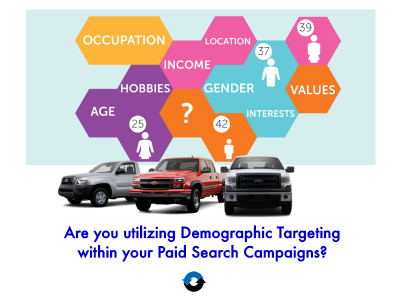
Facebook Ads and Social Media Marketing

PROS: Unlike traditional advertising methods, Facebook Ads are targeted by using user volunteered information and many other metrics. You can refine the targeting in many ways. With Facebook's Ad Manager you can select demographic profiles and interests like:

Males; Age: 25-45; Education: College or University; Employed; Interests: Sports, Outdoors, Active Lifestyle; Relationship: Married with children.

CONS: No matter how focused you can be on a demographic, you are still targeting based on assumptions. What if an in-market buyer that falls within this profile is NOT searching for an SUV or Crossover? What if dad is searching for a sporty sedan to drive to work? Your campaign will be ineffective and you risk the potential buyer blocking any future ads from your store.

This method, like newspapers or billboards, relies on showing your ads to a wide range of people in hopes of potentially having just the right buyer see one post. Fortunately, cost-per-click payment formats will help to protect you from this waste.

Hyper-Dynamic Inventory Display Advertising

PROS: These dynamically generated ads of immediately available inventory are much more successful at converting traffic than their traditional counterparts (Based on countless tests against Price and Offer style ads). If I am a motivated buyer, and I see what I want and that it’s available at my local store, there is a very good chance I will click and engage.

As with regular display ads, these inventory display ads are distributed in large online ad networks so you can reach people where they are spending the most online time. The reach is significantly wider than search and Social Media combined, each of which according to a recent study respectively occupy only 10% and 15% or a consumer’s online attention. Using the right combination of a vast array of websites you can reach well over 90% of your target audience.

CONS: Not everything is perfect, though, even dynamic display advertisements. Unless automated, creating these ads can be difficult and time-consuming. Constantly updating your inventory in many dynamic environments requires the personnel to stay on top of it.

Nobody knows your market better than you and auto shopping changes constantly and quickly. Don't be left playing catch-up in an increasingly competitive marketplace. Take the time to sit and brainstorm the next evolution in your dealership's marketing direction.

ssm-aan-attract-buyers-small.png

The Absolute Best Places you can Trim your Advertising Dollars

“There is no bad press!” has been attributed to a multitude of famous, and pseudo-famous, people that were usually getting bad press at the time but none-the-less were still profiting from the exposure. Is the same true in automotive advertising? Can you effectively throw money at any form of advertising and still sell cars?

Yes, you probably could, but how much of that spending is useful to the dealership and how much is just not bringing value at all? Let’s break down the main forms of advertising that automotive dealerships generally and historically have engaged in and why they maybe should not be the top priority for your advertising dollar.

Disclaimer for Full Disclosure

I am the VP of Sales and Marketing for Speed Shift Media and we work with customers in these fields of advertising. We also have many friends in companies I may be relating to. So in all fairness, many of these advertising products hold value at the dealership level and can be used effectively to advertise their business.

Typical or Traditional Display

I’ve written at length about the inherent difference between typical display and inventory display advertising, so I’m not going down that rabbit hole again. Instead, I want to go into this by demonstrating where traditional display works and why it just doesn’t deliver for your dealership if you’re trying to sell specific cars.

I often refer to traditional display advertising as the McDonald’s or Coca~Cola style advertisements. Simply put, these types of ads are great at building brand recognition or announcing events. You’ll often see the banner or billboard ads online, and they’ll read “Ford Family Pricing EventⓇ” or “Mercedes-Benz S-Class: Benchmark in SophisticationⓇ” or “Hummer: Everyone should get one.” Not one of these banners told you where to buy one, how much or if your favorite trim package was in stock. This is not the intention, the point of these ads is to evoke a response, a feeling or emotional connection with the brand.

This should help you understand why this type of advertising doesn’t help you sell individual cars on your lot. If you are one of three dealerships in your city that sell Mercedes-Benz cars, then the S-Class banner would inspire an enthusiastic shopper to visit the first dealership they could find, not necessarily yours.

A piece of advice, as banner ads are usually just part of the marketing mix, use them. Just don’t count on them to sell more cars. Use them to do what they do best, build your brand recognition or showcase a make & model specific sale your dealership has going on. To target in-market buyers on a very granular level traditional display advertising just falls short, and you could spend your advertising budget more wisely elsewhere.

Print Advertising? Do people still read print?

This is one of those industries that falls under the full disclosure above. I worked with a print media company to help them transition to a more digital world. I have a soft spot for print whether it’s newsprint or magazines. Print transcends generations when it comes to delivering information to the masses but let’s be clear, like traditional display advertising, it too has a time and place.

First, let’s address what and who print advertising works well for. If you live in Austin, TX, then taking out a full page in each of your local weekly papers is probably quite expensive and likely goes (for the most part) unnoticed.  If you live in Lexington, TX, on the other hand, taking out a full page in your local weekly may be a good spend. Why is that, do you think? Let’s talk about demographics and population size for starters. Austin is very plugged in, metropolitan and modern so it can be assumed that most people in Austin don’t read the printed newspaper and would be more aware of advertising in the digital world. Whereas Lexington is a good distance away from the big city, has a smaller geographic footprint, and it stands to reason that its’ population likely relies more heavily on their local weekly newspaper to deliver the events and coupons the residents need.

Print is not dead; it’s simply aging. Not as many people read the newspaper in print form anymore. For this reason, your advertisements here simply won’t carry the same impact as they did before. National dailies like our Globe & Mail deliver a vetted collation of the information you should know. The local dailies  like our Vancouver Sun carry the information of local interest in the same way. Both of these publications though are much like typical display advertising, the amount you would spend advertising on their pages cannot be justified by the few people the ads would reach.

In the long run, if you have a special event and a little money left over in your ad budget, why not take out a print ad. It can’t hurt and may serve to reinforce your digital messaging.

Premium Listings: To List or Not to List?

Listing sites fall under that umbrella of the most recent additions to Traditional media. They have been around for a long, long time, and now it’s become a question of the value you get vs. what you can get from your site. True, but listing sites were and still are the best place to put your inventory in a safe, unbiased environment for customers to search and discover. A lot of consumers still discover their local dealership from a listing site first. For this reason, alone, I would keep advertising on listing pages.

The question is whether premium listings (or other upgrades) provide you with the best bang for your advertising dollar.

To answer that let’s look at why listing sites became popular in the first place. Let’s look to the stereotype of the pushy car salesman trying to get you to buy the car with his best margins, not necessarily the one you need or want. With listing sites, buyers can browse, unfettered, with no pressure and find just what they want. When you look at it this way it’s no wonder that listing sites and their predecessor, the listing catalog magazines, became so popular. Of course, the savvy dealership always wants to be the top of the list to sell the most inventory, and this ushered in the premium listing.

This was a great add-on until the online consumer became savvier as well and realized that these so-called “premium listings” were becoming no different than the pushy sales guy. As a result, now, even the consumers you were capturing previously with a flashier car listing are now ignoring these advertisements and moving deeper into the listing pages to find the vehicle they want.

Listing pages are a valuable spend. No question. Paying for premium is likely not something you need to do as aggressively as once thought.

The Best of the Rest?

TV commercials. Billboards on the interstates. The inflatable flappy arm guy. Paying your niece or nephew to dress up as the mascot to wave at motorists. There is no shortage of places to throw money to sell just one more car. Let’s consider what is a good practice if you’re having a difficult time sorting where the spend should go.

As the dealership marketing manager or team or even GM, you know what has worked for you in the past but let me give you a fairly simple template to follow.

  1. Your priority in advertising is to get as many people as possible to view your inventory, your Vehicle Detail Pages (VDPs). As the marketing person or team, this is your priority and likely where you are going to spend the bulk of your ad dollars. Once you’ve exhausted all these avenues and you have budget remaining ...
  2. The next focus should then fall into getting people to your Search Results Pages (SRPs). This is the equivalent of bringing people to the dealership door and having them cruise the lot. Once you’ve exhausted this avenue, then …
  3. Focus on driving as much quality traffic as possible to your website through SEM, SEO, and other promotional methods.
  4. If you still have some extra money in your advertising budget, then and only after all other higher converting avenues are exhausted, look into direct mail, TV, billboards and other forms of marketing that you feel are giving you a positive return.

Follow this funnel and you will always be able to justify your advertising spend to your leadership. Obviously, success is measured differently at different dealerships but following these basic premises will at least ensure you are spending your advertising budget appropriately.

The big wrap-up

I don’t like to say this is the right way, or this is the only way because it assumes that I know your market better than you. This isn’t the case. In my experience, though, certain types of advertising have historically been successful regardless of geographic market. As technology has evolved and delivery mediums have changed, these historically successful means of delivering advertisements have improved and only gotten stronger which is why I take certain stances.

Over the course of an advertising year, there will always be a place for some, if not all, of the technology discussed in this overview in some form. My goal is to use my experience to help you determine where the best use of your ad dollars are. It is up to you to determine what will bring the buyers to your door, ready to drive away in the vehicle of their dreams.

Are You Demanding Accountability From Your Social Media Agency?

Last month, I participated in a panel discussion about social and digital marketing at the Digital Dealer 21 convention in Las Vegas. In attendance were hundreds of automotive dealers ready to learn best practices in digital and social media.

As the panel discussion unfolded, one issue kept coming up again and again: accountability. Dealers wanted to know what kinds of results they should expect using social media. They wanted confirmation that they were getting adequate bang for their buck. They wanted to know the strategies that could help them grow their businesses.

I found this odd. While traditional media offer varying levels of accountability, social media (especially Facebook) is off the charts regarding accountability and transparency. In fact, it’s more accountable than the previous champion, direct mail, with only 20% of the cost.

Social media measures everything: open rates, clickthrough, and time of engagement. Given Facebook’s recent alliance with R. L. Polk, not only can social media target better than any medium in history, it can now track sales and ROI like never before.

You read that right. Social media generates proven sales. It conquests at impressive rates. And each sale can be tracked right back to the social media campaign that generated it.

But these clients aren’t even seeing this information. Why? Are their agencies not aware it exists? Are they even gathering the info that’s available to them? Are they withholding it from their clients instead of letting it guide everyone’s day-to-day decision-making?

Considering that social media has answered most of the accountability questions that older media can only raise, I thought it would be a good time to clear the air by providing the questions that every client should be asking their social media agency right now.

  1. “What sales can I expect from my social media campaign?”Direct response marketing in this powerful two-way medium is about results. And getting results starts with setting achievable goals. Your agency should know how many Facebook users are in-market for your products in any given geographic area. This will help you set your budget and estimate ROI before you spend a penny.
  2. “Who exactly are you are targeting with my campaign?”Are they targeting owners or conquests? Within what geographic area? Intenders or in-market shoppers? What are their hobbies and interests? Make sure your agency knows and can easily tell you. If they can’t, start shopping for an agency that can.
  3. “Can you show me why your creative will work?”Ask your agency for sample creative early in the process. Ask what specific ad units they will be running. Carousel ads? Video ads? How many per month? This will give you a feel for their strategic direction as you seek to generate clicks and leads.
  4. “What is your strategy for turning shoppers into buyers?”What’s their conversion strategy? Urgency? Offer exclusivity? Social proof? Reciprocity—like a $50 test drive offer? If you want your social media campaign to drive sales, you need the right conversion strategy suited to the right customer.
  5. “Will you deliver leads directly into my dealership CRM system?”Unfortunately, most social media vendors still deliver Facebook leads into their client’s Facebook business page account. There, they get lost or ignored. Your agency must deliver all your hot leads directly into your dealership’s CRM system in real-time. And for free!
  6. “Will you give me a campaign performance guarantee?”Social media is so accountable, that it’s also predictable. So you should demand at least a minimum level of performance. If your agency isn’t confident enough to provide a sales guarantee, that may be telling you something about their capabilities.
  7. “Once my campaign begins, will you keep me updated, and prove that you are delivering the results I was promised?”Are you getting weekly or monthly updates on key campaign metrics, like leads, showroom visits and sales? You should be. Real-time sales matching is now possible on Facebook through their partnership with R. L. Polk. Ultimately, you should know your cost per impression, cost per shopping activity, cost per lead, and cost per sale. (Try and get that from a TV buy!)
  8. “Will you give me the service I need?”When you have a question or concern, make sure you know who your Account Manager is. Does he/she have lots of other clients? Will he/she take your calls and answer your questions? Will they be pro-active and call you with ideas and concerns? If you aren’t receiving this level of service, you’re not getting your money’s worth.
  9. “Will you give me a full sales match?”If your campaign includes lead generation ads, you should get a sales match on all leads. EXAMPLE: Your campaign generates 300 leads. You end up selling to 60 of them—or 20%. What happened to the other 240 leads? Did they buy? If so, from whom? A competitor? Another brand? Insist on receiving a complete sales match so you really know who you’re competing with.
  10. “Are you keeping me up-to-date with best practices?”Social and digital media are constantly changing. Your agency should be at the cutting edge, speaking at industry events and sharing their knowledge with you. Insist on receiving free newsletters and white-papers with the latest thinking, strategies and tips.

That’s it. A list of ten simple questions to ask your social media vendor. If you ask them today and get solid, intelligent answers, you are going to make money using social media. But if you ask these questions and the answers don’t pass muster, the enormous power of social media may be passing you by.

Text Sells: Improve Your CSI and Repeat Business with SMS

Sponsored-Blue.png
Are you looking for ways to improve your Customer Survey scores? Do your service advisors wish they had a clone to do all the follow-up for them? Would you like to see more first-time customers return to your service department repeatedly?

Naturally these are things all dealers desire and there are many ways to achieve them. But how these things are achieved and how efficiently they are achieved will vary from dealer to dealer and with mixed results.

Improve Your Dealer's CSI

You know how hard it is to move the needle on Overall Satisfaction with your CSI. Averages are all too easy to decline, yet improving your average score can be like climbing Mt. Everest. Therefore, every single percent increase counts in a big way.

[highlight color="#cc652d" font="#ffffff"]
>> Free Download: SMS Compliance Guide for Auto Dealers

Adapt or Die: The Auto Dealer's Digital Adaptation Survival Guide

Sponsored-Blue.png
If there is one thing that remain constant throughout the automotive industry today, it is that change is inevitable. Change will never cease to come along and disrupt the way we sell cars and service customers. If we aren't willing and prepared to adapt our thinking, our strategy, and our tactics then we might as well as fold up our chairs and step aside to make way for those that are.

Much like with the game of baseball, dealerships and OEMs must continue to introduce new rules into their playbook due to the inescapable realities of change and evolution, especially when it comes to their digital marketing strategies.

There are three myths that dealers must consider right now when it comes to their automotive digital marketing strategy.

Combined they speak to common misunderstandings about the way consumers behave online and how should approach them digitally:
Myth #1: “It’s all about driving traffic to your website.”
Myth #2: “Most consumers click on search and display ads.”
Myth #3: “If you do paid search right, you won’t waste ad dollars.”

Because of these misconceptions, SEM costs are on the rise. In February 2016, Google removed paid ads on the right side of SERPs – leaving less ad real estate and of course, more competition amongst dealerships.

The result of this change? Industry-wide panic followed by increases in cost per click (CPC). Based upon the laws of supply and demand, as well as the history itself of search engine marketing (SEM), these increases will undoubtedly continue to rise.

Contrary to the market’s alarmed reaction to this change, the fact that paid search ad costs are surging is nothing new to search marketers. A few years ago, AdGooroo performed a study examining the rise in CPCs from 2012 to 2014 across nine different industries. Automotive had an 83% increase in CPC - the second highest out of all nine categories.

Dealers unaware of these changes and making adjustments to their strategies are willingly throwing money in the garbage.

This eBook from AutoHook provides automotive marketers with four vital rules that will give you the adaptation skills you need to prepare for the imminent digital disturbances of the future:

RULE #1: Constantly Reevaluate Your Game Plan
RULE #2: Seek Out Change Before You Strike Out
RULE #3: Never Settle for Mediocre Players
RULE #4: Deliver a Grand Slam Ballpark Experience
Adapt or Die and download your free copy today of the Auto Dealer's Digital Adaptation Survival Guide or click below for more information.

AutoHook-Adapt-or-Die-Learn-More1.png

Online Vehicle Checkout: An Interview with Drive Motors CEO Aaron Krane

As early as 2006, a little known sole-proprietorship known as Ai-Dealer was attempting to introduce the idea of an online shopping cart for consumers to purchase their vehicle on a dealer’s website. CRM trailblazer Brian Hoecht had begun working with a handful of dealers to integrate their DMS with his technology to support online shopping and financing directly on the dealership’s website. At the time, the idea was a stretch for consumers and dealers and the industry alike.

Fast forward ten years, there are now multiple companies providing dealers with the ability to allow website visitors the option to purchase online, each with their own unique approach and features. However, there appears to be quite a division in thinking throughout the industry as to the role that online vehicle checkout plays and what it means to the industry and to consumers.

Recently, while at the 21st Digital Dealer Conference in Las Vegas, I had the opportunity to conduct a phone interview with the CEO of one of these companies - Aaron Krane of Drive Motors, along with DealerRefresh Chief Editor Jeff Kershner. Drive Motors builds commerce experiences for auto dealers. During our conversation Jeff and I were able to get a glimpse of Aaron’s vision for how he sees consumers and dealers responding to this growing capability.

[highlight color="#CCE6FF" font="black"]Don't Miss the Hottest Discussion in the Forums: Online Shopping to Online Buying[/highlight]

Below are excerpts from our interview:

DR: What percentage of consumers want the ability to purchase their vehicle online and how do you know?
AK: Our dealership customers tell us that presently, at least 40% of their customers would prefer to buy their vehicles online, and this figure will only increase. A recent Accenture study reported that three out of four car buyers would prefer to complete the entire buying process online.

DR: What is the feedback like from dealership personnel at dealerships offering consumers this option?
AK: Dealership staff love that customers who use online checkout will not only sell themselves, but also upsell themselves, while the store is closed. That means orders through Drive Motors convert to sale at over 10-times the rate of leads, and have a higher PVR than many stores’ averages. Moreover, in the words of one dealership, online checkout customers are “ecstatic.”

DR: How do online vehicle purchases affect financing and other aspects of the sale?
AK: Drive Motors lets dealerships offer any lease or financing plans they want, and it actually has the most comprehensive and up-to-date source of rates, incentives, and rebates, in the entire market. That means customers get clear monthly payment indications, and they don’t grind on rates.

DR: How are dealers handling the trade-in and financing aspects of the sale when conducted online? What is the customer experience like?
AK: With online checkout, the customer can place an order for a dealer’s vehicle, add a trade-in, choose financing, and the customer feels “closed.” However, the dealership does not actually commit to the sale until it is transacted in-person, and the dealer has verified customer information, as well as inspected the trade-in.

DR: How does online checkout affect front-end gross and profitability?
AK: Sales through Drive Motors online checkout consistently exceed a store’s average profit per vehicle, often by hundreds -- if not thousands -- of dollars. This is because online checkout lets dealerships offer customized add-ons, and when customers are in their comfort zone, they upsell themselves.

DR: What do you look for in a dealership to ensure that offering online checkout is a good direction for them?
AK: Online checkout is a fantastic option for any dealership, but it’s much more effective when the dealership has an impressive website, and also an active online-advertising strategy. Of course, car pricing is also critical.

DR: What are some of obstacles and challenges dealers experience when offering customers the option to conduct their purchase online?
AK: There is no real challenge to trying online checkout by Drive Motors; we’ve made it a no-brainer. Setup entails cut-and-pasting one line of code into the dealer website; no further inventory connection is required. Then, when sales occur, the complete data is shared seamlessly into the dealer’s existing financing software.

DR: What is one on-point message you’d like the industry to know around the idea of consumers conducting their vehicle purchase online?
AK: “Let your customers close and upsell themselves with online checkout, day or night, and you’ll get more sales, with more sale profit, while your store is closed.”

divider-1024x166.png

Aaron is one of a handful of key thinkers and innovators we have spoken with on this subject, including dealers, auto group leaders, and thought leaders alike. As you can see, he claims that as many as 40% of consumers prefer online checkout, a statistic consistent with what Prodigy CEO Michia Rohrssen suggests in his piece Online Sales Isn’t the Future of Car Buying...

As Bill Playford said, "Today’s buyers are online, like it or not. They’re using their smartphones to do research about cars and pricing (even when they are on your lot,) utilizing technology to be as savvy as possible throughout the entire experience. How does anyone expect them, or anyone who comes after them, to stop using a buying channel that they’re used to?"

As Edward Latham suggested in his 2007 Auto News article, "...you just know it's going to spread."

[highlight color="#CCE6FF" font="black"]Join the Discussion: Online Shopping to Online Buying[/highlight]

Sell More Trucks Without Spending More Money

An Experiment Using AdWord’s Demographic Targeting

Background

A while ago I read an article on the Washington Post about how the F-150, and most other trucks, became a plaything for the rich. A quote from the author got me thinking about a using a new approach to my PPC truck campaigns for my clients:

The truck's turn from rugged back-roads to glitz and luxury has driven its price twice as high as the average car or truck sold in the U.S. this year - pricier even than upscale SUVs from Porsche and Mercedes-Benz.

If the article is true, that the F-150 and other trucks have gone upmarket, then I should re-work my PPC campaigns for my volume truck dealers. If the campaigns are optimized according to what the article states then I could save my dealerships thousands in ad spend by targeting only demographics that are more likely to convert - high income households.

The goal of this experiment is to lower the CPA while increasing conversion volume so we’ll be able to spend less in the future and receive more qualified leads. I’ll be taking advantage of AdWord’s advanced demographic targeting to help me find the winning campaign.

Let's see what happens...


DR-Demographic-Targeting-Paid-Search-Campaigns.png


The Control

The control is a successful campaign in the Display network from a large volume dealer in the North East. This campaign will be cloned 4 times and paused while the experiment is running. The results of the 4 experiments will be measured against this campaign.

The Experiment

I used a set of rules that each campaign must follow to help me determine the winner:

  1. Create 4 identical Truck campaigns, each with the same targeting, bidding, settings and ads.
  2. Separate the 4 campaigns by adding Demographic targeting. Target by household income tier.
    1. Campaign #1: Top 10% Income
    2. Campaign #2: 11 - 20% Income
    3. Campaign #3: 21 - 30% Income
    4. Campaign #4: Lower 50% Income
  3. Run for six weeks.
  4. Analyze results to determine which experiment exceeded the control in conversion volume and CPA.

Once the top performing campaign is determined we can scale it and pause the other experiments.

The Results

After running the experiments for six weeks I was excited to see a clear winner emerge. Here’s 3 views on how the demographic targeting based on household incomes reacted:

View 1
dr-view3.png


The amount of clicks, impressions, and costs that accrued over 6 weeks are relatively spread even. The Top 10% income earners had the highest CTR, but the bottom 50% had the best CPC.

Now let’s add conversion data to this set:

View 2
dr-view2.png

The Top 10% earners are the runaway favorite when looking at conversion data. An impressive 156 converted clicks, and a conversion rate that’s more than double the experiment average of 4.23%! In fact, the converted click volume for the Top 10% is greater than all the other demographics combined.

We’re not done yet. The conversion data is impressive, but let’s take a look at the site engagement metrics:

View 3

dr-view3.png

Another knockout punch by the Top 10% - we have a clear winner.


In fact, just by comparing rates between all experimental campaign we can see that the Top 10% wins in almost every category:

dr-view-finalrates.png

It was at this phase when I decided to pause the other experiments and increase the budget for our winner. I’m pleased to say that this experiment ended up being a big win for the dealership.

What do you think?
Are you utilizing Demographic targeting within Paid Search Campaigns?
Have a question or something to add... join the conversation over in the dealer forums 

3 Benefits of a NEW HIRE Onboarding Program

The onboarding process begins on your new hire’s first day and ends after all the HR paperwork is signed and filed, right?

Well... not quite.

The truth is, onboarding begins long before the employee ever officially clocks-in and can last months or even up to a year before an employee is fully immersed. Onboarding occurs throughout the entire selection and hiring stage, as prospective employees receive their first look into the inner workings of your dealership - including the HR process, organizational hierarchy and different levels of communication.

That’s why an effective onboarding program is critical.

A great onboarding program is designed to educate and engage your employees so they can become productive members of your organization quickly and effectively. The more comfortable they feel, the more inclined they will be to stay employed at your dealership.

Still not convinced?

THREE Reasons to Institute a Comprehensive Onboarding Program

Here are three reasons why your dealership should institute a comprehensive onboarding program.


  1. Engage Employees Early On

According to a recent study conducted by the National Automobile Dealers Association, the annualized turnover rate for all dealership positions is 39.4 percent. For sales consultants, turnover is 71.9 percent, with a three-year retention rate of just 32.8 percent. It’s clear that employees are not engaged in their positions. A solid onboarding program can help your dealership properly facilitate early success and help to retain talent.

Engagement is the number one objective when it comes to your onboarding program, not just because it helps build company culture and rapport among new staff, but also because it directly drives your dealership’s growth. According to a study done by Gallup, employees who reported themselves as “highly engaged with their company” had 147 percent higher earnings per share than those who were “not engaged.”


  1. Assimilate Your Employees

Most of the time, the only way new hires learn about the culture or the subtle nuances of a dealership is after they have done something they shouldn’t have. This “trial by fire” approach is not conducive to helping create an employee that wants to stay with your organization and grow. Being unable to assimilate isn’t only frustrating for new hires; poorly assimilated employees can create a great deal of conflict within your organization and have a severe effect on the overall team morale.

A well-thought-out approach to onboarding can serve to assimilate new staff members and provide them with clarity regarding their roles, responsibilities, and team goals, along with effectively working with other departments in your dealership to help them all reach the same page and best work together.


  1. Encourage Open Communication

According to a study done by the University of Missouri Business Development Program, two of the top 10 reasons why employees quit their jobs were attributed to inadequate training and poor communication. New employees may often feel scared or intimidated to share concerns or feedback about their new role and surroundings. They may not feel comfortable asking questions or expressing their opinions and that could negatively impact their work, as well as motivation to stay on board.

An onboarding program can give your dealership’s new hires a proper communication structure to help them get answers to questions about their new workplace without the unneeded pressure. Encouraging them to feel comfortable and honest can do wonders in creating a space where they feel secure and part of a team. If this is something that is established early on in the onboarding process, it translates to more confident workers and a better outcome for your dealership.

Improve Onboarding and Decrease Turnover at your DealerShip

Implementing a solid onboarding program ensures a better employee/employer relationship right from the start, as well as making communication easier - keeping employees engaged and interested in staying for the long haul.

Your dealership’s onboarding program is not only essential to its success, but can go a long way towards growing your culture and increasing your bottom line. What’s stopping you from retaining your dealership's employees?


Filter

🔥 This Week 5 threads · 28 posts
Tech & Data
Used Car Acquisition Costs - 1st Party vs. Auction
Alex Snyder shares DMS data analysis showing customer-sourced used cars (trades, street buys, lea...
Rank the CRMs
A 12-store dealer group on Elead/CDK is exploring a switch and asks the community to rank automot...
General
Looking for honest feedback on an idea. Turns car snaps into professional car listing photos.
An early-stage founder named Dyllan is seeking honest feedback on a tool that transforms casual c...
Too many automotive news sites... anyone else?
A dealer community member introduced AutoIntel, a daily automotive news digest he built to consol...
Dealer feedback - finding hidden mechanical problems before they impact profitability
A vendor called Sorel is seeking dealer feedback on an AI-powered tool that analyzes engine acous...
Get this delivered every week