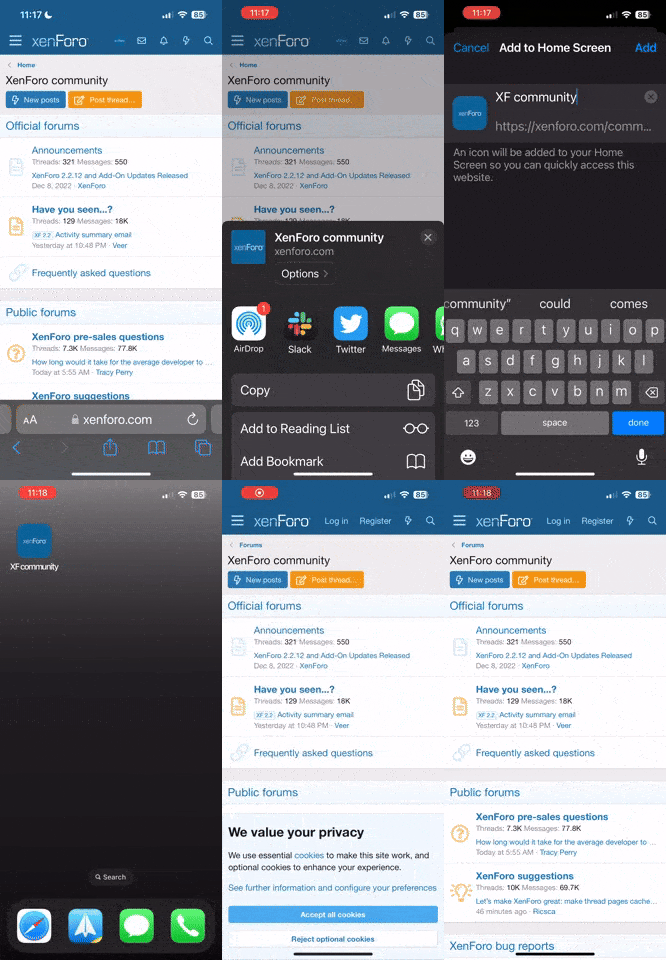
Yes, you can pinch and zoom on iPhone also, but you're zooming on a 100k (100,000 bytes) photo, which is small today's standards. A thumbnail looks ok at 100k or less, but final images need to be 1/4 megabyte (250K) at least IMHO.Thank you, you can zoom in. I guess it works better on Android.
Hi Darius, I like the photo quality, and order, but could not find a way to supersize the images? All images were small on mobile device (iPhone 16 pro).
Good post!If you’re building an app, managing content can quickly become a headache. That’s where a CMS for app development comes in. It helps you organize, update, and control content without needing to touch the code every time.
In this guide, we’ll break down what a CMS does, why it matters for app projects, and how to pick the right one for your needs.
So, what exactly is a CMS?
A Content Management System (CMS) is a tool that allows you to create, edit, and manage content—like text, images, videos, and other data—through a user-friendly dashboard. You don’t need to be a developer to use it. That means your marketing or content team can update in-app banners, blog sections, or product descriptions without writing a single line of code.
When it comes to app development, especially for mobile or cross-platform apps, a CMS becomes even more valuable. Instead of hardcoding content into the app, you connect it to a backend CMS. That way, updates happen in real-time, without needing to push a new app update every time something changes.
Why is this important?
Because app users expect fresh, relevant content. Whether it’s updating your home screen offers, publishing a new article, or adding a seasonal banner, being able to make fast changes matters. A CMS for app development gives you that agility.
There are also different types of CMS platforms to choose from. Some are traditional systems like WordPress or Drupal (with mobile support), while others are more advanced headless CMS platforms like Contentful, Strapi, or Sanity. These headless systems are built for flexibility—perfect for developers who want full control over the front end, while content editors can still manage everything from the backend.
Another huge benefit? Scalability. As your app grows—more users, more content, more screens—a CMS helps you stay organized. You can manage content in one place, structure it properly, and deliver it across multiple platforms (web, mobile, even IoT) without duplicating work.
At the end of the day, choosing the right CMS for app development depends on your app’s goals, your team’s technical skills, and how much flexibility you need. But one thing’s for sure—it’s an investment that saves time, cuts down on development costs, and makes life easier for both devs and content teams.
When people talk about CMS making app development faster, I think a lot of it comes down to reducing friction between content and code. I’ve worked on a couple of mobile projects where a decent CMS saved us a ton of time, especially when non-technical folks needed to update content without breaking anything. It also helped keep the app logic cleaner, since we didn’t have to hardcode every little change. While figuring this out for a React Native app, I stumbled across Limeup’s blog post and it honestly matched my own experience pretty well. It breaks down what to look for and how teams usually approach hiring and structuring React Native work, without overhyping things. For me, the biggest win was aligning the CMS setup with the dev workflow early on—once that clicked, updates became way smoother and releases less stressful.

Thanks for sharingIf you’re building an app, managing content can quickly become a headache. That’s where a CMS for app development comes in. It helps you organize, update, and control content without needing to touch the code every time.
In this guide, we’ll break down what a CMS does, why it matters for app projects, and how to pick the right one for your needs.
So, what exactly is a CMS?
A Content Management System (CMS) is a tool that allows you to create, edit, and manage content—like text, images, videos, and other data—through a user-friendly dashboard. You don’t need to be a developer to use it. That means your marketing or content team can update in-app banners, blog sections, or product descriptions without writing a single line of code.
When it comes to app development, especially for mobile or cross-platform apps, a CMS becomes even more valuable. Instead of hardcoding content into the app, you connect it to a backend CMS. That way, updates happen in real-time, without needing to push a new app update every time something changes.
Why is this important?
Because app users expect fresh, relevant content. Whether it’s updating your home screen offers, publishing a new article, or adding a seasonal banner, being able to make fast changes matters. A CMS for app development gives you that agility.
There are also different types of CMS platforms to choose from. Some are traditional systems like WordPress or Drupal (with mobile support), while others are more advanced headless CMS platforms like Contentful, Strapi, or Sanity. These headless systems are built for flexibility—perfect for developers who want full control over the front end, while content editors can still manage everything from the backend.
Another huge benefit? Scalability. As your app grows—more users, more content, more screens—a CMS helps you stay organized. You can manage content in one place, structure it properly, and deliver it across multiple platforms (web, mobile, even IoT) without duplicating work.
At the end of the day, choosing the right CMS for app development depends on your app’s goals, your team’s technical skills, and how much flexibility you need. But one thing’s for sure—it’s an investment that saves time, cuts down on development costs, and makes life easier for both devs and content teams.
Ready to take your app content management to the next level? Start exploring CMS options and find the one that fits your vision.
Compared to Tekion Desking, it is pretty good. Other than DC cannot push back a complete deal into Tekion DMS. The irony. But I blame Tekion for that API limitation. Hopefully DC and Tekion DMS get another level of integration which would allow us to Desk in DC. Tekion is the worst Desking DMS out there.Drivecentric is incredible, but their new desking is the absolute worst.
Yes i see thisNice thread, thanks for kicking it off! A few thoughts:
- Great that you’re doing both organic and paid social. Organic helps build trust; ads help scale reach.
- Don’t get too hung up on follower numbers, engagement (shares/comments) often matters more than raw count.
- Try testing content types (video, stories, reels vs static posts) to see what your audience actually responds to.
Curious, what metrics do you use to decide whether a social campaign is “working”?
At the end of the day, social media is like good facilities management Visit official source, it’s all about consistency, maintenance, and adapting to what people actually need.
Great for CMS app developerIf you’re building an app, managing content can quickly become a headache. That’s where a CMS for app development comes in. It helps you organize, update, and control content without needing to touch the code every time.
In this guide, we’ll break down what a CMS does, why it matters for app projects, and how to pick the right one for your needs.
So, what exactly is a CMS?
A Content Management System (CMS) is a tool that allows you to create, edit, and manage content—like text, images, videos, and other data—through a user-friendly dashboard. You don’t need to be a developer to use it. That means your marketing or content team can update in-app banners, blog sections, or product descriptions without writing a single line of code.
When it comes to app development, especially for mobile or cross-platform apps, a CMS becomes even more valuable. Instead of hardcoding content into the app, you connect it to a backend CMS. That way, updates happen in real-time, without needing to push a new app update every time something changes.
Why is this important?
Because app users expect fresh, relevant content. Whether it’s updating your home screen offers, publishing a new article, or adding a seasonal banner, being able to make fast changes matters. A CMS for app development gives you that agility.
There are also different types of CMS platforms to choose from. Some are traditional systems like WordPress or Drupal (with mobile support), while others are more advanced headless CMS platforms like Contentful, Strapi, or Sanity. These headless systems are built for flexibility—perfect for developers who want full control over the front end, while content editors can still manage everything from the backend.
Another huge benefit? Scalability. As your app grows—more users, more content, more screens—a CMS helps you stay organized. You can manage content in one place, structure it properly, and deliver it across multiple platforms (web, mobile, even IoT) without duplicating work.
At the end of the day, choosing the right CMS for app development depends on your app’s goals, your team’s technical skills, and how much flexibility you need. But one thing’s for sure—it’s an investment that saves time, cuts down on development costs, and makes life easier for both devs and content teams.
Ready to take your app content management to the next level? Start exploring CMS options of ppcine download apk and find the one that fits your vision.
I am an Independent Dealer.Thanks Chris! I agree its price sensitive and the budget sites lack lead gen. What kind of step up do you think it takes to be worthwhile? When I was in retail I always set the bar at 300% attributable ROI for any marketing spend.
keep seeing the same pattern: Dealers start with the $99 solutions (Carsforsale, DealerCenter basics, etc.) because they're affordable, but those sites are cookie-cutter, slow, and not built for actual SEO or conversions.
Always check the fine print for additional charges, such as insurance, airport surcharges, or mileage limits, which can significantly increase the final cost.Hello everyone.
I'm planning a short trip and need a reliable, budget-friendly car rental. Every time I search online, I’m overwhelmed by hidden fees, insurance add-ons, and unclear terms.
I’m looking for advice on how to truly find the cheapest car rental without sacrificing too much on quality or reliability.
Are there any trusted sites, apps, or insider tips to avoid common traps? Is it better to book in advance or last-minute?
Any rental companies known for transparency and low prices?
I’d appreciate your suggestions and personal experiences of Cars.
How do you know? How can you look at a Franchise store website and know that this isn't happening?I haven’t seen this happen @ Franchise stores. What dealer wants to deal with the headaches that possibly comes with? I guess there may be some but I haven’t come across any.