
-
This thread is just the tip of the iceberg.The people ahead of the curve aren't Googling for answers — they're already in here, having the conversations you haven't found yet. DealerRefresh is free.Get the full picture →
You are using an out of date browser. It may not display this or other websites correctly.
You should upgrade or use an alternative browser.
You should upgrade or use an alternative browser.
Filters
Show only:
#RefreshFriday Merchandizing - Someone is Launching a new Service | Joe Pistell

- By Chris Cachor
- RefreshFriday Weekly Webcast
- 197 Replies
I like the "confirmed available as of" timestamp.

Remember when AI was $$$ CHEAP?

- By joe.pistell
- AI Artificial Intelligence Tools & Ideas
- 13 Replies
Ugh. a $500 Fable 5 day. That's over the $200 base. I could have waited 36 hrs for the reset, but, time is more valuable. It's worth every penny, but it still is painful to a bootstrapper.
I Wonder if Dealership Websites Are Solving the Wrong Problem?

- By Gayle Rogers
I don't think this is simply a "website issue"...It's a larger problem of expectations, intent and purpose. @KennySmithAutoUnite outlined it really well.That example with your daughter is probably the best way to explain it.
If she walked into my store asking for a pink Beetle, I wouldn’t tell her she’s shopping wrong. I’d ask a few questions first. How far is she driving? What can she comfortably afford? How important is reliability? What does she actually need the car to do?
Then show her a few vehicles that make sense and explain why.
And I’d leave the Beetle in there too. If she understands the tradeoffs and still wants the pink Beetle, that’s fine. The point isn’t to choose for her. It’s to help her make a better decision.
I think that’s the piece we’re missing online.
Some customers know exactly what they want and should be able to get straight to inventory.
Others need help getting from “I need a car” to “these are the three that actually make sense for me.”
Once they make that decision, then we get into the actual inventory, mileage, condition, history, equipment, price and which store they want to deal with.
A good salesperson already does a lot of this in person. I think the website should be able to do some of it before the customer ever raises their hand.
Most dealership websites, and really a lot of websites in general, are built almost entirely around getting someone to contact you. Go to a dealership website and count how many different ways you're pushed to call, chat, submit a form, check availability, get a price, etc.
The website isn't really being used as a consultative tool. It's being used as a funnel to get you off the website and into contact with the dealership.
And I think that extends to marketing in general. So much of what we put in front of customers doesn't position dealers as experts, designed to help them understand their options, make a better decision, or always make the best choice. It's designed primarily to serve the immediate goal of generating a lead.
A lot of it is systemic. We've built a lot of technology, marketing, metrics, and processes around capturing the customer instead of helping the customer.
How Much Does SEO Cost Per Month in the USA?
- By Gayle Rogers
I love that you have been put the effort in to do the actual research. I know there aren't enough people in our industry that do. That said, I'd be really curious about the correlation vs causation factors. There are so many things that come together to create a "well optimized site" and/or one that ranks well. I'm certainly not dismissing the importance of CWV, but shark attacks are not caused by an increase in ice cream consumption...I have been doing a ton of work on this recently but figured I would share the results of a case study we ran across 1300 dealerships
The basics were we monitored Core Web Vitals every day on both mobile and desktop (and technically still do)
I then segmented the data between the highest performers and lowest performers in the same market and pulled SEO keyword ranking data to compare
Summary - website that have passing or near passing CWV scores ranked for more keywords in positions 1-3 on google than websites who had failing CWV
And that was looking at dealers who didnt have a lick of SEO compared to dealers spending $5k a month, so the moral of the story much like everything is that if you dont have the basics down, it really doesnt matter and if anything hurts you
Anyway I look forward to offering SEO services in the very near future for a fraction of the cost with significantly more impact and ability to track sales back to the work to give true ROI
Tuesday 2pm Dealer Search Tip Series - Tip #2
 Service is the most underutilized part of the dealership website. It is the most important gateway to future sales.
I'm researching dealership defection rates driven by rising vehicle ownership costs. When I'm done, I'll share it here to further strengthen your argument.
Core Web Vitals Rankings - I spent way too much time on this to rank 1300 websites

- By George Nenni
Here is a cool website I found looking for dealership citation data, pretty cool. Ranks core web vitals, and shows market share for automotive website providers, and shows when dealers defect from one website provider to another:

 www.dealerships.io
DealerDB - Market Dynamics
Explore the most up-to-date data on market share shifts, performance metrics, and vendor switches to stay ahead in the competitive auto dealership industry
Core Web Vitals Rankings - I spent way too much time on this to rank 1300 websites

- By Alex Snyder
I like what you're up to!

#RefreshFriday Merchandizing - Someone is Launching a new Service | Joe Pistell
- By joe.pistell
- RefreshFriday Weekly Webcast
- 197 Replies
Let's work that "Check Availability" CTA:
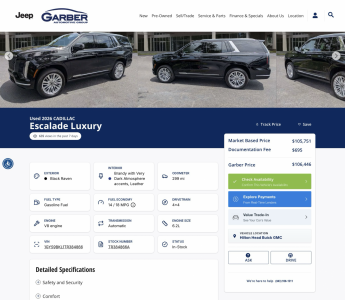
CTA call to action is one of the most valuable lead gens, let's experiment!
Within our constraints of car dealer world... this is very doable:
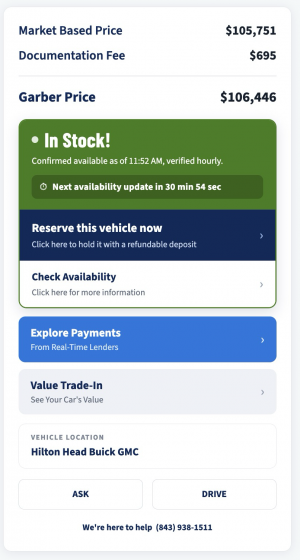
This CTA exploits that most websites are updated hourly. The goal is to change the CTA into a sense of urgency.
TROLLS... Be nice, this is a 1st draft, I am sharing the draft for idea improvement feedback.
This is yet another "you heard it here first" share on DR.
Your NEVER see this on Linkedin.
In your opinion, where is the biggest gap in today's CDPs?

- By JayKelly
- DMS Systems, Data, Security, I.T.
- 6 Replies
Are the large players in this space building their own walled gardens? Will this help or hinder at the dealer level? I could be wrong but I am pretty sure Cox hasn't and probably can't integrate all of their solutions beyond an API currently.
I believe the value proposition of the CDP is allowing dealers to be proactive. unlocking the insights, allows dealers to become as efficient as possible with their investments.
Watch the Widewail interview around AI assistants and the data they are ingesting.
Did you catch the Gemini updates?
Steallantis's new rules?
The FTC .....
You have increased scrutiny from the govt, OEM's and search engines on the bottom of the funnel where dealers spend the majority of their dry powder trying to move the needle.
You will need to truly understand your metrics before you can pivot to offense. The dealers that start to dive into the lost opportunity cost will set themselves apart in the future.
Struggling to generate workshop traffic
At 12 ROs a day with that much room in the shop, I probably wouldn’t try to solve it with one promotion.
Direct mail still works pretty well for us, especially when we target it instead of just blasting everybody. I’d go after customers who haven’t been back, overdue service, declined work, missed appointments, older VWs, stuff like that.
We’ve also been getting service appointments through Meta. Pretty simple ads. Real pictures of the shop, one reason to come in, and send them straight to the appointment scheduler. Something as simple as letting people know you have openings this week can work if everybody else around you is booked out.
I’d hit Google pretty hard too. If somebody nearby searches VW service, brakes, tires, warning light, MOT/inspection, whatever the problem is, I’d want them to be able to find you and book without having to hunt around.
Then I’d track booked appointments, shows and actual ROs from each source. If the mail is producing ROs, send more. If Meta is producing them, keep feeding it.
With that much open capacity I’d be trying a few channels at the same time and figuring out which one actually puts cars on the drive.
What actually makes you switch on a new syndication destination?
Joe, I think you’re right. I’ve never sat in a store thinking we need another place to send inventory. Something usually has to make me care first.
If you can show me real shoppers are there, keep the pricing and inventory accurate, and it doesn’t create more work for my team, I’ll listen.
Ryan, I’d call every one of those stores that turned it on without being asked. I’d want to know what happened that made them go looking for you in the first place.
What process at your store only one person really knows?

- Off Topic & Everything Else
- 0 Replies
Curious if every store has one of these.
Everything runs fine until somebody takes a few days off and then you realize they’re the only person who really knows how part of the process works.
Could be titles, accounting, recon, inventory, CRM, service, whatever.
Doesn’t even mean the process is bad. Sometimes that person has just been doing it forever and knows all the little stuff nobody else does.
What is it at your store?
And if you’ve actually gotten away from depending on one person like that, what did you change?
How Much Does SEO Cost Per Month in the USA?
The pricing ranges seem pretty reasonable, but I think the biggest takeaway is that there really isn’t a single “standard” SEO price. A small local business and a competitive national eCommerce site can need completely different levels of work. I’d personally look at what’s actually included, the competition, and the agency’s track record before comparing monthly prices alone. Cheap SEO can get expensive if it doesn’t produce anything measurable.SEO has become a must-have for businesses looking to thrive in today’s digital world. But how much does seo cost per month in the USA? In this guide, we’ll break down the cost of SEO services in 2025 and help you understand what to expect when investing in SEO for your business.
What Is SEO and Why Does It Matter?
SEO (Search Engine Optimization) is the art of optimizing your website so that it ranks higher on search engines like Google. Without it, your online presence is likely to be limited, and your target audience may never find you. SEO helps businesses increase visibility, drive traffic, and, ultimately, convert that traffic into sales.
Average SEO Costs in 2025
SEO costs can vary significantly, depending on various factors. On average, businesses in the USA can expect to pay anywhere from $1,500 to $8,500 per month for SEO services. Let’s dive deeper into the factors that influence these prices:
Factors Influencing SEO Costs
- Business Size
SEO costs often depend on the size of your business. Smaller businesses may pay around $500 to $2,000/month, while medium-sized companies typically pay $2,100 to $5,000/month. Large enterprises can expect to pay $5,000 to $8,500/month for more customized services.- Type of SEO Service
The cost of SEO can also depend on the type of SEO service you need. On-page SEO, which involves optimizing your website's content, meta descriptions, and images, typically costs between $800 to $2,000 per month. Off-page SEO, focusing on link-building and domain authority, may cost between $1,000 to $5,000 per month. Technical SEO, which deals with site speed, mobile optimization, and indexing, usually ranges from $1,200 to $3,000 per month. For local businesses, local SEO services designed to boost visibility in specific geographic areas can cost $600 to $1,400 per month. If you run an eCommerce site, expect to pay between $1,800 to $3,000 per month for services aimed at optimizing product and category pages.- Industry Impact on SEO Costs
Certain industries may require more in-depth SEO strategies due to high competition. For example, SEO for the finance industry can cost up to $4,999/month, while industries like real estate and tourism may pay $800 to $3,000/month.How Does Company Size Affect SEO Costs?
The size of your company also plays a key role in SEO pricing. Small businesses with fewer than 10 employees typically spend between $500 and $2,000 per month on SEO services. Medium-sized businesses, with 11-50 employees, usually pay around $2,100 to $5,000 per month, while large enterprises with 50+ employees often spend between $5,000 and $8,500 per month. The larger the company, the more complex the SEO strategy, which leads to higher costs.
Key Factors That Impact SEO Pricing
Here are some additional factors that can influence SEO costs:
- Scope of Work: Comprehensive strategies involving multiple SEO services (e.g., on-page, off-page, and technical SEO) will be more expensive.
- Competitiveness: Highly competitive industries may require more extensive SEO work, raising costs.
- Agency Expertise: SEO agencies with extensive experience and a strong track record often charge higher fees.
Choosing the Right SEO Service Provider
Finding the right SEO service provider can make all the difference. Here's how to find a good one:
- Check Reviews and Testimonials: Look for feedback on platforms like Google Reviews or Trustpilot to gauge the agency’s reputation.
- Review Their Portfolio: Assess their past work, case studies, and client testimonials.
- Evaluate Pricing Models: Make sure their pricing structure aligns with your budget and needs.
Conclusion
While SEO can be an expensive investment, its return is undeniable. The higher your rankings, the more visibility, traffic, and leads you’ll get. SEO is an essential tool for businesses in 2025, and the right strategy can significantly improve your brand’s online presence.
For those looking to maximize their SEO efforts without breaking the bank, Monk Outsourcing offers affordable SEO services with transparent pricing and a proven track record. Investing in quality SEO today will yield lasting results for your business in the long run.
What have you replaced with AI?
- By JayKelly
- AI Artificial Intelligence Tools & Ideas
- 29 Replies
Pattern recognition, decisioning and service schedule optimization are the best use cases for AI.
Back in the day when roller hockey was a thing, I bought a pair of roller hockey skates. Think traditional hockey skates except with wheels. I considered myself pretty fast but everyone and I mean everyone was skating circles around me. They all had a good laugh then told me those are nice new skates. You will need to upgrade the bearings if you don't want to have a heart attack out here. We should be using the data and technology to optimize the human experience not replace it. Do you think there is a correlation between your google reviews and the fact that it takes 6-7 outbound messages to get someone to book service? What percentage of your chats are people who's car needs immediate service? Who monitors that? Did the LLM improve your show rate? close rate?
Back in the day when roller hockey was a thing, I bought a pair of roller hockey skates. Think traditional hockey skates except with wheels. I considered myself pretty fast but everyone and I mean everyone was skating circles around me. They all had a good laugh then told me those are nice new skates. You will need to upgrade the bearings if you don't want to have a heart attack out here. We should be using the data and technology to optimize the human experience not replace it. Do you think there is a correlation between your google reviews and the fact that it takes 6-7 outbound messages to get someone to book service? What percentage of your chats are people who's car needs immediate service? Who monitors that? Did the LLM improve your show rate? close rate?
What do dealership websites make customers do that we’d never tolerate in the showroom?
- By joe.pistell
You’re right that segments exist the question is can a need entry point plus one constraint get the shopper to where they want to go faster than dropping them into the full segment?
I am done spoon feeding you sir, you are on your own.
If you give a shit, let go of the mouse, get into a store and start helping sell cars.
What have you replaced with AI?
- By Alex Snyder
- AI Artificial Intelligence Tools & Ideas
- 29 Replies
Whoa......waaaaaaaay back. That was when we were on a DealerOn website. Circa 2005 I think.
What do dealership websites make customers do that we’d never tolerate in the showroom?
- By joe.pistell
What matters most to you?
- Family
- Towing
- Off-Road
- Daily Driver
Ahh grasshopper, segments (well known to shoppers), maps to owner's context.
Try it.
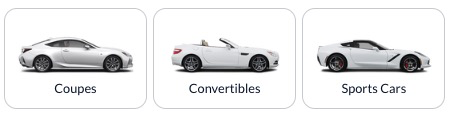
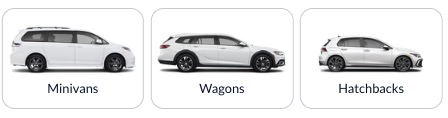
I Wonder if Dealership Websites Are Solving the Wrong Problem?
- By joe.pistell
Asking a website to parse motivation is outside the realm of possibility.
The website is designed to capture intent.
Another OG, JAY KELLY IS IN DA' HOUSE!

What do dealership websites make customers do that we’d never tolerate in the showroom?
Joe, I get what you mean now. I was reading “low quality user” as the shopper, not the level of experience they expect.
I agree though. Before we keep adding more tools, the basic shopping experience has to be really easy. Help me find the right car, show me what matters, and don’t make me work for it.
If we get that part right, the rest should feel a lot more natural.
I agree though. Before we keep adding more tools, the basic shopping experience has to be really easy. Help me find the right car, show me what matters, and don’t make me work for it.
If we get that part right, the rest should feel a lot more natural.
What have you replaced with AI?
- By joe.pistell
- AI Artificial Intelligence Tools & Ideas
- 29 Replies
The second thing has been UI/UX development. We could be unique in that I could make a pixel-perfect design for engineers to implement before AI came around.
LOL Alex Snyder's avatar from 20 years ago!!
Checkered Flag Motor Car Corporation
What do dealership websites make customers do that we’d never tolerate in the showroom?
- By joe.pistell
calling the people who don’t use filters low quality.
Kenny, you missed my context...

I'm at Dealer.com talking to leaders about product design strategy, telling them why Digital Retailing was going to fail.
If you look at that chart...
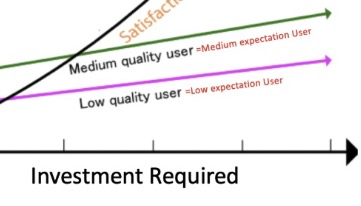
...you'll see it state that the low-quality user (meaning low quality as far as product creation and sophistication) is a low-expectation user. They have no intent to use complex or sophisticated analysis or comparisons. They're here to be motivated, and they move into action quickly.
I told the team at DDC that Digital Retailing was going to FAIL due in large part that the majority of car shoppers are the low-expectation to medium-expectation users, and if you don't have the bedrock of car shopping solved for them, then adding digital retailing to an already shitty website produces little to no e-commerce sales.
You'll know when you've built a great website when the logical conclusion of the experience is to click the buy button with your pajamas on.
What do dealership websites make customers do that we’d never tolerate in the showroom?
Joe, this is probably the part that changed my thinking the most.I see the logic Kenny, but to brag just a touch, two of my three patents touch on your topic, but I think there's much more opportunity higher in the funnel.
Meaning we've got friction in the shopping system that's ahead of some of the more sophisticated concepts that you're talking about.
- MOST shoppers that don't use the SRP filters
- shoppers that don't use the save this VDP feature on VDPs
I'm a visual thinker, I built this chart while I was working with Alex Snyder at Dealer.com. I was trying to communicate the spectrum of users and the time it takes to build experiences that satisfy the spectrum of users.
View attachment 11622
My message was that the overwhelming majority of users are low- and medium-quality and have low expectations of what they want from the internet. To execute and optimize the system for them first will still be used and appreciated by most-demanding users.
I agree the basic path has to work before we start getting fancy. If a customer knows exactly what they want, get them to the inventory as fast as possible.
The only part I would push back on a little is calling the people who don’t use filters low quality.
I see plenty of good buyers in the store who are not car people and are never going to learn how we organize inventory online. They just know what they need.
Three rows. Under $40k. Not 80k miles. Good in bad weather. Enough room for the family.
That’s plenty for a salesperson to start helping them in the showroom, so the website should probably be able to start there too.
Maybe the answer isn’t adding more tools. Maybe it’s making the first step easier.
If they know the stock number, get them there.
If they only know what they need, help them get to the right cars.
That feels a lot closer to how we actually sell cars in the store.
Your chart definitely made me rethink the order of this.
I Wonder if Dealership Websites Are Solving the Wrong Problem?
That example with your daughter is probably the best way to explain it.The reason I made the post was because this past week my wife told me my daughter has been talking about getting her first car to drive back and forth to work. They are looking for a pink VW Beetle because she had seen a pink one and really liked it.
And my first thought was, “How do I explain to her that's not how you buy a car?”
Then I thought every car has a purpose for which it is better suited for, so I needed to try and understand which car best suits my daughters needs?
You’ve a 5 ton truck that’s great for hauling things but makes a terrible daily driver.
However some are great for towing. Some are great on the highway. Some are inexpensive to maintain. Some are great in snow or bad weather. Some have lots of room but aren't efficient.
But when I’m looking at cars online, all of that gets buried underneath make, model, year, trim, color, wheels, packages, etc.
So I started thinking about how I would build the experience if I were doing it specifically for my daughter.
First, make every car pink.
If she likes the pink Beetle, that's fine. But let's take color and styling out of the equation for a minute and figure out what the car actually needs to do for her.
Then ask her a series of simple questions about how she drives, what she needs, what matters to her, what she can afford, reliability, space, mileage, and so on.
At the end, instead of giving her 500 cars to look through, give her three vehicles that actually make sense for her.
Then explain why.
Maybe the Beetle is one of them. Maybe it isn't.
And if she really wants the Beetle, that's fine too. She can keep it in the comparison and see how it stacks up against the other choices.
Once she decides, then we get into inventory.
Now we're comparing the actual cars available locally with things like trim, mileage, price, accident/history information, maintenance, equipment, and everything else that matters when choosing between two otherwise similar vehicles.
And then the last step, she clicks a button and she has me contact the dealership so I can help her through the actual purchase.
And to be honest I’ve been so out of touch with the car market for so long I haven’t a clue what the best car for her would be and rather than just trust some guy at the dealership to tell me how the car on his lot is the best car for her, I figure I needed to understand what matters most to her, then figure out which car best fits those needs, then compare every car for sale in the area with what really matters (and it isn't price) and in the process I begin to wonder if dealerships websites might have missed the mark?
If she walked into my store asking for a pink Beetle, I wouldn’t tell her she’s shopping wrong. I’d ask a few questions first. How far is she driving? What can she comfortably afford? How important is reliability? What does she actually need the car to do?
Then show her a few vehicles that make sense and explain why.
And I’d leave the Beetle in there too. If she understands the tradeoffs and still wants the pink Beetle, that’s fine. The point isn’t to choose for her. It’s to help her make a better decision.
I think that’s the piece we’re missing online.
Some customers know exactly what they want and should be able to get straight to inventory.
Others need help getting from “I need a car” to “these are the three that actually make sense for me.”
Once they make that decision, then we get into the actual inventory, mileage, condition, history, equipment, price and which store they want to deal with.
A good salesperson already does a lot of this in person. I think the website should be able to do some of it before the customer ever raises their hand.
I Wonder if Dealership Websites Are Solving the Wrong Problem?
- By JayKelly
When we bought our house it was a light tan color. My wife wanted to paint it. We went through the whole process. We and by we I mean I painted it white. It was a night and day improvement. I then asked my neighbor how he likes the color. He said it's great why do you ask? I said because you look at the outside of my house 50x more than I do....
So based upon the data, The Sherman Williams store should canvass the neighborhood look for odd colored housing and offer the husband a discount.
Asking a website to parse motivation is outside the realm of possibility.
The website is designed to capture intent.
Does your daughter want a pink car or a pink bug?
You would probably be better off buying a bug and having it wrapped vs trying to find a pink one.
The website is designed to convert your intent into a sale that is it.
Load more
Filter
🔥 This Week
5 threads · 44 posts
Marketing & SEO
MCP from CDK & Reynolds and other DMS companies
Dealers and vendors debate how soon CDK, Reynolds, and other DMS providers will offer Model Conte...
Best lead sources today for internet leads
Dealers are debating which third-party lead sources deliver the best ROI, with shared Q3 close ra...
I want more AI traffic! But what content is worth creating?
Dealers are chasing AI traffic and GEO/AEO metrics without first asking whether that traffic can ...
Community
How to be a respectful vendor
A first-time poster and early-stage vendor asks the DealerRefresh community how to prospect deale...
Is improving new-vehicle affordability actually showing up in the showroom?
Dealers are questioning whether reported gains in new-vehicle affordability are actually moving m...
Get this delivered every week